
September 12, 2026
Creating AI Videos: Your 2026 Guide to AI Video Creation
Discover how creating AI videos transforms content production in 2026. Expert strategies for AI-powered UGC ads, tools, and best practices.
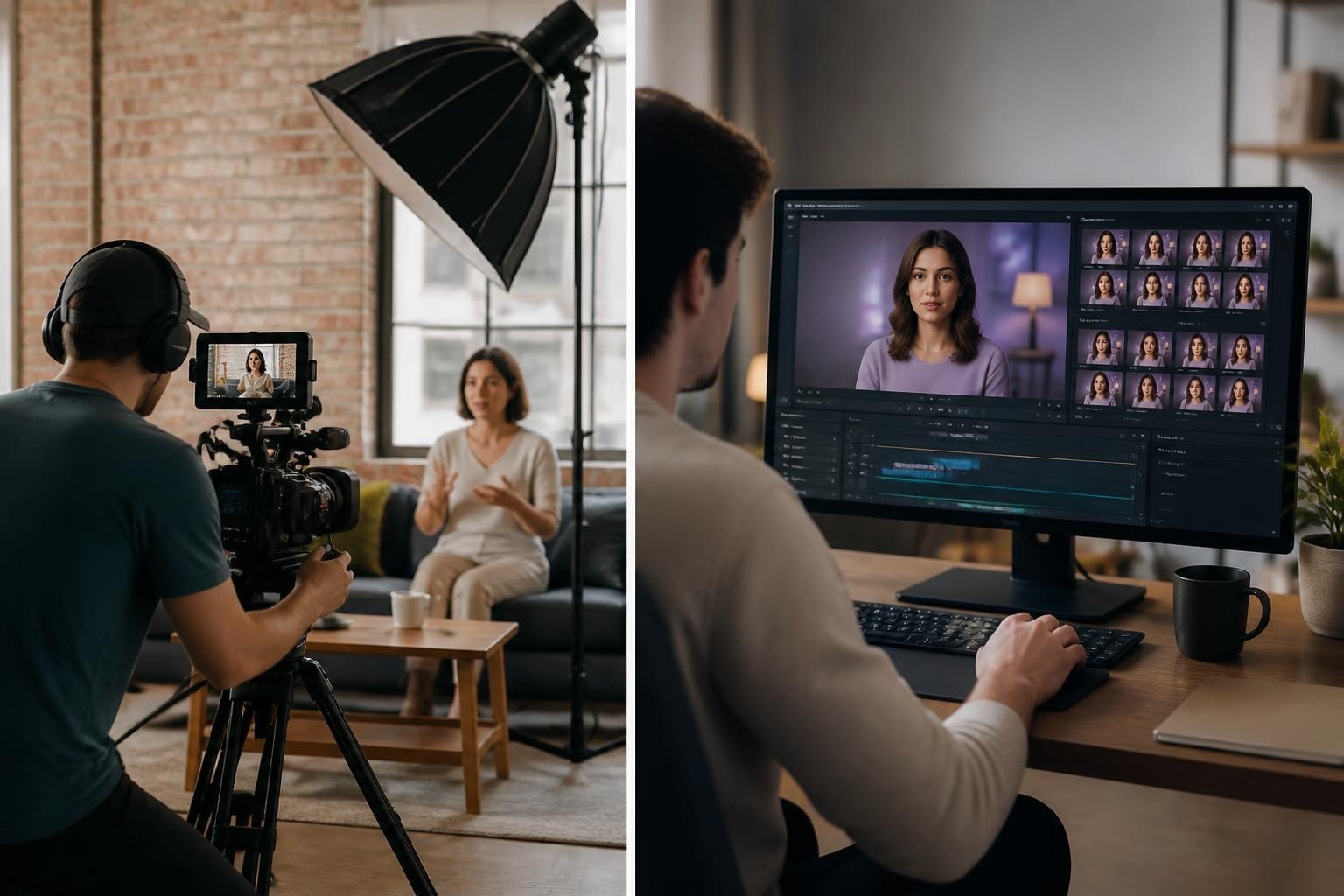
The landscape of video content production has fundamentally shifted. What once required cameras, crews, and costly production schedules now happens through artificial intelligence in minutes. Creating AI videos has become an essential capability for marketers, brands, and content creators who need to produce high-quality video content at scale. This technology democratizes video production while opening new possibilities for personalization, rapid iteration, and cost-effective campaigns that perform across TikTok, Meta, and emerging platforms.
Understanding AI Video Generation Technology
The foundation of creating AI videos rests on sophisticated machine learning models that transform text prompts, images, or existing footage into polished video content. These systems leverage diffusion models and generative adversarial networks to understand visual patterns, motion dynamics, and narrative structure. According to research on diffusion-based video generation approaches, modern architectures handle temporal coherence, realistic motion, and high-fidelity output through increasingly refined training methodologies.
Core Technologies Powering AI Video Creation
Several technical approaches drive today's AI video platforms:
- Text-to-video models that generate entire sequences from written descriptions
- Image-to-video systems that animate static visuals with realistic motion
- Video-to-video transformation that applies style transfer, enhancement, or character swapping
- Avatar synthesis that creates realistic human presenters from text or voice input
- Scene composition engines that assemble multiple elements into cohesive narratives
The computational requirements have dropped dramatically. What required data center resources in 2023 now runs efficiently on cloud infrastructure accessible to individual creators and small marketing teams. This accessibility shift has transformed AI video generation from experimental technology to production-ready tooling.

Strategic Applications for Marketing and Brand Content
Creating AI videos delivers measurable advantages across multiple marketing functions. Performance marketers use AI-generated content to test dozens of creative variations simultaneously, identifying winning formulas before committing production budgets. User-generated content (UGC) ads particularly benefit from AI capabilities that replicate authentic creator aesthetics without coordinating schedules, managing talent, or handling complex production logistics.
Primary Use Cases in 2026
| Application | Benefits | Typical Turnaround |
|---|---|---|
| UGC ad creative | Authentic feel, rapid iteration, cost efficiency | 15-30 minutes |
| Product demonstrations | Consistent messaging, multi-language support | 20-45 minutes |
| Social media content | Platform-optimized formats, trending styles | 10-20 minutes |
| Explainer videos | Clear visualization, easy updates | 30-60 minutes |
| Personalized outreach | Dynamic customization at scale | 5-15 minutes per variant |
The Partnership on AI's guidance on synthetic media emphasizes that responsible deployment requires transparent disclosure practices. Marketers should clearly indicate when content uses AI generation, maintaining audience trust while leveraging efficiency gains.
Brands running direct-to-consumer campaigns find that creating AI videos enables testing velocity previously impossible with traditional production. A single product launch might generate fifty creative variations exploring different hooks, pain points, and visual styles. Analytics quickly surface top performers, and teams iterate the winning concepts within hours rather than weeks.
Selecting the Right AI Video Platform
The AI video creation market has matured into distinct platform categories serving different needs. Enterprise solutions emphasize brand controls, compliance features, and integration with marketing automation stacks. Creator-focused tools prioritize ease of use, template libraries, and social media optimization. Specialized platforms target specific formats like UGC ads, explainer videos, or product showcases with purpose-built workflows.
Evaluation Criteria for Platform Selection
When choosing an AI video solution, consider these factors:
- Output quality and realism - Does the generated content meet your brand standards?
- Customization depth - Can you control visual style, pacing, and messaging nuances?
- Brand consistency - Does the platform maintain your visual identity across outputs?
- Production speed - What's the realistic turnaround from brief to finished asset?
- Format flexibility - Does it support the aspect ratios and specifications your channels require?
- Pricing structure - Does the cost model align with your production volume?
For teams focused on advertising creative, platforms offering AI-powered market research alongside video generation deliver compounding value. Understanding what resonates with your target audience before creating content dramatically improves first-version success rates.

Technical Workflow for Creating AI Videos
The production process varies by platform, but most workflows follow a similar architecture. Understanding these stages helps teams optimize their creative briefs and quality control processes for the best results when creating AI videos.
Standard Production Stages
Brief development forms the foundation. Clear, detailed descriptions of the desired video significantly impact output quality. Specify the hook, core message, call-to-action, visual style, pacing, and any brand-specific requirements. Include reference materials when available-existing videos, brand guidelines, competitor examples that capture the desired aesthetic.
Asset preparation involves gathering logos, product images, color palettes, fonts, and any other brand elements the AI should incorporate. Organized asset libraries accelerate production and ensure consistency across multiple video variations.
Generation and iteration represents the core AI processing. Most platforms produce initial outputs in minutes, then allow refinement through parameter adjustments or prompt modifications. Expect to iterate 2-4 times to dial in the exact creative execution.
Review and optimization ensures the generated content meets quality standards, maintains brand alignment, and achieves the strategic objective. Check audio sync, visual coherence, pacing, and messaging clarity. Test on target devices and platforms since display contexts affect viewer perception.
Quality Control Checkpoints
- Brand compliance - Logo placement, color accuracy, font usage, messaging alignment
- Technical specifications - Resolution, aspect ratio, file format, compression quality
- Narrative flow - Hook effectiveness, message clarity, CTA visibility
- Visual coherence - Consistent style, smooth transitions, appropriate pacing
- Audio quality - Clear voiceover, balanced music, effective sound design
Research published in Frontiers in Big Data on deepfake evaluation highlights metrics and standards valuable for assessing generated video quality and detecting potential artifacts that reduce authenticity.

Optimizing Creative for Platform Performance
Creating AI videos efficiently matters little if the content underperforms on distribution channels. Platform algorithms prioritize specific characteristics, and understanding these preferences shapes effective creative strategies.
Platform-Specific Optimization Guidelines
TikTok rewards immediate engagement within the first second. Hook strength determines whether viewers scroll past or stop to watch. AI-generated UGC ads should open with pattern interrupts-unexpected visuals, compelling questions, or relatable scenarios that capture attention instantly. Effective UGC hooks combine curiosity, relevance, and authenticity.
Meta platforms (Facebook, Instagram) favor watch time and completion rate. Videos should deliver value quickly while maintaining interest throughout. The algorithm rewards content that keeps viewers engaged, so pacing and narrative arc matter significantly. Creating AI videos optimized for Meta means balancing quick hooks with sustained engagement.
YouTube Shorts demands different treatment than long-form content. These vertical, short videos benefit from clear value propositions, rapid pacing, and strong CTAs directing viewers to longer content or conversion points. AI generation excels at producing volume for testing different value propositions.
| Platform | Ideal Length | Key Success Factor | Recommended Hook |
|---|---|---|---|
| TikTok | 15-30 seconds | Pattern interrupt in first 1 second | Visual surprise, question, or bold claim |
| Instagram Reels | 15-45 seconds | Story arc with payoff | Relatable scenario opening |
| YouTube Shorts | 30-60 seconds | Clear value delivery | Promise of specific benefit |
| Meta Feed | 15-30 seconds | Complete story in clip | Problem identification |
Addressing Copyright and Ethical Considerations
The legal landscape surrounding AI-generated content continues evolving. Creating AI videos responsibly requires understanding current copyright frameworks and implementing ethical guardrails.
Copyright Framework in 2026
The U.S. Copyright Office guidance on AI clarifies that purely AI-generated works generally lack copyright protection, while human-authored works incorporating AI elements may qualify for protection based on the human contribution. For marketing content, this distinction matters less than ensuring you have proper rights to any source materials used in generation.
Training data provenance has become a differentiator among platforms. Reputable providers document their training datasets and obtain appropriate licenses. When evaluating platforms for creating AI videos, verify they use ethically sourced training data to avoid potential liability.
Ethical Best Practices
Transparency builds trust. Disclose when content uses AI generation, particularly in advertising contexts where authenticity claims matter. Many platforms now support automated disclosure labeling that complies with emerging regulations.
The NIST report on synthetic content approaches outlines technical methods for watermarking, provenance tracking, and detection that responsible platforms implement. Choose systems incorporating these transparency mechanisms.
Misuse prevention requires vigilance. Avoid creating content that could deceive, mislead, or cause harm. The Interpol report on synthetic media risks documents real-world harms from malicious synthetic content and emphasizes the responsibility of creators and platforms to prevent abuse.
Measuring Performance and Iterating Creative
Creating AI videos enables testing velocity, but only systematic measurement converts volume into performance improvements. Establishing clear metrics and feedback loops separates experimental production from strategic advantage.
Key Performance Indicators
Engagement metrics reveal whether creative resonates. Track view duration, completion rate, likes, comments, shares, and saves. Compare these across creative variations to identify patterns in what works.
Conversion metrics connect creative to business outcomes. Monitor click-through rates, landing page engagement, lead generation, and purchase conversion. Attribution modeling helps understand which creative elements drive results.
Cost efficiency quantifies the economic advantage of AI generation. Calculate cost per finished asset, cost per view, cost per engagement, and cost per conversion. Compare against traditional production benchmarks.
Testing Frameworks
Structured experimentation accelerates learning:
- Hook testing - Generate 5-10 variations with different opening sequences
- Message testing - Vary the core value proposition while maintaining format
- Visual style testing - Test aesthetic approaches (minimal, energetic, documentary, etc.)
- CTA testing - Experiment with different calls-to-action and placement
- Length testing - Create 15-second, 30-second, and 45-second versions
Building effective advertisement videos requires systematic iteration informed by performance data. AI generation enables rapid testing, but deliberate experimental design ensures you extract meaningful insights rather than random noise.
Integration with Broader Marketing Systems
Creating AI videos delivers maximum value when integrated into comprehensive marketing workflows. Isolated video production misses opportunities for coordination, data sharing, and strategic alignment.
Workflow Integration Points
Creative briefs should flow from strategic planning directly into video generation platforms. Marketing calendars, campaign themes, and messaging frameworks inform what content gets created. Bidirectional integration lets performance data influence future strategic decisions.
Asset management systems centralize brand resources, generated videos, and performance metadata. Teams avoid duplicating work and leverage successful creative across campaigns. Version control ensures everyone uses current brand guidelines.
Distribution platforms receive finished videos through automated pipelines. Direct publishing to TikTok, Meta, YouTube, and other channels eliminates manual file handling. Metadata tags and descriptions accompany videos for optimal discoverability.
Analytics platforms aggregate performance data across channels. Unified reporting reveals which creative performs best on which platforms, informing future production priorities. Close the feedback loop by feeding insights back into brief development.
Advanced Techniques and Future Capabilities
The frontier of creating AI videos pushes toward increasingly sophisticated capabilities. Understanding emerging techniques helps teams prepare for coming opportunities.
Current Advanced Capabilities
Dynamic personalization generates unique video variations for different audience segments. A single base creative spawns dozens of versions with personalized product recommendations, regional references, or demographic-specific messaging. Personalization at this scale was economically impossible with traditional production.
Multi-language generation produces native-language versions with culturally appropriate visuals and voiceovers. Global campaigns launch simultaneously across markets without sequential localization delays. The AI handles translation, voiceover synthesis, and cultural adaptation.
Real-time generation responds to trending topics, breaking news, or viral moments within hours. Brands participate in cultural conversations while topics remain relevant. Speed differentiates winners from late arrivals in attention economy competition.
Emerging Capabilities on the Horizon
Research continues advancing the state of the art. Academic surveys on video diffusion generation explore efficiency improvements, resolution enhancements, and longer coherent sequences that will reach commercial platforms in coming years.
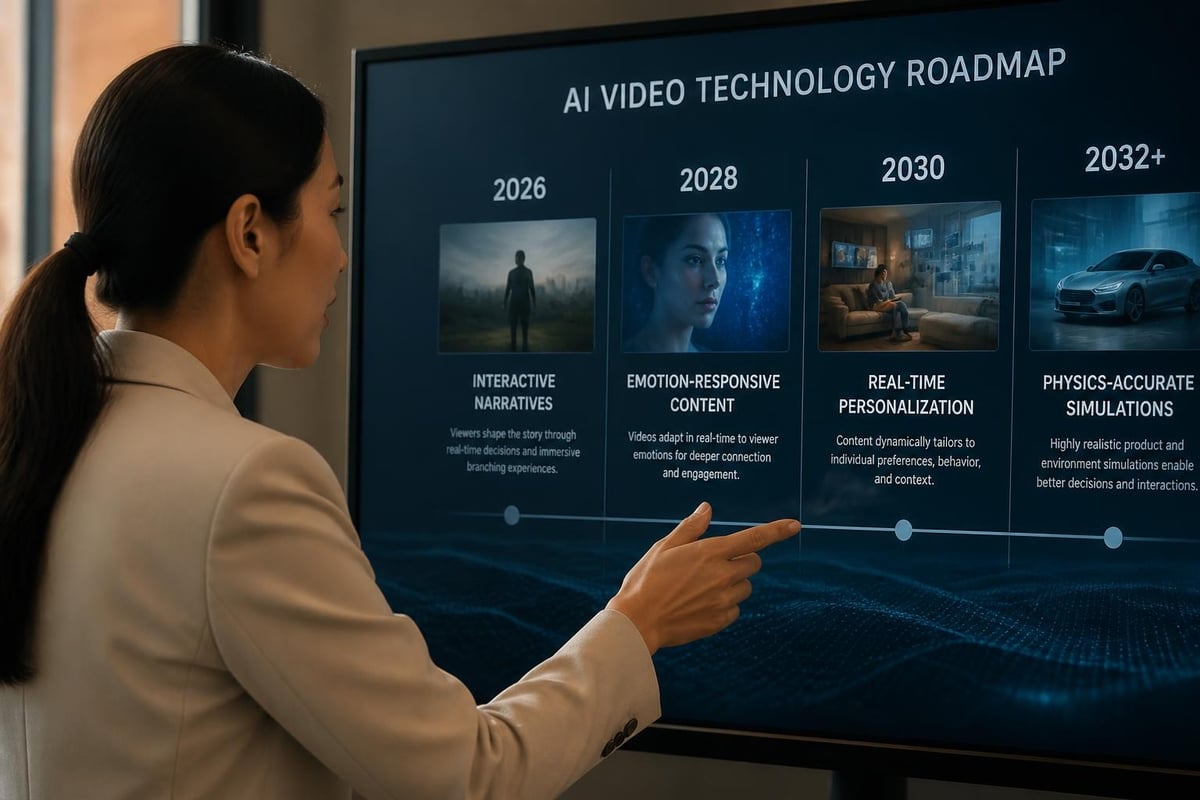
Interactive video generation will let viewers influence narrative direction in real time. Choose-your-own-adventure advertising creates engaging experiences that traditional linear video cannot match.
Emotion-responsive generation will analyze viewer reactions and adjust content dynamically. If a viewer seems bored, the narrative might accelerate. If confused, the explanation might simplify. This feedback responsiveness makes video content adaptive rather than static.
Physics-accurate simulation will enable photorealistic product demonstrations showing materials, lighting, and physics that match real-world behavior. Viewers won't distinguish between filmed products and AI-generated representations.
Building In-House AI Video Capabilities
Organizations face build-versus-buy decisions when adopting AI video creation. Some scenarios favor developing custom solutions, while most benefit from platform adoption.
When to Build Custom Solutions
Highly specialized requirements that commercial platforms don't address may justify custom development. Proprietary data, unique creative formats, or regulatory constraints sometimes necessitate purpose-built systems.
Massive scale operations with hundreds of thousands of video variants might find economic advantages in custom infrastructure. The break-even point typically appears above 10,000 videos monthly with highly specific requirements.
Deep technical expertise in machine learning, computer vision, and video processing enables organizations to push beyond commercial platform capabilities. Research organizations and technology companies with relevant talent may pursue custom approaches.
When to Adopt Platforms
Most use cases favor proven platforms offering reliability, ongoing improvement, and support ecosystems. Creating AI videos through established solutions delivers faster time-to-value and predictable outcomes.
Limited technical resources make platforms essential. Marketing teams without machine learning expertise still produce professional results through intuitive interfaces and guided workflows.
Rapid scaling needs benefit from platforms designed for volume production. Proven infrastructure handles traffic spikes, maintains performance, and scales transparently as demand grows.
Teams should honestly assess their technical capabilities, scale requirements, and strategic priorities. For the vast majority of marketing organizations, platforms like VidBud's AI UGC video solutions offer superior ROI compared to custom development.
Overcoming Common Challenges
Creating AI videos introduces new workflows that require adaptation. Understanding common obstacles and proven solutions accelerates successful adoption.
Challenge: Maintaining Brand Consistency
Symptom - Generated videos vary in style, tone, or visual treatment across production batches.
Solution - Develop comprehensive creative guidelines specifically for AI generation. Document preferred styles with examples, establish template libraries, and implement review workflows before distribution. Centralized asset management ensures all production uses current brand resources.
Challenge: Generating Authentic-Feeling Content
Symptom - AI-generated videos feel artificial or lack the emotional resonance of human-created content.
Solution - Study successful UGC patterns and encode those insights into briefs. Reference specific successful videos when prompting generation. Iterate based on performance data to identify which creative approaches resonate with your audience. Remember that authenticity stems from relevance and emotional truth, not production method.
Challenge: Workflow Integration Friction
Symptom - AI video creation exists as isolated tool separate from broader marketing processes.
Solution - Map integration points explicitly. Connect creative briefs, asset libraries, distribution systems, and analytics platforms through documented workflows and where possible, technical integrations. Assign clear ownership for each workflow segment to ensure smooth handoffs.
Challenge: Quality Consistency
Symptom - Some generated videos meet standards while others require extensive revision.
Solution - Invest in brief development training. Quality outputs require quality inputs. Create brief templates that capture all necessary context. Build review checklists standardizing quality assessment. Track which brief patterns correlate with first-attempt success.
Creating AI videos has evolved from experimental technology to essential marketing capability in 2026, enabling unprecedented scale, speed, and cost efficiency in video content production. The platforms, workflows, and best practices outlined above provide a roadmap for leveraging this technology effectively while navigating ethical and quality considerations. VidBud helps creators, brands, and marketers turn creative briefs into scroll-stopping UGC ads through AI-powered market research, creative direction, and video generation built specifically for performance on TikTok, Meta, and beyond.