
September 6, 2026
Create a Advertisement Video: Your Complete Guide
Learn how to create a advertisement video that converts. Expert strategies, production tips, and platforms to help you launch scroll-stopping ad creative.
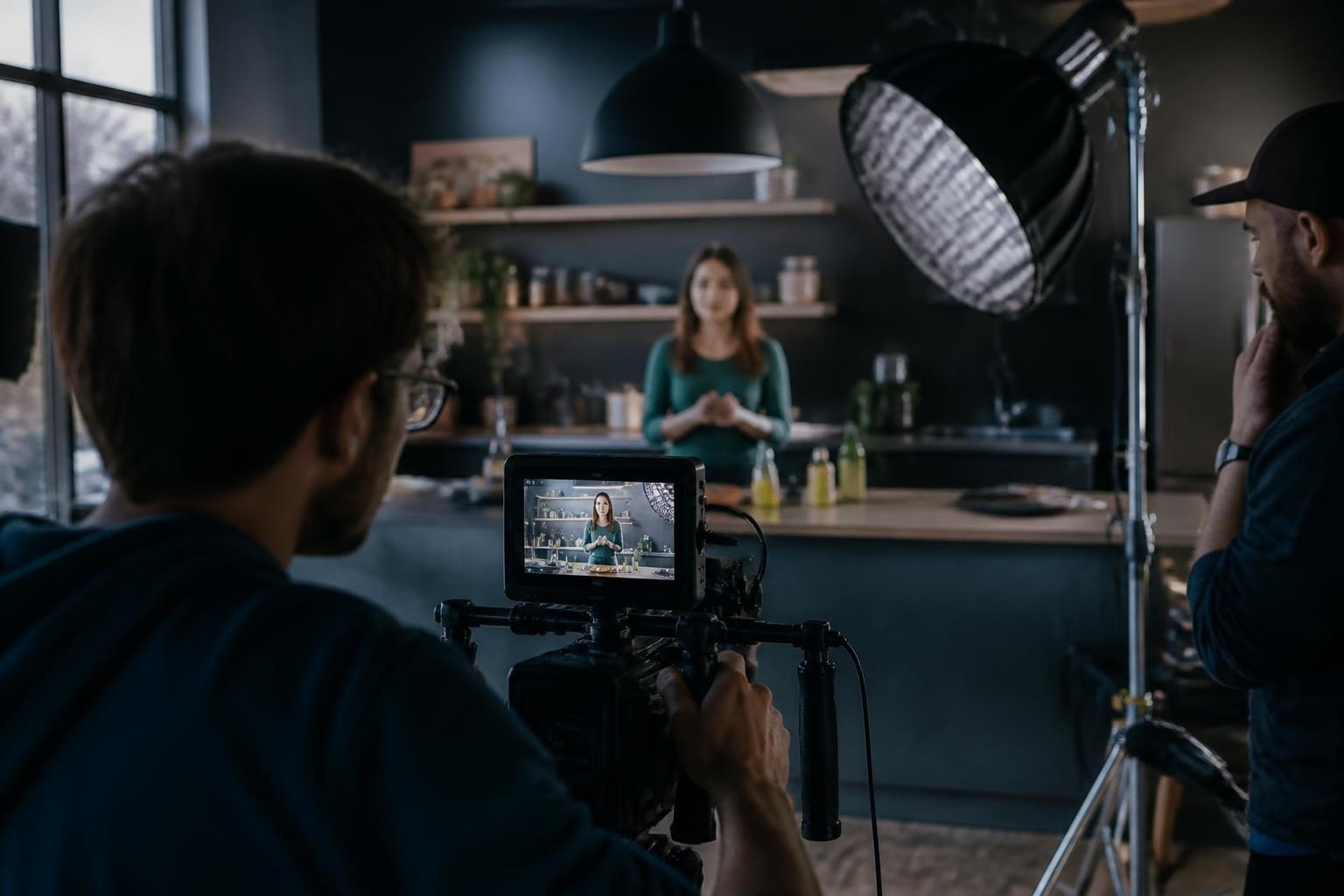
Creating effective video advertisements has become essential for brands looking to capture attention in an increasingly crowded digital marketplace. Whether you're launching a new product, building brand awareness, or driving conversions, knowing how to create a advertisement video that resonates with your target audience can make the difference between scrolling past and clicking through. This comprehensive guide walks you through every stage of the process, from initial concept development to final distribution, with strategies tailored for modern performance marketers and DTC brands.
Understanding Your Advertisement Video Objectives
Before diving into production, defining clear objectives shapes every creative decision that follows. Your goals determine format, length, tone, and platform optimization.
Establishing Campaign Goals
The first step to create a advertisement video is identifying what success looks like. Are you building brand awareness among a cold audience, retargeting warm prospects, or driving immediate conversions? Each objective requires different creative approaches and calls-to-action.
Key objective categories include:
- Awareness campaigns: Focus on memorable storytelling and brand recall
- Consideration ads: Highlight product benefits and differentiation
- Conversion-focused content: Feature strong CTAs and urgency elements
- Retention videos: Build community and reinforce customer loyalty
Research from the IAB 2024 Video Ad Spend Report shows that campaigns with clearly defined objectives see 40% higher engagement rates compared to general awareness efforts.
Identifying Your Target Audience
Successful advertisement videos speak directly to specific viewer segments. Document your ideal customer's demographics, pain points, aspirations, and platform preferences before scripting begins.
Create detailed audience personas that include age ranges, interests, objections, and the specific language they use. This foundation ensures your creative resonates authentically rather than falling flat with generic messaging.

Planning Your Advertisement Video Content
Strategic planning separates scroll-stopping ads from forgettable ones. This phase transforms objectives into concrete creative briefs.
Developing a Creative Brief
A comprehensive creative brief aligns stakeholders and guides production teams. When you create a advertisement video without this foundation, scope creep and misaligned expectations often derail projects.
| Brief Component | Key Questions | Output |
|---|---|---|
| Core Message | What's the single takeaway? | One-sentence value proposition |
| Emotional Hook | What feeling drives action? | Primary emotion to evoke |
| Proof Points | Why should viewers believe us? | 2-3 supporting claims |
| Call-to-Action | What should viewers do next? | Specific action and urgency driver |
Your brief should also specify technical requirements including aspect ratios (9:16 for stories, 1:1 for feed, 16:9 for YouTube), duration targets, and platform-specific guidelines from resources like the IAB Tech Lab's digital video format specifications.
Scripting for Performance
The script transforms your brief into a viewer journey. Performance-oriented scripts follow proven frameworks that capture attention in the first three seconds and maintain engagement throughout.
High-converting script structures:
- Hook (0-3 seconds): Pattern interrupt or compelling question
- Problem (3-8 seconds): Agitate the pain point
- Solution (8-15 seconds): Introduce your product as the answer
- Proof (15-20 seconds): Show results, testimonials, or demonstrations
- CTA (20-25 seconds): Clear next step with urgency
User-generated content (UGC) style advertisements consistently outperform polished brand videos because they feel native to social feeds. According to HubSpot's video marketing research, UGC-style ads see 4x higher engagement than traditional brand spots.
Production Methods for Advertisement Videos
How you produce content depends on budget, timeline, and desired aesthetic. Modern marketers have more options than ever to create a advertisement video efficiently.
Traditional Video Production
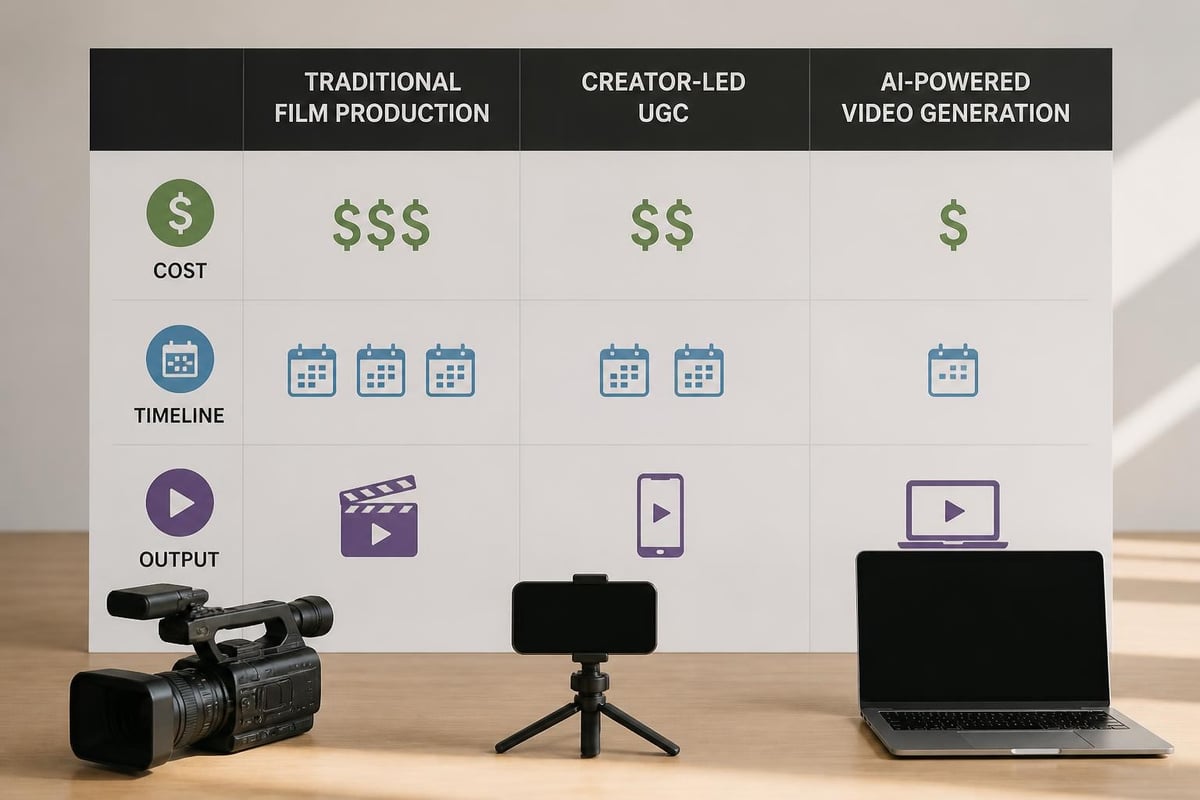
Traditional production involves hiring videographers, actors, location scouts, and post-production teams. This approach offers maximum creative control and polish but requires significant investment.
Typical production timeline:
- Pre-production planning (1-2 weeks)
- Shoot day(s) (1-3 days)
- Post-production and editing (1-2 weeks)
- Revisions and finalization (3-5 days)
Budget considerations range from $2,000 for basic local productions to $50,000+ for professional campaigns with multiple deliverables.
AI-Powered Video Generation
AI platforms have revolutionized how performance marketers create a advertisement video at scale. These tools combine market research, creative direction, and video generation into streamlined workflows.
Modern AI video platforms analyze your brief, generate on-brand scripts, and produce UGC-style advertisements without filming or actors. For brands running multiple campaigns simultaneously or testing numerous creative variations, this approach delivers speed and cost efficiency that traditional production cannot match.
Platforms designed specifically for ad creative enable teams to go from brief to published ad in hours rather than weeks. VidBud's AI UGC video generation exemplifies this shift, allowing marketers to produce scroll-stopping TikTok and Meta ads with built-in market research and creative direction.

Hybrid Approaches
Many successful brands combine methods, using AI for rapid testing and iteration while reserving traditional production for winning concepts that justify larger investments.
Optimizing Video Content for Platform Success
Where your advertisement runs dictates specific creative requirements. Platform optimization can double or triple performance metrics.
Platform-Specific Considerations
Each advertising platform has unique technical specifications and audience expectations. Creating one master video and repurposing it rarely delivers optimal results.
| Platform | Ideal Length | Aspect Ratio | Creative Style |
|---|---|---|---|
| TikTok | 9-15 seconds | 9:16 vertical | Raw, authentic, trend-aware |
| Instagram Reels | 7-15 seconds | 9:16 vertical | Polished UGC, visually cohesive |
| Facebook Feed | 15-30 seconds | 1:1 square | Direct, benefit-focused |
| YouTube (skippable) | 15-20 seconds | 16:9 horizontal | Story-driven, front-loaded |
| YouTube Shorts | 15-60 seconds | 9:16 vertical | Punchy, educational or entertaining |
Mobile-first platforms demand vertical video, bold text overlays readable on small screens, and captions for sound-off viewing. The W3C's accessible media guidance provides standards for captions and transcripts that improve both accessibility and engagement metrics.
Compliance and Disclosure Requirements
Advertisement videos must comply with platform policies and legal requirements. When you create a advertisement video featuring testimonials, endorsements, or sponsored content, proper disclosures protect both your brand and audience.
The FTC's guidance for advertisers and influencers outlines clear requirements for transparent disclosures. Material connections must be disclosed clearly and conspicuously, typically through visible text overlays or verbal statements in the first few seconds.
Editing and Post-Production Excellence
Raw footage becomes persuasive advertising through strategic editing decisions. Post-production polish separates amateur content from professional campaigns.
Essential Editing Techniques
Key editing elements that drive performance:
- Pacing: Match cuts to platform norms (faster for TikTok, more measured for YouTube)
- Text overlays: Reinforce key messages for sound-off viewers
- Transitions: Keep momentum without distracting from the message
- Color grading: Maintain brand consistency while enhancing visual appeal
- Audio mixing: Balance music, voiceover, and ambient sound
Modern editing software ranges from beginner-friendly mobile apps to professional suites like Adobe Premiere and Final Cut Pro. The tool matters less than understanding fundamental editing principles that guide viewer attention.
Thumbnail and Preview Optimization
Static thumbnails and preview frames determine whether users engage with your video ad in the first place. These elements deserve as much attention as the video content itself.
Choose thumbnail frames that clearly communicate the video's value proposition. Include readable text, compelling imagery, and brand elements that build recognition across multiple touchpoints. A/B test thumbnail variations to identify which visual hooks drive the highest click-through rates.
Testing and Performance Measurement
Creating your first advertisement video is just the beginning. Systematic testing and optimization separate good campaigns from exceptional ones.
Setting Up Proper Tracking
Before launching campaigns, implement tracking pixels and UTM parameters that attribute conversions accurately. This foundation enables data-driven optimization decisions.
Critical metrics to track:
- View-through rate (VTR): Percentage who watch past key thresholds (3s, 15s, 100%)
- Click-through rate (CTR): Engagement level and relevance indicator
- Cost per click (CPC): Efficiency of audience targeting and creative appeal
- Conversion rate: Ultimate measure of creative effectiveness
- Cost per acquisition (CPA): Campaign profitability indicator
The Innovid 2024 Advertising Benchmarks report provides industry benchmarks across channels to help contextualize your performance data.
Creative Testing Frameworks
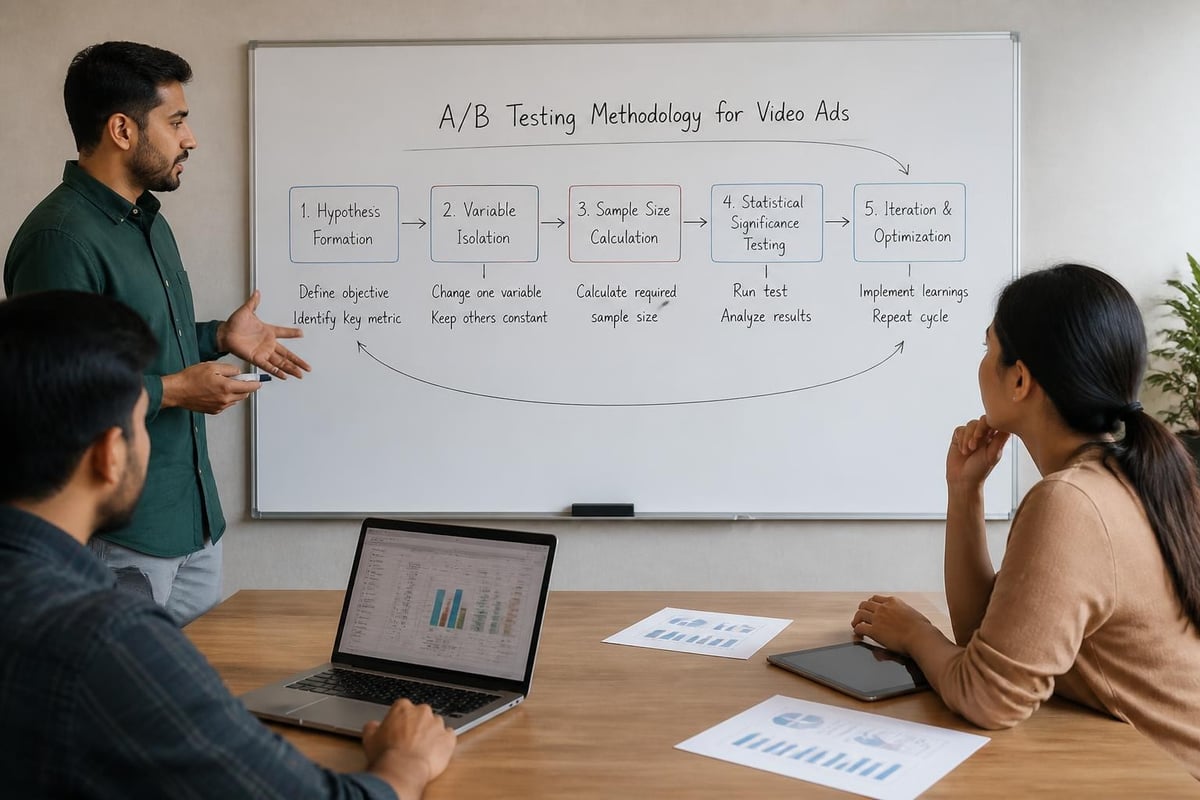
Systematic creative testing identifies winning elements to double down on and losing variables to eliminate. When you create a advertisement video for testing, isolate single variables to understand what drives performance changes.
Variables worth testing systematically:
- Hook variations: Different opening frames or questions
- Messaging angles: Feature-focused vs. benefit-focused vs. transformation-focused
- Talent and authenticity: Actors vs. UGC creators vs. customer testimonials
- Length: 6-second bumpers vs. 15-second spots vs. 30-second narratives
- CTA placement: Early vs. late, verbal vs. text vs. both
Run tests with adequate sample sizes before drawing conclusions. Minor performance differences within the first 100 conversions often disappear at scale.
Scaling Your Advertisement Video Production
Once you've identified winning creative formulas, scaling production becomes the bottleneck. Efficient systems enable consistent output without proportional cost increases.
Building Creative Systems
Document your winning frameworks so teams can replicate success. Create templates for scripts, shot lists, editing sequences, and approval workflows that maintain quality while increasing velocity.
Systematic production elements:
- Script templates with proven hooks and structures
- Brand asset libraries with approved logos, colors, fonts, and music
- Editing presets that maintain visual consistency
- Approval workflows that balance stakeholder input with speed
For brands running campaigns across multiple products, regions, or audience segments, the ability to create a advertisement video quickly determines competitive advantage. Exploring VidBud's platform capabilities reveals how modern AI tools enable this scale without traditional production constraints.
Managing Creative Fatigue
Even winning advertisements decay in performance as audiences see them repeatedly. Monitor frequency metrics and refresh creative before performance drops significantly.
Best practices suggest introducing new creative variations every 7-14 days for high-frequency campaigns. Keep winning frameworks but rotate talent, backgrounds, hooks, or proof points to maintain novelty while preserving effectiveness.
Distribution Strategy and Amplification
Creating compelling content means nothing without strategic distribution. Your advertisement video reaches its full potential through intentional placement and amplification decisions.
Paid Media Placement
Paid advertising platforms offer unprecedented targeting precision. Structure campaigns to test broad audiences initially, then narrow to highest-converting segments as data accumulates.
Campaign structure considerations:
- Objective alignment: Choose platform objectives that match campaign goals (awareness vs. conversions)
- Audience layering: Test interests, behaviors, demographics, and lookalikes systematically
- Budget allocation: Use portfolio approaches with multiple creative variants running simultaneously
- Bid strategies: Match bidding to campaign maturity (manual for testing, automated for scale)
Start with modest daily budgets ($20-50) when launching new creative to gather performance data before scaling winners.
Organic and Earned Distribution
Paid amplification works best when complemented by organic distribution through owned channels. Share your advertisement videos across email lists, social profiles, websites, and partner channels to maximize reach efficiency.
Encourage employees and brand advocates to share content authentically. User-generated distribution often reaches audiences skeptical of traditional advertising through trusted peer recommendations. For detailed strategies on integrating video across marketing channels, review Wistia's comprehensive video marketing guide.
Technical Specifications and File Management
Professional advertisement campaigns require organized asset management and technical precision. Poor file handling creates unnecessary delays and quality issues.
Export Settings for Quality and Compatibility
Each platform specifies optimal video codecs, bitrates, and file sizes. Exporting at settings beyond platform requirements wastes file size without improving quality, while underexporting causes compression artifacts.
Recommended export specifications:
| Platform | Resolution | Frame Rate | Bitrate | Format |
|---|---|---|---|---|
| Meta (FB/IG) | 1080x1920 (vertical) | 30fps | 5-8 Mbps | H.264, MP4 |
| TikTok | 1080x1920 | 30fps | 5-8 Mbps | H.264, MP4 |
| YouTube | 1080p minimum | 30-60fps | 8-12 Mbps | H.264, MP4 |
| 1080x1080 (square) | 30fps | 5 Mbps | H.264, MP4 |
Maintain source files at higher resolutions when possible. Future platform requirements may demand higher quality, and starting from high-resolution masters ensures flexibility.
Asset Organization Best Practices
As you create a advertisement video library, systematic organization prevents lost files and duplicated effort. Establish naming conventions and folder structures from day one.
Effective naming convention example:Brand_Campaign_Platform_Variation_Date.mp4VidBud_Q3Launch_TikTok_HookA_20260906.mp4
Archive raw footage, project files, scripts, and performance data together. Future creative iterations often reference past successful elements, making searchable archives valuable strategic assets.
Budgeting and Resource Allocation
Financial planning determines what production methods are viable and how aggressively you can test creative variations. When you create a advertisement video on tight budgets, prioritizing spending becomes critical.
Cost Breakdown by Production Method
Understanding where money goes helps optimize spending for maximum creative output.
Traditional production costs:
- Pre-production (10-15% of budget): Scripting, casting, location scouting
- Production day (40-50% of budget): Crew, equipment, talent, location fees
- Post-production (30-40% of budget): Editing, color, sound, revisions
- Project management (5-10% of budget): Coordination and approvals
AI-assisted production costs:
- Platform subscription or per-video fees
- Creative brief development time
- Minimal revision and optimization labor
- Platform advertising spend separate from production
For performance marketers testing multiple concepts simultaneously, AI-powered approaches often deliver 10-20x more creative variations for equivalent budgets compared to traditional production.
ROI Calculation and Justification
Calculate expected return before greenlighting production investments. Conservative ROI projections help justify creative budgets to stakeholders focused on bottom-line impact.
Simple ROI framework:(Revenue from campaign - Total costs) / Total costs × 100 = ROI%
Include production costs, media spend, and allocated labor hours in total costs. Track revenue attributable to specific video advertisements through proper UTM tagging and conversion tracking. More resources on measuring video marketing ROI are available through the VidBud blog.
Mastering how to create a advertisement video that drives measurable business results combines strategic planning, audience understanding, platform optimization, and continuous testing. Whether you choose traditional production, modern AI-powered tools, or hybrid approaches, the core principles remain consistent: understand your objectives, speak authentically to your audience, optimize for platform requirements, and let data guide iteration. VidBud empowers creators, brands, and marketers to transform briefs into scroll-stopping UGC ads with AI-powered market research and creative direction, helping you launch performance-driven video advertisements at the scale and speed modern marketing demands.