
September 16, 2026
AI Creates Video: How Marketers Generate Scroll-Stopping Ads
Discover how AI creates video content for ads at scale. Learn the tech behind AI video generation and how brands produce scroll-stopping UGC ads.
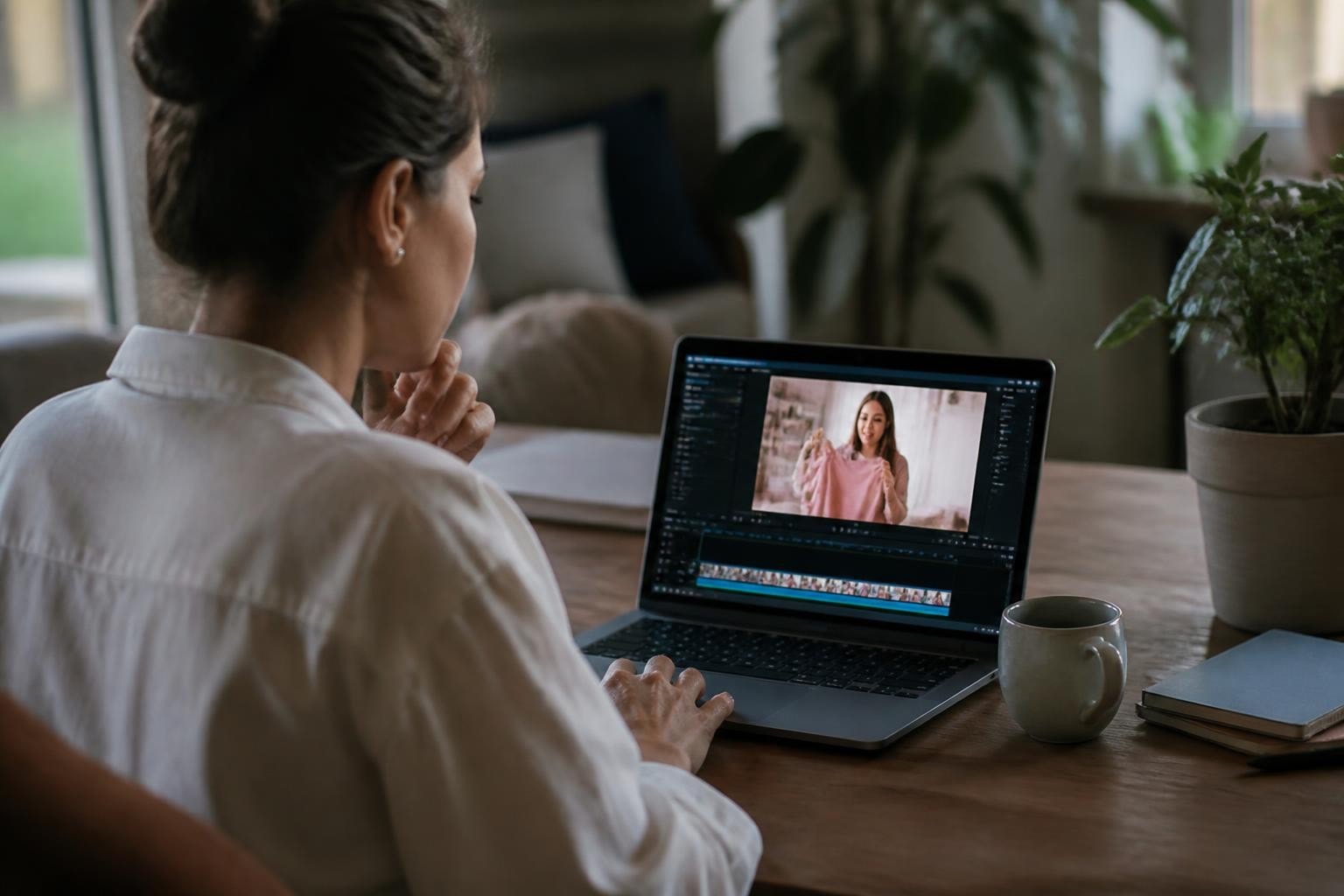
The landscape of video advertising has undergone a seismic shift in the past two years. What once required production crews, actors, expensive equipment, and weeks of editing can now happen in minutes. AI creates video content at scale, transforming how brands and creators approach user-generated content ads for social platforms. This technological leap isn't just about speed-it's about fundamentally reimagining the creative process, from brief to finished ad, with machine learning models handling everything from concept development to final rendering.
The Technology Behind AI Video Generation
Modern AI video generation relies on sophisticated diffusion models and transformer architectures that have evolved rapidly since 2022. These systems work by learning patterns from massive datasets of video content, understanding not just what objects appear in frames but how they move, interact, and change over time.
When AI creates video from text prompts or creative briefs, the underlying models process multiple dimensions simultaneously. They must handle spatial consistency (making sure objects look correct in each frame), temporal coherence (ensuring smooth motion across frames), and semantic alignment (matching the generated content to the input description). Foundational research on text-to-video generation introduced techniques that allow models to learn video generation without requiring perfectly paired text-video training data, a breakthrough that accelerated commercial applications.
The Building Blocks of AI Video Models
Several key components work together when AI generates video content:
- Latent diffusion frameworks that compress video into efficient representations before generation
- Motion modeling systems that separate content (what appears) from motion (how it moves)
- Temporal attention mechanisms that maintain consistency across hundreds of frames
- Style transfer networks that apply brand-specific visual treatments
- Audio synthesis modules that generate or match sound to visual elements
The most advanced systems use latent video diffusion architectures that process video in compressed latent space rather than pixel space, dramatically reducing computational requirements while improving output quality. This efficiency matters enormously for platforms that need to generate thousands of ad variations.
How Brands Use AI Video Generation for Advertising
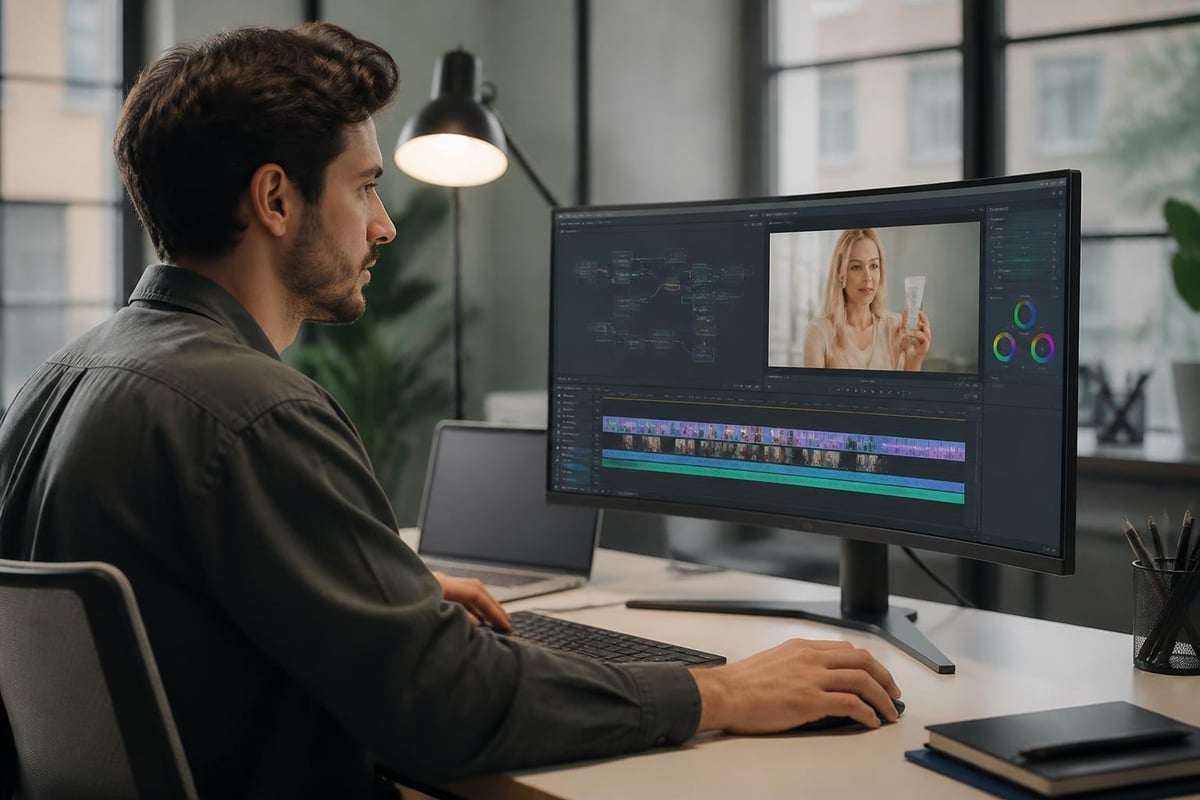
The advertising industry has embraced AI video generation with particular enthusiasm because it solves multiple pain points simultaneously. Traditional video production for ads involves casting, location scouting, multiple takes, post-production, and revision cycles that can stretch for weeks. When AI creates video ads, the timeline compresses to hours or even minutes.
Performance marketers running campaigns on TikTok and Meta face unique challenges. These platforms reward frequent creative refreshes-ads that perform well today may see declining engagement within days. The solution requires a constant stream of fresh creative, which traditional production simply cannot supply at the necessary pace or cost.
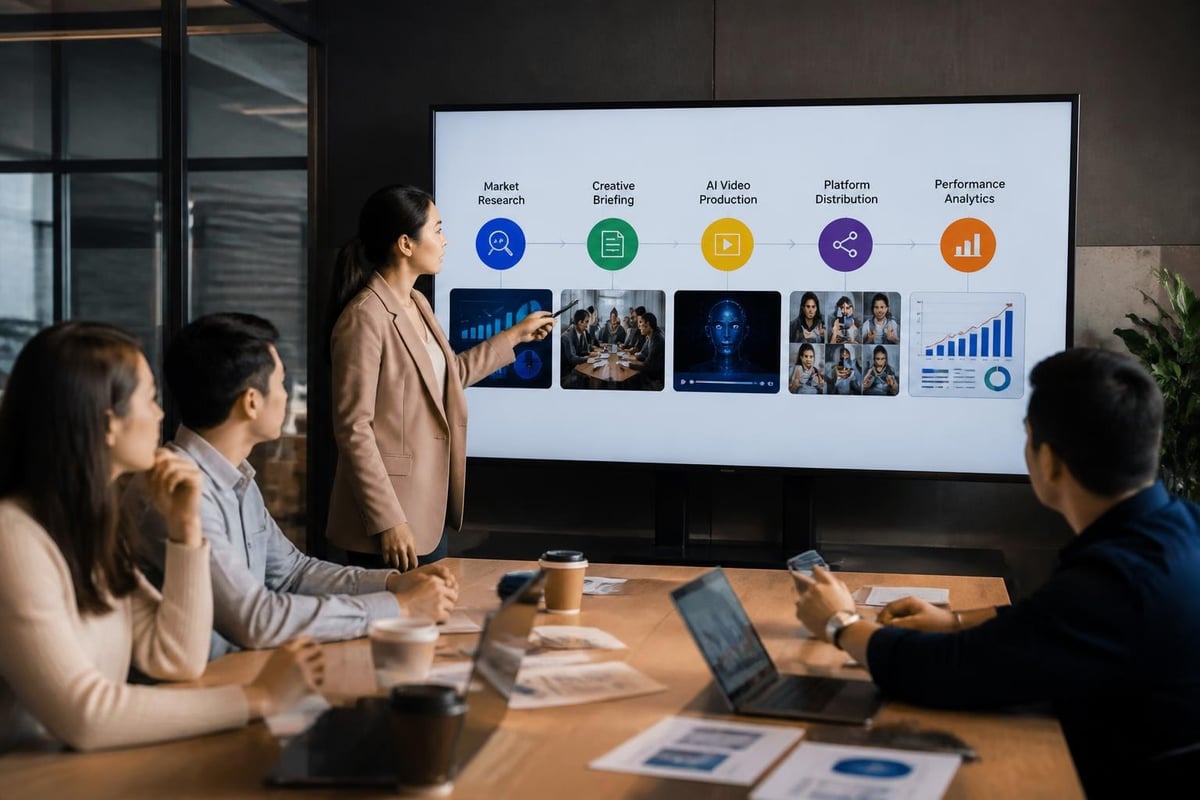
AI video generation platforms now handle the entire creative workflow. They analyze market data to identify winning hooks and formats, generate creative concepts aligned with brand guidelines, and produce multiple video variations ready for testing. This integrated approach means creative direction and production happen in a unified process rather than separate phases.
UGC Ads Without Actors or Cameras
User-generated content ads-videos that appear authentic and creator-made rather than polished and corporate-consistently outperform traditional advertising on social platforms. The challenge? Actual UGC requires recruiting creators, managing collaborations, reviewing submissions, and coordinating revisions.
When AI creates video in the UGC style, it replicates the authentic aesthetic that performs well while eliminating the coordination overhead. The technology has advanced to the point where AI-generated UGC ads maintain the casual, genuine feel that makes this format effective while allowing brands complete creative control.
| Traditional UGC Production | AI Video Generation |
|---|---|
| 1-2 weeks per creator collaboration | Minutes per video variant |
| $500-$5,000 per video | Fraction of traditional cost |
| Limited revision cycles | Unlimited iterations |
| Creator availability constraints | On-demand generation |
| 3-5 concepts per project | Hundreds of variations possible |
For brands testing what makes a UGC hook work, AI generation enables rapid experimentation at a scale impossible with human creators alone.
Quality Metrics and Performance Evaluation
As AI video generation has matured, so have the methods for evaluating output quality. The industry has moved beyond subjective human assessment to quantitative metrics that predict how well generated videos will perform.
Fréchet Video Distance (FVD) has emerged as the standard metric for evaluating AI-generated video quality. This measurement compares the distribution of features in generated videos against real videos, providing a numerical score that correlates well with human perception of quality and realism.
Key Performance Indicators for AI-Generated Ads
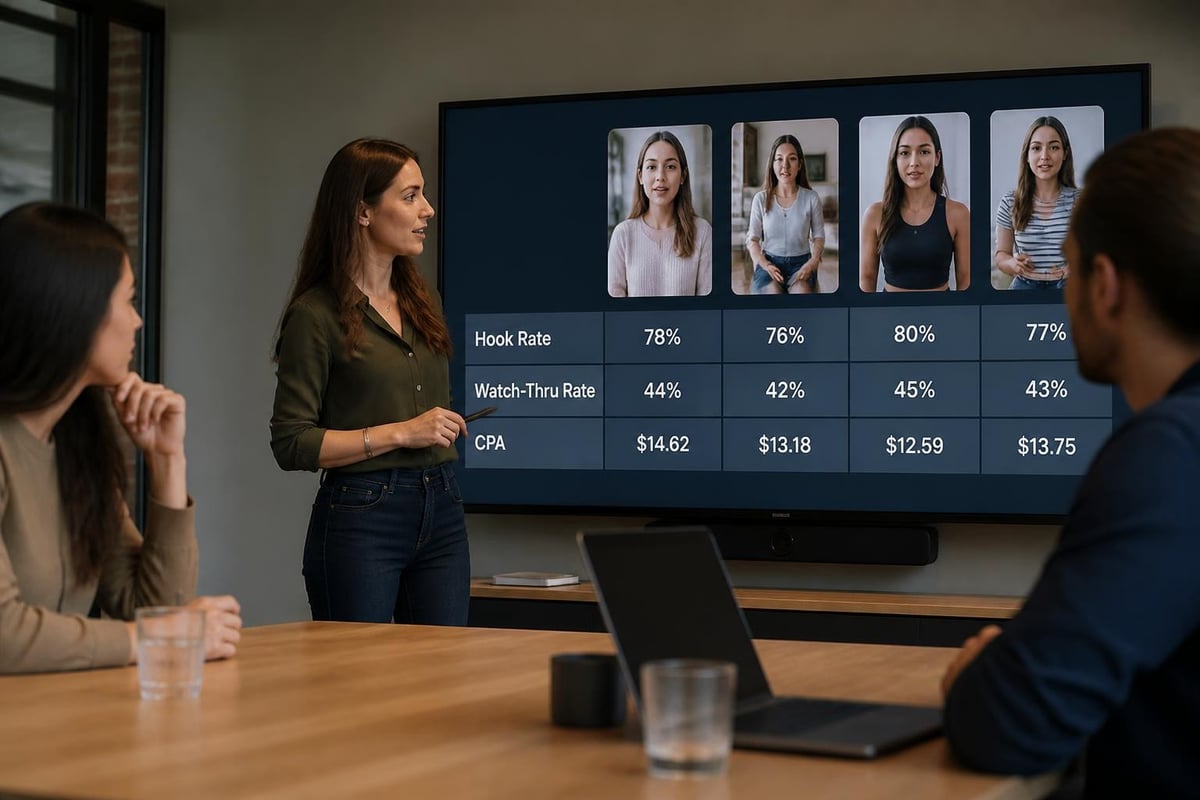
When brands evaluate whether AI creates video content that drives results, they track several specific metrics:
- Hook rate in the first 3 seconds (percentage of viewers who keep watching)
- Watch-through rate for the full video duration
- Click-through rate on calls-to-action
- Cost per acquisition compared to traditionally produced ads
- Creative fatigue curve (how quickly performance degrades over time)
Early adopters of AI video generation for ads report that while individual AI-generated videos may not always outperform the single best traditional ad, the ability to generate and test dozens of variations quickly leads to discovering winning combinations that would never emerge in traditional production timelines.
Customization and Brand Consistency at Scale
One of the most significant advantages when AI creates video for commercial use is the ability to maintain brand consistency across unlimited variations. Traditional production struggles with this-different shoots, different crews, and different creators naturally produce content that varies in style, tone, and visual treatment.
AI video platforms solve this through learned brand parameters. Once a system understands a brand's visual identity, voice, and creative guidelines, it can apply those constraints to every generated video. This means a brand can produce 100 different ad concepts that all feel unmistakably on-brand, something nearly impossible to achieve through traditional creator coordination.
The Role of Creative Direction in AI Video
Despite automation, successful AI video generation still requires strong creative strategy. The AI executes on direction-it doesn't replace strategic thinking about audience, messaging, and positioning. The most effective workflows combine human creative direction with AI execution capabilities.
Platforms that generate AI-powered UGC ads and video creative typically include market research capabilities that identify trending formats, successful hooks in specific verticals, and audience preferences. This research informs the creative briefs that guide video generation, creating a feedback loop where performance data shapes future creative output. Tools like VidBud integrate this research-to-production workflow, allowing marketers to move from insight to finished ad without switching platforms.

Ethical Considerations and Transparency
As AI creates video content that becomes increasingly realistic and difficult to distinguish from human-created material, important ethical questions arise. The same technology that enables efficient ad production also enables the creation of misleading or manipulative content.
Recent surveys on deepfake media generation document how quickly the technology has advanced and the growing challenge of detection. While marketing applications focus on creating original content rather than impersonating real people, the boundary between creative innovation and potential misuse requires ongoing attention.
Disclosure and Authenticity Standards
Leading platforms and brands have begun implementing disclosure standards for AI-generated content. These practices include:
- Clear labeling when videos are AI-generated rather than filmed
- Watermarking systems that embed generation metadata
- Transparency about AI use in advertiser-audience relationships
- Compliance with platform policies on synthetic media
- Adherence to ethical frameworks like the UNESCO Recommendation on AI Ethics
For UGC-style ads specifically, the question becomes: does the authentic aesthetic of AI-generated content mislead viewers about its origins? Industry consensus is moving toward disclosure when content could reasonably be mistaken for human-created footage, even when no specific person is being impersonated.
Copyright and Ownership in AI-Generated Video
The legal landscape around AI-generated content continues to evolve, with significant implications for brands and marketers using these tools. The fundamental question: who owns the copyright to a video when AI creates video from a text prompt?
Current U.S. Copyright Office guidance establishes that AI-generated content lacks human authorship and therefore cannot be copyrighted in its raw form. However, when humans contribute creative selection, arrangement, or modifications to AI-generated video, those human contributions may receive copyright protection.
For advertising purposes, this creates interesting dynamics. Brands using AI video generation platforms typically receive commercial usage rights through their platform agreements, even if the underlying generated content isn't copyrightable. The practical implications:
- Competitors can legally recreate similar AI-generated content if they use the same prompts
- The creative brief and editing choices represent the protectable creative work
- Platform terms of service determine usage rights more than copyright law
- Brand distinctiveness comes from consistent creative direction rather than copyright protection
This reality actually reinforces the importance of strong creative strategy when working with AI video tools-your competitive advantage lies in the creative thinking behind the prompts, not legal protection of the output.
Integration with Modern Marketing Workflows
When AI creates video for advertising campaigns, it doesn't exist in isolation. Modern marketing requires integration across multiple platforms, tools, and processes. The most valuable AI video generation systems connect seamlessly with existing workflows.
Performance marketers typically work within ecosystems that include:
| Workflow Stage | Connected Tools | AI Video Integration |
|---|---|---|
| Strategy & Research | Audience analytics, competitor monitoring | Market research feeds creative briefs |
| Creative Development | Design tools, asset libraries | Brand guidelines constrain generation |
| Production | Video editing, asset management | Direct export to required formats |
| Distribution | Ad platforms, social media management | Platform-specific optimizations |
| Performance Tracking | Analytics, attribution systems | Creative variations tagged for testing |
The platforms that support AI video generation have evolved to handle this full workflow, from initial concept through performance analysis. This integration matters because isolated tools create friction-every export, upload, and reformatting step slows the process and introduces error potential.
The Future of AI Video Generation for Brands
The trajectory of AI video technology points toward several clear developments over the next 18-24 months. Models will continue improving in temporal consistency, allowing longer-form content without artifacts. Resolution and detail will increase, pushing toward 4K outputs that match professional production quality.
More significantly, AI video generation will become more controllable and precise. Current systems excel at broad creative direction but struggle with specific details. Future iterations will allow frame-by-frame control, precise object manipulation, and reliable reproduction of exact brand elements.
Emerging Capabilities and Applications
The next generation of tools for situations when AI creates video will likely include:
- Real-time generation for interactive and personalized video ads
- Voice cloning integration for consistent narrator voices across campaigns
- Multi-language variants generated simultaneously with lip-sync matching
- Dynamic product insertion where objects in videos update automatically
- Performance-optimized generation where models learn from conversion data
For marketers focused on creating video with AI, these advances will further compress the timeline from concept to campaign while expanding creative possibilities.
Quality Control and Human Oversight
Despite automation advances, human judgment remains essential in the AI video creation process. When AI creates video content, the output requires review, refinement, and strategic context that machines cannot provide.
Successful brands using AI video generation maintain quality control processes that include:
- Creative brief review to ensure strategic alignment before generation
- Output screening for brand safety, message accuracy, and quality standards
- A/B test design to validate AI-generated content against benchmarks
- Performance monitoring to identify when creative refreshes are needed
- Feedback loops where human editors improve AI outputs and retrain models
This human-AI collaboration creates a multiplier effect. AI handles the repetitive, time-consuming execution work while humans focus on strategy, judgment, and creative direction. The result is dramatically increased output without sacrificing quality or brand integrity.
The most effective implementations treat AI as a tool that amplifies human creativity rather than replaces it. Creative directors can explore ten times more concepts when AI handles execution. Media buyers can test dozens of variations to find optimal combinations. Brand teams can maintain consistent messaging across unprecedented volumes of content.
Technical Challenges and Limitations
While AI video generation has made remarkable progress, current systems still face meaningful limitations. Understanding these constraints helps brands set realistic expectations and work within the technology's capabilities.
Temporal coherence remains challenging, especially in longer videos. Objects may shift slightly between frames, creating subtle but noticeable inconsistencies. Fine detail control struggles with precision-asking for specific hand positions, facial expressions, or object interactions may not produce reliable results. Novel concepts that combine elements in ways rarely seen in training data can produce unexpected or incorrect outputs.
Physical plausibility presents another challenge. When AI creates video of objects moving or interacting, it sometimes generates physically impossible motions or violations of basic physics that immediately signal artificial generation to attentive viewers.
These limitations are actively being addressed through ongoing research and increasingly sophisticated models, but they currently influence how brands should deploy AI video generation. The technology excels at specific use cases-UGC-style ads, simple product showcases, testimonial-format content-while still struggling with complex narratives, intricate movements, or highly specific visual requirements.
AI video generation has evolved from experimental technology to practical tool for brands and marketers who need scroll-stopping ad creative at scale. The ability to move from creative brief to finished video in minutes rather than weeks fundamentally changes what's possible in performance marketing. VidBud brings this capability together with market research and creative direction in a unified platform, enabling creators, brands, and marketers to generate on-brand UGC ads ready for TikTok, Meta, and beyond-transforming how teams approach creative production for social advertising.