
September 9, 2026
Creating Video with AI: A Complete 2026 Guide
Learn how creating video with AI transforms ad production. Discover tools, workflows, and best practices for AI-generated video content.

The landscape of video production has undergone a fundamental transformation. Creating video with AI is no longer a futuristic concept-it's a practical reality reshaping how brands, marketers, and creators produce content at scale. Traditional video production demands significant time, budget, and coordination across multiple teams. AI-powered video generation eliminates these barriers, enabling anyone to produce professional-quality video content from simple text prompts or briefs. This shift is particularly impactful for performance marketers and direct-to-consumer brands who need fresh ad creative constantly to maintain engagement across platforms like TikTok and Meta.
Understanding AI Video Generation Technology
Creating video with AI leverages multiple machine learning technologies working in concert. At the foundation, diffusion models and transformer architectures combine to generate coherent video sequences from text descriptions or other inputs.
The technology stack includes several key components:
- Text-to-video models that interpret natural language prompts
- Motion synthesis engines that create realistic movement and transitions
- Style transfer systems that maintain visual consistency across frames
- Audio generation tools that add voiceovers, music, and sound effects
Research has advanced rapidly in this field. The CVPR 2024 paper on GenTron demonstrates how diffusion transformers achieve high-quality video generation by treating video as sequences of spatiotemporal data. These architectural innovations enable AI systems to understand not just static visual elements but the temporal relationships that make video feel natural and engaging.
The Architecture Behind Video AI
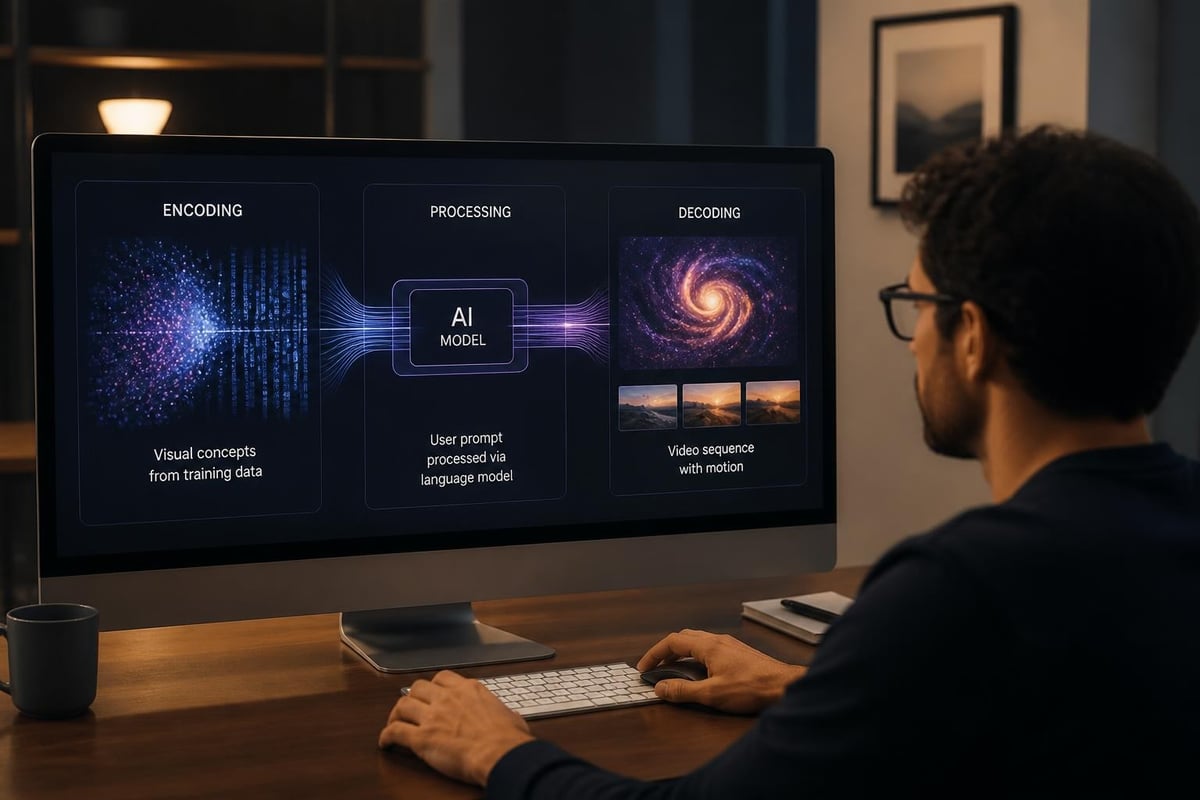
Modern video generation systems process information hierarchically. First-stage models encode visual concepts from training data, learning patterns in motion, composition, and style. Second-stage models decode these learned representations into new video sequences based on user inputs.
Academic research provides important context for understanding these capabilities. A comprehensive survey on generative AI for video published in 2024 maps the connections between large language models, video generation methods, and practical applications, highlighting how natural language understanding enhances creative control over generated content.
Practical Applications for Marketers and Creators
The real value of creating video with AI emerges in practical applications. Performance marketers face constant pressure to test new creative variations, adapt messaging for different audience segments, and refresh campaigns before ad fatigue sets in.
User-Generated Content at Scale
UGC-style advertising consistently outperforms polished studio content on social platforms. Authentic-looking videos drive higher engagement and conversion rates. However, coordinating with multiple creators, managing revisions, and maintaining brand consistency creates bottlenecks.
AI video generation solves this by enabling teams to:
- Generate multiple creative variations from a single brief
- Test different hooks and messaging angles without reshooting
- Maintain consistent brand voice across all outputs
- Adapt content for platform-specific requirements automatically
For brands running campaigns across VidBud, this means transforming a creative brief into dozens of scroll-stopping ads ready for immediate deployment. The platform combines market research, creative direction, and video generation in one workflow, eliminating the traditional production pipeline entirely.

E-commerce and Product Marketing
Product demonstrations and feature highlights benefit enormously from AI video creation. Instead of scheduling photoshoots for every SKU or seasonal promotion, marketing teams can generate product videos on demand.
| Traditional Production | AI Video Generation |
|---|---|
| 2-4 weeks timeline | Hours or minutes |
| $5,000-$50,000 per video | Fraction of traditional cost |
| Fixed deliverables | Unlimited variations |
| Coordination across vendors | Single platform workflow |
The speed advantage enables rapid response to market conditions, competitor moves, or trending topics that demand immediate creative execution.
The Creative Workflow for AI Video
Creating video with AI requires a different approach than traditional production, but the creative process remains fundamentally the same: concept, execution, refinement.
Brief Development and Prompt Engineering
The quality of AI-generated video depends heavily on input quality. Effective briefs include:
- Target audience description with demographic and psychographic details
- Key message and value proposition clearly articulated
- Desired tone and style with reference examples
- Platform specifications including aspect ratio and duration
- Brand guidelines covering visual identity and voice
Prompt engineering-the practice of crafting inputs that produce desired outputs-has become a core skill. Unlike simple text prompts, video generation benefits from structured briefs that specify scene composition, pacing, transitions, and emotional arc.
Iteration and Refinement
AI video generation excels at rapid iteration. Instead of requesting reshoots or edits through a production vendor, creators can adjust parameters and regenerate content in minutes.
This iterative workflow typically follows this pattern:
- Generate initial batch of variations (4-8 versions)
- Review outputs against creative objectives
- Identify successful elements (hooks, visuals, pacing)
- Refine brief to emphasize winning elements
- Generate next batch incorporating learnings
- Repeat until achieving desired results
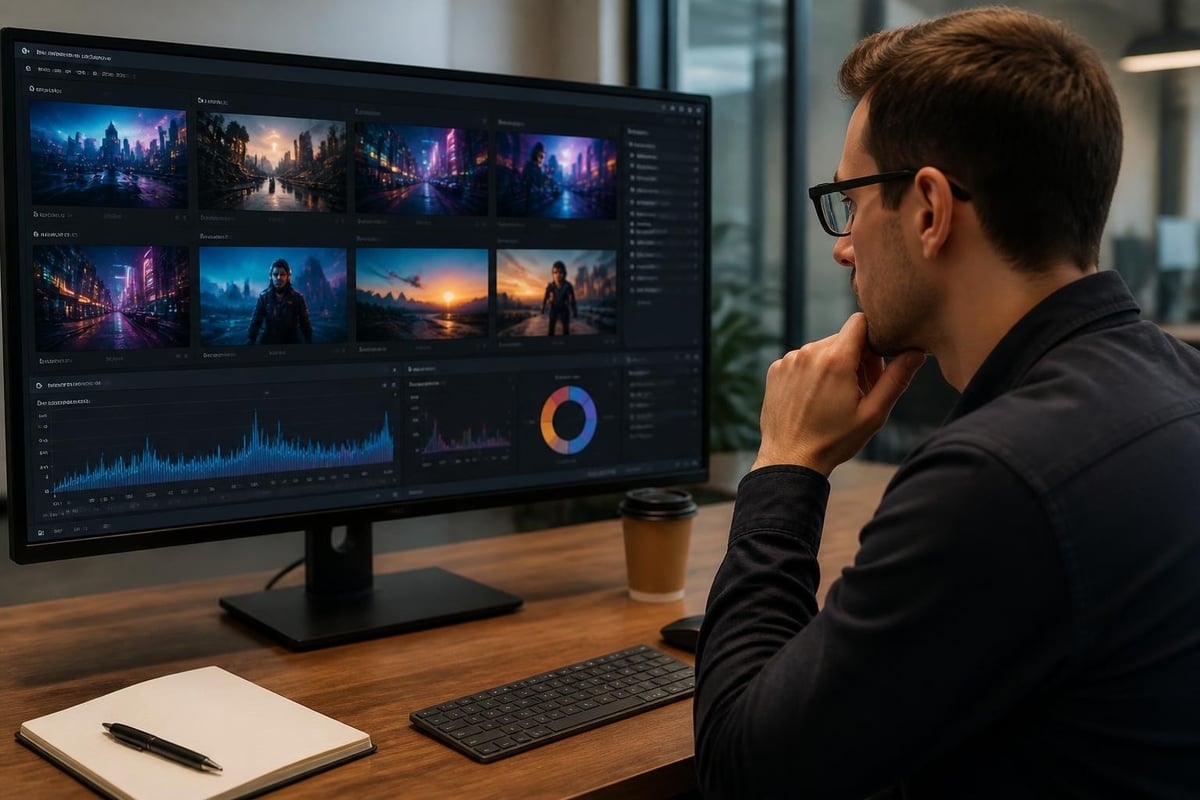
The speed of this cycle enables testing creative hypotheses that would be cost-prohibitive with traditional production. Want to test whether product close-ups or lifestyle contexts perform better? Generate both and let data decide.
Technical Considerations and Implementation
For teams implementing AI video generation, several technical factors influence success. Understanding these considerations helps set realistic expectations and optimize workflows.
Model Selection and Capabilities
Different AI video models offer varying capabilities. Some excel at photorealistic output, others at stylized animation. Some handle human figures well, others focus on products or abstract concepts.
The OpenAI Video Create API provides programmatic access to Sora models, enabling developers to integrate video generation into existing marketing tools and workflows. This API-first approach allows for automation at scale, triggering video generation based on campaign needs, inventory changes, or performance data.
Key technical parameters include:
- Resolution and aspect ratio options
- Maximum video duration
- Processing time per generation
- Batch generation limits
- Format and codec support
Integration with Marketing Technology
Creating video with AI delivers maximum value when integrated with existing marketing technology stacks. Connections between video generation platforms, ad managers, and analytics tools create closed-loop workflows.
Modern implementations often include:
- Automated brief creation from product feeds or campaign parameters
- Direct publishing to Meta Ads Manager or TikTok Ads Platform
- Performance tracking linked back to creative variations
- A/B testing frameworks that automatically generate and test variations
For teams using VidBud's platform, these integrations enable true end-to-end automation from creative concept to campaign deployment.
Quality Control and Brand Safety
As with any automation, quality control becomes critical when creating video with AI at scale. Organizations need frameworks to ensure generated content meets brand standards and avoids problematic outputs.
Brand Consistency Frameworks
Successful teams implement multi-layer quality controls:
| Control Layer | Function | Implementation |
|---|---|---|
| Template constraints | Limit style and format variations | Pre-approved visual themes |
| Content filters | Screen for inappropriate elements | Automated content moderation |
| Human review | Final quality gate | Approval workflows |
| Performance monitoring | Catch issues in market | Real-time analytics |
These frameworks balance automation efficiency with brand protection, ensuring that speed doesn't compromise quality or consistency.
Accessibility and Inclusion
Generated video content must meet accessibility standards to reach all audiences. The W3C Accessibility Guidelines provide comprehensive guidance for making audiovisual content accessible, including requirements for captions, audio descriptions, and visual clarity.
AI video generation presents unique opportunities for accessibility:
- Automated caption generation from scripts
- Multiple audio tracks in different languages
- Alternative versions optimized for different accessibility needs
- Consistent formatting that aids assistive technologies
Ethical Considerations and Disclosure
The capability to create realistic video content using AI raises important ethical questions. Organizations must navigate these responsibly to maintain trust and comply with emerging regulations.
Transparency and Disclosure
The Partnership on AI's framework for responsible synthetic media practices emphasizes disclosure as a core principle. When content is AI-generated, audiences have a right to know.
Best practices for disclosure include:
- Clear labeling on AI-generated advertising content
- Transparent communication in brand guidelines
- Documentation of AI use in production processes
- Compliance with platform-specific disclosure requirements
Data Privacy and Training Data
Creating video with AI relies on models trained on large datasets. Understanding data provenance and privacy implications matters, particularly when generating content featuring people or using customer data.
The United Nations University recommendations on synthetic data use provide valuable guidance for organizations navigating these considerations, particularly around bias mitigation and privacy protection in model training.
Regulatory Landscape and Compliance
As AI video generation becomes mainstream, regulatory frameworks are evolving to address associated risks. The EUHYBNET standardisation report outlines emerging requirements addressing deepfakes and synthetic media across European and international contexts.
Organizations creating video with AI should monitor:
- Platform policies on AI-generated content
- Advertising standards and disclosure requirements
- Data protection regulations affecting training data
- Intellectual property considerations for generated content
Staying ahead of regulatory requirements protects brands from compliance risks while demonstrating responsible AI use. The VidBud compliance page provides resources for understanding these evolving standards in the context of AI advertising.
Performance Optimization Strategies
Generating video is only valuable if that content performs. Optimizing AI-generated video for engagement and conversion requires understanding platform algorithms and audience preferences.
Platform-Specific Optimization
Different platforms reward different content characteristics:
TikTok:
- Hook within first 0.5 seconds
- Vertical format (9:16)
- Native, unpolished aesthetic
- Trend-aware content
Meta (Facebook and Instagram):
- Strong opening frame for feed stop
- Multiple aspect ratio versions
- Clear value proposition early
- Thumb-stopping visual contrast
YouTube:
- Longer-form content support
- Thumbnail and title synergy
- Retention-focused pacing
- SEO-optimized metadata
Creating video with AI for each platform means tailoring generation parameters to match these requirements, producing platform-native content rather than one-size-fits-all videos.
A/B Testing at Scale
The economics of AI video generation enable testing volumes impossible with traditional production. Instead of testing two or three variations, teams can test dozens simultaneously.
Effective testing frameworks for AI-generated video include:
- Isolate single variables per test (hook, product focus, messaging angle)
- Generate sufficient variations to reach statistical significance
- Use platform native testing tools for accurate measurement
- Document learnings to inform future generation parameters
- Automate winning variations into regular rotation
This data-driven approach transforms creative from art to science, continuously improving performance through systematic experimentation.
Team Structure and Skills Development
Successfully implementing AI video generation requires evolving team roles and developing new competencies. Traditional video production skills remain valuable but need augmentation with AI-specific capabilities.
Emerging Role: AI Creative Director
The AI creative director role combines traditional creative judgment with technical understanding of AI systems. Responsibilities include:
- Translating creative vision into effective prompts and briefs
- Understanding model capabilities and limitations
- Managing iteration workflows for optimal results
- Maintaining quality control across generated content
- Staying current with evolving AI capabilities
This role bridges creative and technical teams, ensuring AI tools serve creative objectives rather than constraining them.
Training and Capability Building
Organizations investing in AI video creation should prioritize capability building across teams. Effective training programs cover:
- Prompt engineering fundamentals specific to video generation
- Platform-specific optimization techniques
- Quality control frameworks and brand consistency
- Ethical considerations and disclosure requirements
- Integration with existing marketing workflows
The VidBud blog offers ongoing resources for teams developing these capabilities, sharing best practices and emerging techniques as the technology evolves.
Measuring ROI and Business Impact
Justifying investment in AI video creation requires demonstrating clear business impact. Measurement frameworks should capture both efficiency gains and performance improvements.
Efficiency Metrics
Traditional ROI calculations for video production focus on cost and time savings:
| Metric | Traditional | AI-Generated | Improvement |
|---|---|---|---|
| Cost per video | $3,000-$15,000 | $50-$500 | 85-95% reduction |
| Production timeline | 2-6 weeks | Hours to days | 90%+ faster |
| Variations produced | 2-5 | 20-100+ | 10-20x increase |
| Revision cycles | 1-3 | Unlimited | Continuous improvement |
These efficiency gains compound over time, enabling marketing teams to operate at velocities impossible with traditional production.
Performance Metrics
Beyond efficiency, AI-generated video should drive better campaign performance. Key indicators include:
- Click-through rate (CTR) comparing AI-generated versus traditional creative
- Cost per acquisition (CPA) for campaigns using AI video
- Creative fatigue rates measuring how quickly performance degrades
- Test velocity tracking how many creative hypotheses can be validated
Organizations succeeding with AI video generation typically see performance improvements alongside efficiency gains, as the ability to test more variations surfaces winning creative concepts faster.
Creating video with AI represents a fundamental shift in how marketing teams produce and deploy video content. The combination of speed, scale, and creative flexibility enables new approaches to campaign development, testing, and optimization that simply weren't feasible with traditional production methods. For creators, brands, and marketers looking to harness these capabilities, VidBud provides a comprehensive platform that transforms creative briefs into scroll-stopping UGC ads ready for immediate deployment across TikTok, Meta, and beyond-combining AI-powered market research, creative direction, and video generation in one seamless workflow.