
September 13, 2026
AI Create Videos: The Complete 2026 Guide
Learn how AI create videos tools transform content production. Explore platforms, workflows, and best practices for brands and creators in 2026.
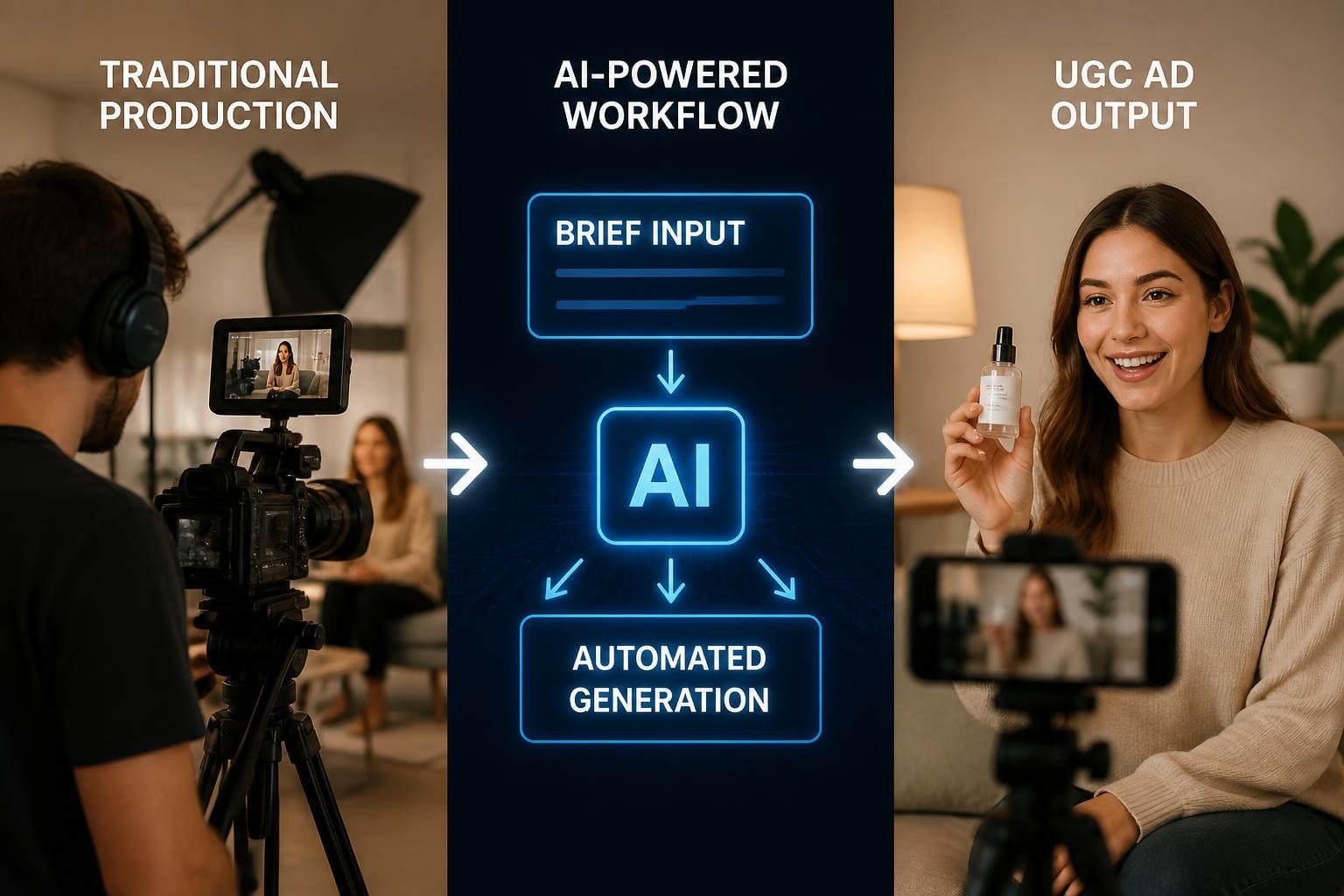
The landscape of video production has fundamentally shifted in 2026. Where brands once needed film crews, actors, and weeks of post-production time, AI create videos platforms now deliver professional content in minutes. This transformation has democratized video advertising, enabling creators and marketers to produce scroll-stopping UGC ads at a scale previously impossible. Whether you're a performance marketer managing campaigns across TikTok and Meta or a brand looking to test creative variations rapidly, understanding how AI-powered video generation works has become essential for competitive advantage.
Understanding How AI Create Videos Technology Works
The foundation of modern video generation relies on sophisticated deep learning models trained on millions of video clips. These systems analyze patterns in motion, composition, lighting, and narrative structure to synthesize new content that appears remarkably human-created.
The Core Architecture Behind Video Generation
At the heart of video synthesis platforms are transformer-based models similar to those used in text generation, but adapted for temporal and visual data. Research from Google Brain on variable-length video generation demonstrates how these models can maintain coherence across hundreds of frames while responding to open-domain textual descriptions.
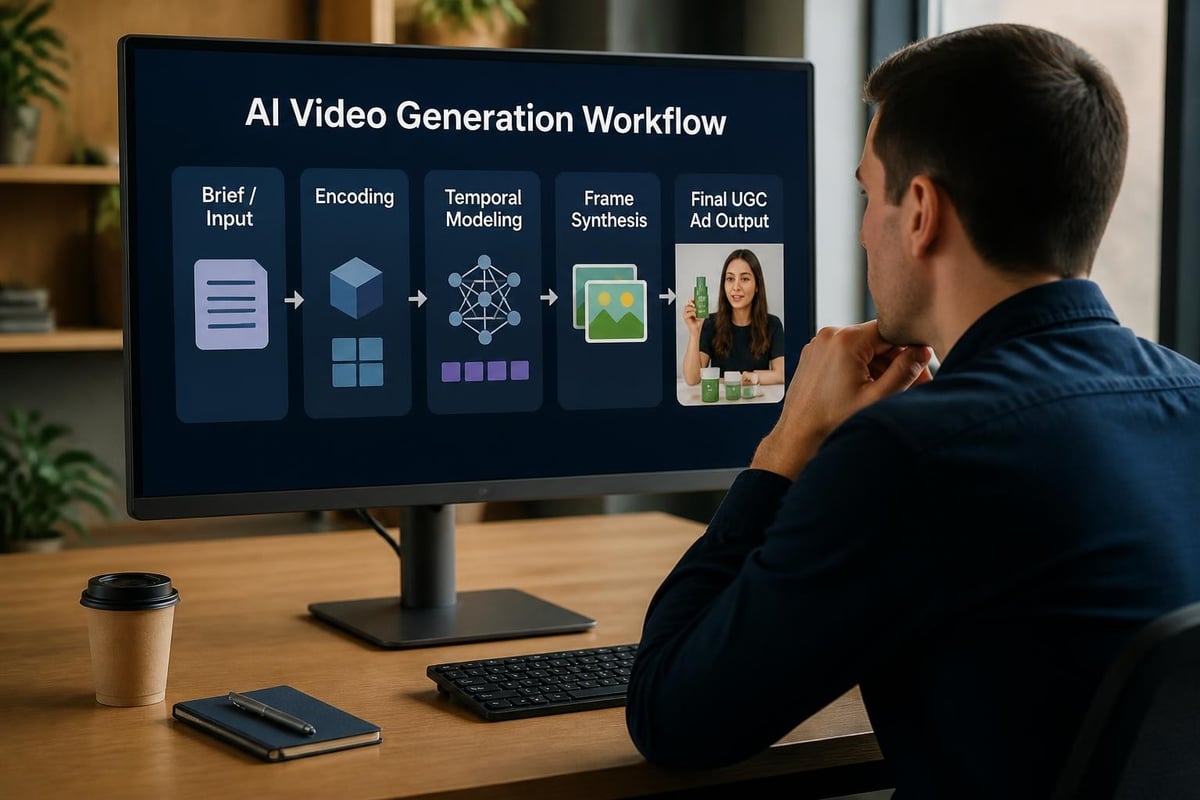
The process involves several computational stages:
- Encoding: Converting text prompts or brand briefs into latent representations
- Temporal modeling: Predicting frame sequences that maintain visual consistency
- Rendering: Generating pixel-level detail with appropriate resolution
- Post-processing: Applying style transfer, color grading, and brand elements
Modern platforms have compressed these stages into streamlined pipelines. What once required specialized ML expertise now happens through intuitive interfaces where marketers input creative briefs and receive finished ads.
From Research Labs to Marketing Teams
The journey from academic research to practical marketing tools accelerated dramatically in recent years. Meta's early work on text-to-video systems laid groundwork that commercial platforms have refined for specific use cases. Rather than general-purpose video creation, specialized tools now focus on formats that drive business results-particularly UGC ads optimized for social platforms.
This specialization matters because different video types require distinct approaches. A product demo demands different compositional rules than a testimonial-style UGC ad. The most effective platforms incorporate understanding of what makes content perform on specific channels.
Key Capabilities When AI Create Videos for Marketing
Not all AI video platforms serve the same purpose. Understanding capabilities helps marketers choose tools aligned with their objectives and avoid mismatched expectations.
Content Types and Format Support
| Format Type | Best Use Cases | Production Speed | Customization Level |
|---|---|---|---|
| UGC-style ads | Social media campaigns, testimonials | Minutes | High |
| Product demos | E-commerce, landing pages | Hours | Medium |
| Explainer videos | Onboarding, education | Hours | Medium |
| Brand videos | Awareness campaigns | Days | Very High |
The distinction between these categories affects both workflow and output quality. Platforms specializing in UGC ad creative optimize for authenticity and platform-specific performance metrics rather than cinematic polish.
Voice, Avatar, and Character Options
Modern AI create videos platforms offer multiple approaches to on-screen presence:
- Synthetic avatars trained on diverse demographics
- Voice cloning that maintains brand consistency across campaigns
- Text-to-speech with natural prosody and emotional range
- Asset libraries featuring licensed stock footage and elements
The choice between these options depends on brand guidelines and campaign objectives. DTC brands often prefer authentic-feeling UGC styles, while B2B companies may prioritize professional avatar presentations.
Building Effective AI Video Workflows
Successfully integrating AI into video production requires thoughtful process design. The goal isn't replacing human creativity but amplifying it through intelligent automation.
The Modern Video Production Pipeline
- Brief development: Define objectives, audience, key messages, and brand requirements
- Market research integration: Analyze competitor creative and platform trends
- Script and concept generation: Use AI assistance for initial creative direction
- Video synthesis: Generate multiple variations based on approved concepts
- Review and iteration: Refine outputs based on brand standards
- Performance testing: Deploy variations to measure engagement and conversion
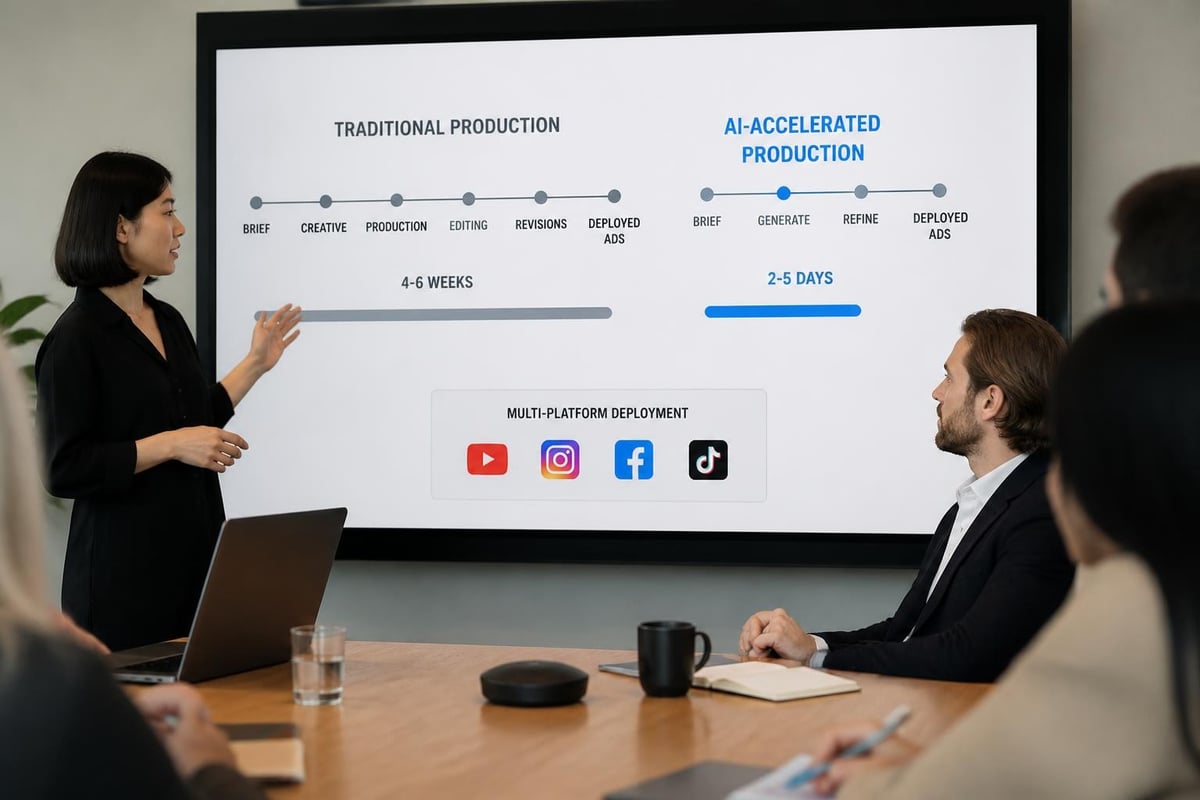
This workflow differs significantly from traditional production. The bottleneck shifts from creation capacity to creative strategy and testing discipline. Teams can generate dozens of variations, making systematic creative testing feasible at scale.
Integrating Market Research with Creative Production
One of the most powerful yet underutilized capabilities involves connecting competitive intelligence directly to creative generation. Pairing ad research with production creates a feedback loop where insights about what's working in your vertical immediately inform new creative tests.
When AI create videos platforms incorporate this research layer, they can suggest hooks, formats, and messaging angles based on actual performance data rather than generic templates. This data-driven approach to creative significantly improves hit rates on new campaigns.
For brands scaling UGC content specifically, platforms like VidBud combine AI-powered market research with creative direction and unlimited video generation, streamlining the entire process from brief to finished ad ready for TikTok and Meta deployment.

Quality Considerations and Brand Consistency
As AI create videos tools become more accessible, maintaining output quality and brand alignment becomes critical. The ease of generation can lead to volume without strategy if guardrails aren't established.
Establishing Quality Standards
Visual consistency across AI-generated content requires clear brand guidelines translated into generation parameters. This includes color palettes, composition preferences, pacing rules, and aesthetic boundaries.
Audio quality often reveals synthetic origins more readily than visual elements. Investing in high-quality voice assets or training custom voice models pays dividends in perceived authenticity.
Message alignment demands review processes that catch off-brand messaging before content reaches audiences. While AI can generate on-topic content, nuance and tone require human oversight.
The Authenticity Question in UGC-Style Content
UGC ads derive power from appearing organic and peer-created rather than brand-produced. When AI create videos in this style, the challenge is maintaining that authentic feel while achieving brand objectives.
Key factors that preserve authenticity:
- Natural speech patterns with appropriate hesitations and informal language
- Realistic environments and lighting rather than studio-perfect setups
- Genuine emotional expression that matches the message
- Platform-native composition and editing styles
The most sophisticated platforms train specifically on high-performing UGC content to internalize these patterns. A comprehensive survey of video generation techniques explores how different model architectures affect output characteristics, including the naturalness that UGC formats require.
Watermarking, Detection, and Transparency
As synthetic video becomes indistinguishable from filmed content, questions of provenance and transparency become more pressing. Both technical and ethical considerations matter for brands using AI-generated content.
Current Watermarking Approaches
Multiple organizations have developed methods to mark AI-generated video:
Google's SynthID system embeds imperceptible signals directly into generated frames, creating a detectable signature without degrading quality. Meta's Video Seal research takes a similar approach with focus on robustness against compression and editing.
These techniques address several concerns:
- Platform compliance with emerging disclosure requirements
- Brand protection against unauthorized modifications
- Audience trust through transparent sourcing
As regulatory frameworks evolve, deep learning-based watermarking techniques will likely become standard features rather than optional add-ons.
Disclosure Best Practices
Beyond technical watermarks, brands must decide how transparently to present AI-generated content. Approaches range from prominent disclaimers to no disclosure when content appears indistinguishable from traditional production.
Current best practices suggest:
- Disclosure when AI generates people or testimonials
- Transparency when regulatory requirements apply (financial services, healthcare)
- Context-appropriate honesty that maintains audience trust
- Clear internal documentation regardless of public disclosure
Platform Selection Criteria for Different Use Cases
Choosing the right AI video platform depends on specific business needs rather than feature checklists. Different tools optimize for different outcomes.
Decision Framework
| Priority | Best Platform Type | Key Features |
|---|---|---|
| UGC ad volume | Specialized UGC platforms | Social format templates, hook variations, platform optimization |
| Brand video production | General-purpose generators | High customization, cinematic quality, long-form support |
| Product demonstrations | E-commerce focused tools | Product integration, template libraries, conversion optimization |
| Educational content | Explainer specialists | Screen recording, annotation, chapter support |
For performance marketers running paid social campaigns, specialized platforms that understand how to create advertisement videos for specific platforms deliver better results than general-purpose tools.
Integration and Workflow Compatibility
Beyond generation capabilities, consider how tools fit existing processes:
- API access for programmatic generation at scale
- Team collaboration features for review and approval workflows
- Asset management to organize and version generated content
- Analytics integration connecting creative attributes to performance data
The most valuable platforms become creative infrastructure rather than standalone tools.
Creative Testing at Scale
The efficiency gains when AI create videos unlock new approaches to creative testing previously impractical due to production constraints.
Systematic Variation Testing
Traditional video production made testing costly. Changing a single element-hook, background, call-to-action-meant reshooting or extensive editing. AI generation makes systematic testing economically viable.
Testing dimensions include:
- Hook variations: Different opening messages to capture attention
- Format styles: Testimonial versus demonstration versus narrative
- Duration: Optimal length for different platforms and placements
- Visual treatments: Color grading, composition, pacing variations
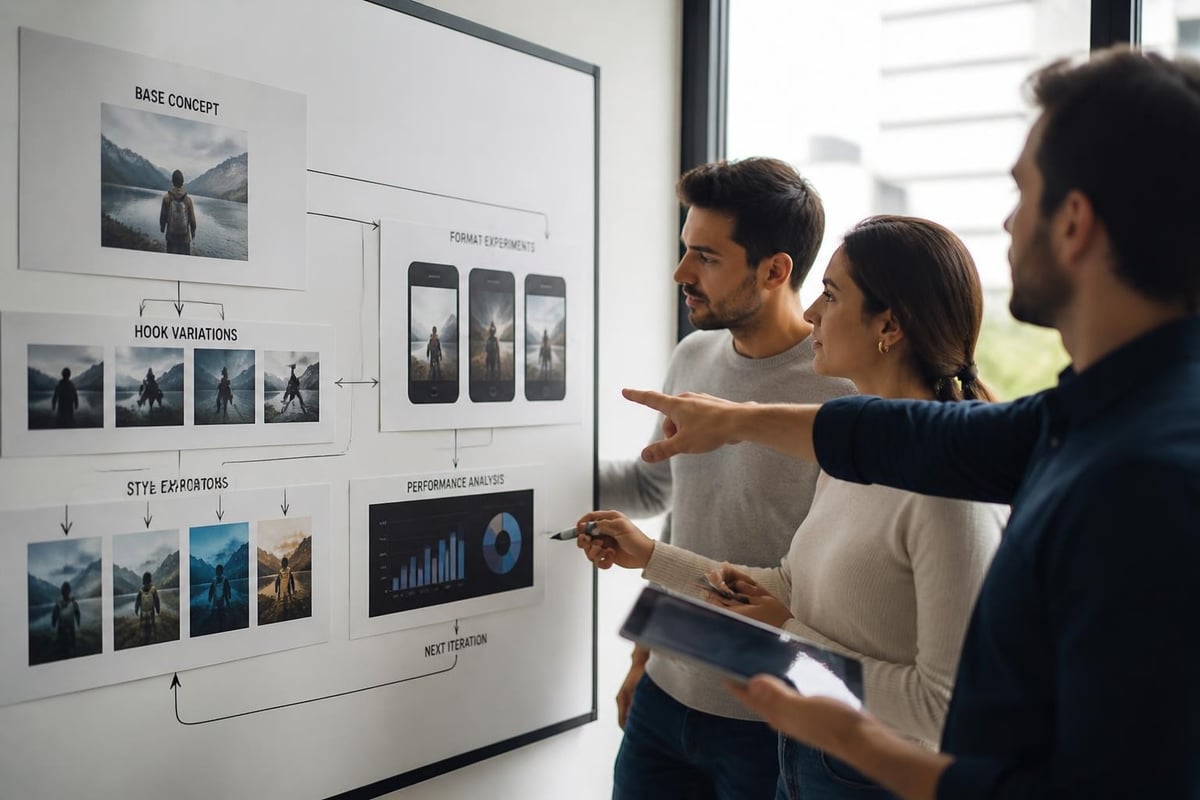
Brands can deploy dozens of variations simultaneously, letting algorithm and audience feedback identify winners rather than relying on creative intuition alone.
Learning Loops and Optimization
The real power emerges when testing creates learning loops. Performance data from current campaigns informs the next generation of creative, which generates new insights, continuously improving output quality and efficiency.
This approach to video AI generation treats creative as a continuous optimization problem rather than discrete production projects. The workflow becomes more analytical while maintaining creative excellence.
Technical Requirements and Production Standards
While AI create videos platforms abstract away much complexity, understanding technical requirements ensures outputs meet platform specifications and quality standards.
Resolution and Format Specifications
Different platforms require specific technical parameters:
- TikTok: 1080x1920 (9:16), H.264 codec, 30-60 fps recommended
- Meta (Feed): 1080x1080 (1:1) or 1080x1350 (4:5), H.264, 30 fps minimum
- Meta (Stories/Reels): 1080x1920 (9:16), H.264, 30 fps minimum
- YouTube Shorts: 1080x1920 (9:16), H.264 or VP9, 24-60 fps
Leading AI platforms automatically output in platform-optimized formats, but verifying technical compliance prevents quality degradation from re-encoding.
File Size and Compression Considerations
While AI generates pristine source files, distribution requires balancing quality with file size. Understanding compression parameters prevents quality loss:
- Use constant quality (CQ) encoding rather than target bitrate when possible
- Maintain bitrates above platform minimums (typically 5-8 Mbps for 1080p)
- Test compressed outputs on target devices before launch
- Archive high-quality masters separate from distribution files
Future Directions in AI Video Generation
The technology continues evolving rapidly. Understanding trajectory helps brands prepare for emerging capabilities and avoid over-investing in transitional solutions.
Emerging Capabilities
Research and commercial development point toward several advances:
Real-time generation will enable live customization based on viewer data, creating personalized video experiences at scale.
Interactive video where viewers influence narrative direction through engagement, blending gaming mechanics with advertising.
Hyper-personalization using customer data to customize not just targeting but creative content itself-products, environments, and messaging adapted to individual viewers.
Multi-modal control allowing marketers to guide generation through combinations of text, reference images, audio tracks, and example videos.
Preparing for Regulatory Evolution
As synthetic media becomes prevalent, regulatory frameworks will mature. Brands should anticipate requirements around disclosure, watermarking, and data usage.
Proactive steps include:
- Documenting all AI-generated content creation processes
- Implementing watermarking even before mandatory
- Establishing clear policies on synthetic people and testimonials
- Maintaining human oversight in creative review processes
Implementation Strategies for Different Organization Types
Successful adoption of AI video tools looks different across organization types. Tailoring implementation to business structure improves results.
For Individual Creators and Small Teams
Start with focused use cases rather than wholesale workflow replacement. Test AI generation for specific campaign types-seasonal promotions, product launches-while maintaining traditional production for core brand content.
Build internal expertise through experimentation. The learning curve is manageable, but discovering what works for your audience requires hands-on testing.
For Agencies and Marketing Teams
Develop AI-assisted production tiers offering clients different speed-to-market and customization trade-offs. Some campaigns benefit from rapid AI generation; others warrant traditional approaches.
Train team members on both creative direction for AI systems and quality assessment of outputs. The role shifts from hands-on editing to strategic guidance and curation.
For Enterprise Brands
Establish governance frameworks before scaling. Define approval processes, brand compliance standards, and performance benchmarks that AI-generated content must meet.
Integrate AI video generation with existing marketing technology stacks. Connections to DAM systems, analytics platforms, and campaign management tools multiply value.
Measuring Success and ROI
Quantifying AI video implementation success requires metrics beyond cost savings. Comprehensive measurement captures both efficiency and effectiveness improvements.
Key Performance Indicators
Production metrics:
- Time from brief to finished asset
- Number of variations tested per campaign
- Cost per finished video compared to traditional production
Performance metrics:
- Engagement rates (view-through, completion, interaction)
- Conversion metrics (CTR, CPA, ROAS)
- Creative fatigue rates over time
Strategic metrics:
- Testing velocity (experiments per month)
- Learning rate (improvement in performance over successive iterations)
- Market responsiveness (time to capitalize on trends)
The most sophisticated measurement connects creative attributes-hooks, formats, visual treatments-directly to business outcomes, creating data assets that inform future creative strategy.
AI-powered video generation has moved from experimental technology to essential marketing infrastructure for brands that compete on creative volume and testing velocity. The ability to produce authentic, platform-optimized UGC ads at scale fundamentally changes what's possible in performance marketing. VidBud helps creators, brands, and marketers harness this transformation with AI-powered market research, creative direction, and unlimited UGC video generation-turning briefs into scroll-stopping ads ready for TikTok, Meta, and beyond.