
September 21, 2026
AI Create Video: How to Scale Ad Creative in 2026
Learn how AI create video tools transform ad production. Discover workflows, platforms, and best practices for scaling UGC video ads efficiently.
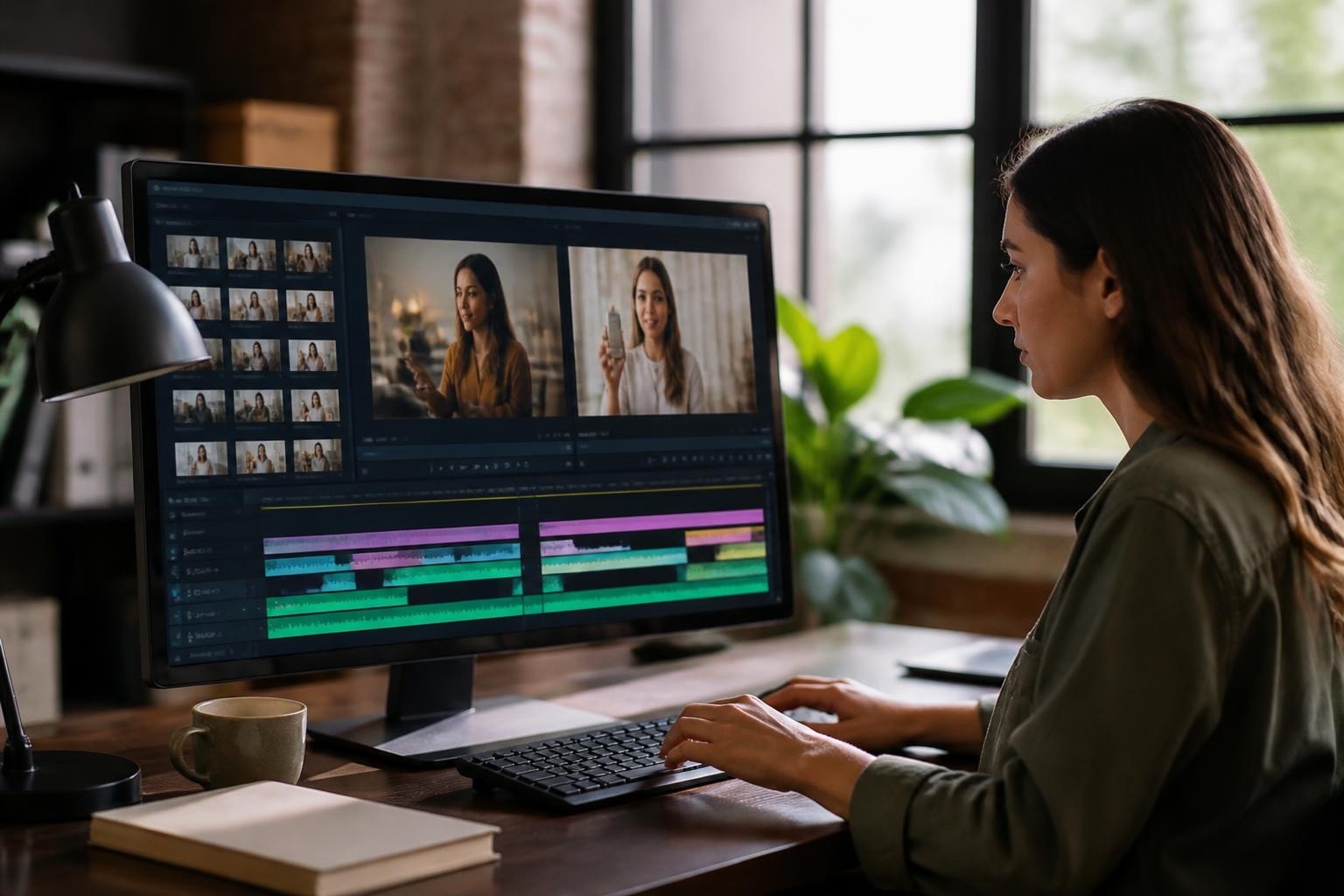
The advertising landscape has fundamentally shifted in 2026. Performance marketers no longer need production crews, casting calls, or weeks of post-production to launch compelling video campaigns. AI create video platforms now empower brands to generate scroll-stopping UGC ads at unprecedented scale, transforming how creative teams approach everything from concept to deployment. This technology doesn't just speed up workflows-it fundamentally reimagines what's possible when you can test dozens of creative variations in the time it once took to produce a single asset.
The Evolution of AI-Powered Video Creation
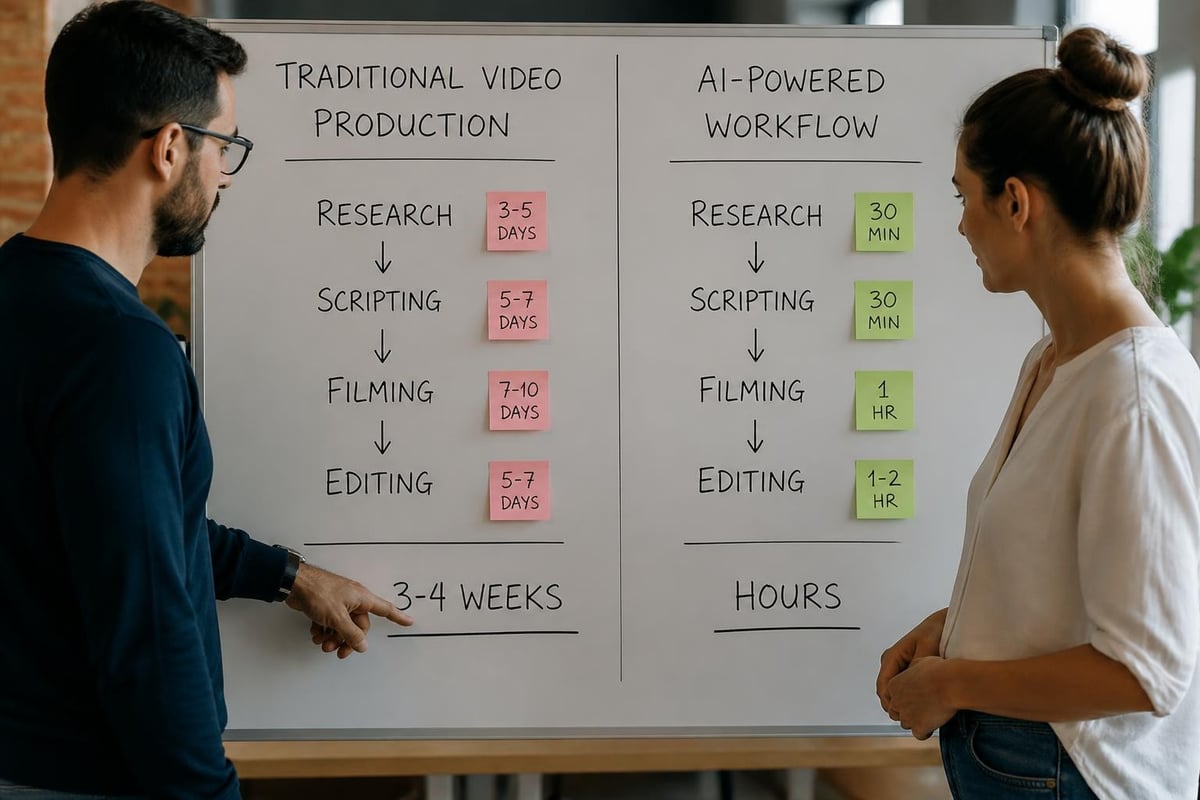
Video advertising has always demanded substantial resources. Traditional production required coordinating talent, equipment, locations, and editing teams. Even basic UGC content meant recruiting creators, managing deliverables, and hoping the final product matched your brief.
AI create video technology has compressed this timeline from weeks to minutes. Modern platforms analyze your creative brief, research market trends, generate strategic direction, and produce video assets that perform across TikTok, Meta, and other paid channels. The shift isn't just about efficiency-it's about enabling a test-and-learn approach that was previously cost-prohibitive.
How Modern AI Video Generation Works
Today's systems combine several sophisticated capabilities:
- Natural language processing to interpret creative briefs and brand guidelines
- Computer vision models to generate or manipulate video frames
- Audio synthesis for voiceovers and background tracks
- Style transfer to maintain brand consistency across assets
- Performance data integration to optimize creative elements based on real campaign results
The underlying architecture typically relies on diffusion models or transformer-based approaches. Recent text-to-video research demonstrates how these models learn temporal consistency, ensuring that generated videos maintain coherent motion and visual continuity across frames. This technical foundation enables brands to specify concepts, tone, and messaging while the AI handles the complex task of rendering engaging video content.

Key Applications for Performance Marketing
AI create video technology delivers the most value when applied to specific marketing challenges. Direct-to-consumer brands face constant pressure to produce fresh creative that cuts through social feeds. Traditional production methods can't keep pace with platform algorithm demands for novelty and variation.
UGC-Style Advertising at Scale
User-generated content consistently outperforms polished brand content on social platforms. Authentic testimonials, product demonstrations, and relatable storytelling drive higher engagement and conversion rates. However, sourcing genuine UGC creators presents challenges:
- Recruitment takes time and often requires intermediary platforms
- Quality control varies wildly between creators
- Brand alignment requires extensive briefing and revision cycles
- Rights management adds legal complexity
- Speed to market suffers when waiting for creator deliverables
AI platforms solve these bottlenecks by generating UGC-style content that mirrors the authentic aesthetic audiences respond to. Instead of coordinating with external creators, marketing teams input their positioning, product benefits, and target messaging. The system generates multiple variations that maintain the spontaneous, relatable quality that makes UGC effective.
Brands using this approach report testing 10x more creative concepts than traditional production allowed. This volume enables granular audience segmentation-different hooks for different demographics, personalized messaging for specific buyer journeys, and rapid iteration based on performance data.
Dynamic Creative Testing and Optimization
The real power of AI create video emerges in testing frameworks. Platform algorithms reward fresh creative, but most brands struggle to produce enough variations to identify what truly resonates.
| Traditional Production | AI-Powered Production |
|---|---|
| 5-10 concepts per month | 50-100+ concepts per week |
| 2-3 week turnaround | Same-day delivery |
| High per-asset cost | Marginal cost near zero |
| Limited iteration cycles | Continuous optimization |
This production velocity transforms creative strategy. Rather than betting on a few carefully crafted concepts, teams can explore the full creative landscape-testing different hooks, value propositions, visual styles, and calls-to-action simultaneously. Understanding what makes a UGC hook work becomes an empirical question answered through data rather than intuition.
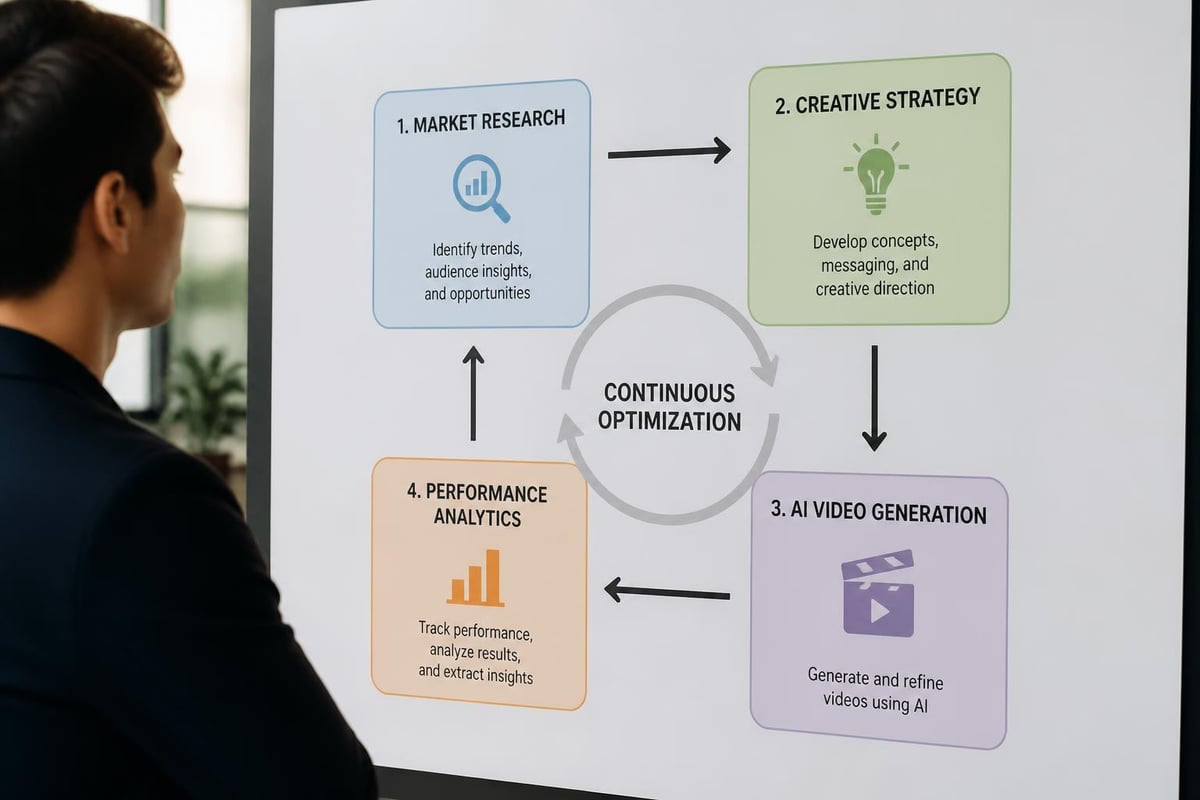
Performance data feeds back into the creative process. When certain messaging angles or visual patterns demonstrate strong engagement, the AI system can emphasize those elements in subsequent generations. This closed-loop optimization means creative quality improves continuously as the platform learns what resonates with your specific audience.
Technical Considerations and Best Practices
Successfully implementing AI video generation requires understanding both capabilities and constraints. These systems excel at certain tasks while struggling with others.
Optimal Use Cases
AI create video platforms deliver best results when your requirements include:
- High volume needs where traditional production is cost-prohibitive
- Rapid testing cycles for identifying winning creative concepts
- Consistent brand aesthetics that can be codified into style guidelines
- Straightforward messaging focused on clear product benefits
- Platform-native formats designed for social feeds rather than broadcast
The technology handles concept-to-completion workflows particularly well when you can articulate clear creative direction. Detailed briefs produce better results than vague instructions. Specify your target audience, key messages, emotional tone, pacing preferences, and any visual elements that must appear.
Current Limitations to Navigate
No technology solves every challenge. Current AI video systems face constraints in:
- Complex narrative arcs requiring sophisticated storytelling
- Precise brand spokesperson representation when specific faces or personalities are essential
- Fine motor control in generated human movements
- Cultural nuance in global campaigns targeting diverse markets
- Legal compliance for regulated industries with strict advertising rules
Understanding these boundaries helps set realistic expectations. Many brands adopt hybrid approaches-using AI for initial concepting and high-volume testing, then investing in traditional production for final hero assets or campaigns requiring specialized expertise.
Navigating Legal and Ethical Considerations
As AI create video technology matures, brands must address intellectual property, disclosure, and authenticity questions. The U.S. Copyright Office continues refining guidance on AI-generated content ownership, while WIPO publications offer international perspectives on these evolving issues.
Intellectual Property Rights
Who owns AI-generated video content? Current legal frameworks distinguish between:
- Training data rights (the content used to teach the model)
- Prompt authorship (the creative direction you provide)
- Output ownership (the resulting video asset)
- Platform licensing (terms governing how you can use generated content)
Most commercial platforms grant users full rights to content created with their systems, but reviewing licensing terms remains essential. Some tools restrict usage in certain industries or require attribution. Others prohibit using AI-generated content for specific purposes like creating misleading political advertising.
The safest approach involves documenting your creative input, maintaining records of prompts and iterations, and ensuring your platform's terms align with your intended use cases. When using AI-generated content in regulated industries-pharmaceuticals, financial services, alcohol-additional legal review is prudent.
Transparency and Disclosure
Should you disclose when advertising features AI-generated content? Platform policies vary, but transparency builds trust. Some jurisdictions are implementing mandatory disclosure requirements for synthetic media in certain contexts.
Best practices include:
- Label AI-generated testimonials or product demonstrations clearly
- Avoid implying real people appear in AI-created content
- Follow platform-specific requirements for Meta, TikTok, and other channels
- Disclose material facts that would influence consumer decisions
- Maintain authentic brand voice even when using AI tools
The NIST technical approaches to synthetic content offer frameworks for watermarking, provenance tracking, and detection methods that help maintain content integrity. As detection technology improves, attempting to pass AI-generated content as traditionally produced becomes both easier to identify and riskier from a brand reputation standpoint.
Integration With Existing Marketing Workflows
AI create video tools deliver maximum value when properly integrated into broader marketing operations. Standalone experimentation produces limited results compared to systematic implementation across the creative development cycle.
Building AI-Native Creative Processes
Forward-thinking teams are restructuring workflows to leverage AI capabilities:
- Start with strategic briefs that clearly define objectives, target audiences, and key messages
- Generate multiple concept variations exploring different creative angles
- Launch rapid micro-tests with small budgets to identify promising directions
- Analyze performance data to understand which elements drive results
- Iterate and scale winning concepts while retiring underperformers
- Refresh continuously to combat creative fatigue
This approach shifts creative teams from production bottleneck to strategic curators. Instead of spending weeks creating individual assets, creatives focus on high-level direction, performance analysis, and identifying patterns in what resonates. The AI handles execution while humans drive strategy.
Why ad research belongs next to ad production becomes clear in this model. The same platforms that generate video can analyze competitor trends, identify emerging messaging angles, and surface audience insights that inform creative direction. Integrating research and production into a single workflow eliminates handoffs and reduces time from insight to execution.
VidBud's approach exemplifies this integration, combining AI-powered market research with creative direction and video generation in a unified platform. This end-to-end solution means insights gleaned from research immediately inform the creative brief that drives video production.

Cross-Functional Collaboration
Successful AI adoption requires coordination across teams:
| Team | Role in AI Video Workflow |
|---|---|
| Creative | Define brand guidelines, approve concepts, refine messaging |
| Performance Marketing | Set testing parameters, analyze results, optimize budgets |
| Product | Ensure accurate feature representation, provide technical details |
| Legal/Compliance | Review disclosures, verify regulatory compliance |
| Data/Analytics | Build measurement frameworks, track creative performance |
Breaking down silos accelerates learning. When performance marketers can directly generate test concepts based on analytics insights, iteration cycles compress dramatically. When creative teams see real-time performance data, they develop intuition for what drives results in specific channels.
Advanced Capabilities and Emerging Trends
The technology continues evolving rapidly. Capabilities that seemed experimental in 2024 became standard features by 2026. Understanding the trajectory helps brands prepare for what's next.
Personalization at Scale
Early AI video generation produced one-size-fits-all content. Current systems enable mass personalization-generating unique variations for different audience segments, geographic markets, or even individual users.
Advanced platforms can:
- Adjust messaging based on viewer demographics
- Modify visual styles to match cultural preferences
- Incorporate dynamic product catalogs showing relevant items
- Customize calls-to-action based on funnel position
- Adapt pacing and length for different platforms
This granular targeting was theoretically possible with traditional production but economically impractical. When you can generate hundreds of variants with minimal cost, testing highly specific hypotheses becomes viable. Does your millennial audience respond better to humor or urgency? Do Gen Z buyers prefer fast cuts or longer-form storytelling? AI create video platforms let you answer these questions empirically.
Multi-Modal Integration
The latest systems don't just generate video-they orchestrate complete campaign ecosystems. Starting from a single brief, advanced platforms can produce:
- Video ads in multiple aspect ratios and durations
- Static images extracted from key frames or generated separately
- Ad copy optimized for platform character limits
- Landing page content maintaining consistent messaging
- Email creative reinforcing campaign themes
This multi-modal approach ensures message consistency while adapting format to channel requirements. Your TikTok video, Instagram Story, Facebook feed ad, and display banner all communicate the same core value proposition but in formats native to each environment.
Projects like Phenaki demonstrate how research prototypes push boundaries, generating minutes-long sequences from text descriptions. While these academic models may not yet match commercial platforms in production-ready quality, they signal where the technology is heading-longer formats, more complex narratives, and greater creative control.
Measuring ROI and Performance Impact
Adopting new technology requires demonstrating value. AI create video platforms should drive measurable improvements in marketing efficiency and effectiveness.
Key Performance Indicators
Track metrics across multiple dimensions:
Production Efficiency:
- Time from brief to finished asset
- Cost per video created
- Number of concepts tested per campaign
- Revision cycles required
Creative Performance:
- Hook rate (percentage viewing first 3 seconds)
- Hold rate (percentage completing video)
- Click-through rate to landing page
- Conversion rate and cost per acquisition
Strategic Impact:
- Creative testing velocity (concepts per week)
- Learning rate (time to identify winning concepts)
- Audience insights generated
- Portfolio performance versus control
The most meaningful comparison isn't AI versus traditional production in isolation-it's the cumulative campaign performance enabled by higher testing velocity. Brands that test 50 concepts find more winners than those testing 5, even if individual asset quality varies.
Attribution and Learning Loops
AI create video excels when connected to measurement systems. Every video becomes a learning opportunity:
- Which hooks stop scrolls most effectively?
- What messaging angles drive consideration?
- How does pacing impact completion rate?
- Which calls-to-action generate clicks?
Answers to these questions feed back into creative strategy. Over time, your understanding of audience preferences becomes more nuanced, and generated content becomes more effective. This continuous improvement separates AI-powered workflows from static production methods.
Exploring broader ad creative strategies reveals how AI video fits within comprehensive marketing approaches. The technology handles execution, but strategic thinking about positioning, differentiation, and audience psychology remains fundamentally human. The most successful implementations combine AI efficiency with human creativity and strategic insight.
Platform Selection and Implementation
Choosing the right AI create video platform requires evaluating capabilities against your specific requirements. Not all solutions address the same use cases or deliver equal value.
Evaluation Criteria
Consider these factors when comparing platforms:
- Output quality across different content types and styles
- Customization options for maintaining brand consistency
- Integration capabilities with existing marketing tools
- Pricing structure and cost predictability at scale
- Support and training resources for team onboarding
- Compliance features for regulated industries
- Rights and licensing terms for generated content
Request trial access to test platforms with your actual creative briefs. Generic demos don't reveal how well a system handles your specific brand voice, product category, or target audience. Real-world testing exposes strengths and limitations before committing to annual contracts.
Implementation Roadmap
Successful rollouts follow phased approaches:
- Pilot program with single team or campaign
- Process documentation capturing workflows and best practices
- Team training ensuring broad organizational capability
- Integration with analytics, asset management, and campaign tools
- Scaling to additional teams and use cases
- Optimization based on performance data and user feedback
Starting small minimizes risk while building organizational knowledge. Early wins create momentum for broader adoption. Documenting what works helps subsequent teams avoid reinventing processes.
Learn more about creating effective video content through our comprehensive guides covering everything from concept development to performance optimization.
Future-Proofing Your Creative Strategy
The AI create video landscape will continue evolving. Platforms that seem cutting-edge today will face competition from more capable systems tomorrow. Building adaptable processes matters more than betting on specific vendors.
Capabilities on the Horizon
Research labs and commercial developers are pursuing several frontier capabilities:
- Real-time generation enabling live customization during user sessions
- Interactive video where viewer choices influence narrative direction
- Augmented reality integration blending virtual and real-world elements
- Voice cloning for consistent brand spokesperson representation
- Emotional intelligence detecting and responding to viewer sentiment
Some of these features already exist in experimental forms. Others remain theoretical. The pattern is clear: AI video generation becomes more capable, more accessible, and more integrated into broader marketing ecosystems with each passing quarter.
Philosophical and Ethical Implications
As synthesis technology becomes indistinguishable from reality, broader questions emerge. Research on deepfake detection limits explores how even sophisticated analysis may fail to identify well-crafted synthetic content. This reality demands that brands establish clear ethical guidelines governing AI use.
Responsible implementation includes:
- Truthfulness in how products and services are represented
- Consent when using likenesses or voices
- Transparency about AI involvement when material to consumer decisions
- Equity in how diverse audiences are portrayed
- Security against malicious use of your brand identity
These principles protect both consumers and brand reputation. As synthesis quality improves, maintaining trust requires proactive ethical standards rather than reactive damage control when problems emerge.
AI create video technology fundamentally transforms how brands approach advertising creative, enabling testing velocity and production efficiency impossible through traditional methods. By integrating AI-powered platforms into strategic workflows, marketing teams can focus on insight and strategy while automation handles execution. Ready to scale your ad creative production? VidBud combines market research, creative direction, and UGC video generation in one platform, turning briefs into scroll-stopping ads optimized for TikTok, Meta, and beyond-every asset on-brand and ready to perform.