
September 20, 2026
How to Make a Video Ad That Converts in 2026
Learn how to make a video ad that drives results. Expert strategies for scripting, production, platform optimization, and measuring performance.
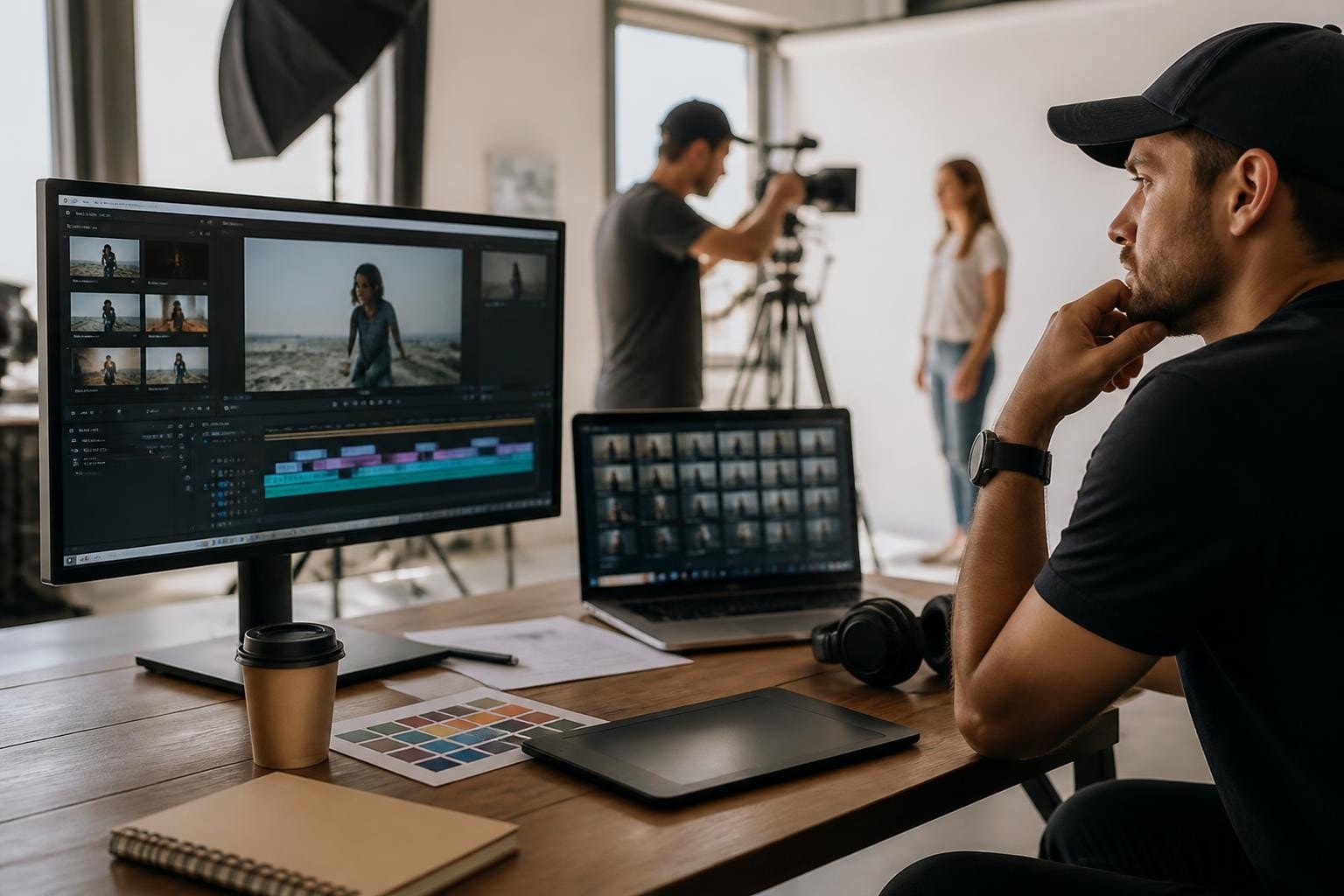
Creating effective video advertising has become non-negotiable for brands competing in today's digital landscape. With social platforms prioritizing video content and consumers scrolling through hundreds of pieces of media daily, knowing how to make a video ad that stops thumbs and drives action separates successful campaigns from wasted budgets. Modern video advertising combines strategic planning, creative execution, platform-specific optimization, and rigorous testing to deliver measurable returns on investment.
Understanding the Video Ad Landscape in 2026
The digital video advertising ecosystem has matured significantly, with performance expectations and production standards evolving alongside platform capabilities. According to the IAB's 2024 Digital Video Ad Spend & Strategy report, advertisers are increasingly focused on measurement precision and creative effectiveness when allocating budgets across video formats.
Platform diversity means each video ad must be tailored to specific viewing contexts. What works on TikTok differs substantially from LinkedIn or YouTube pre-roll. Mobile-first consumption dominates, with vertical video becoming the default format for social platforms. The Think with Google research on mobile video advertising demonstrates how attention patterns and creative requirements shift when users consume content on smaller screens.
User-generated content (UGC) aesthetics now outperform traditional polished advertising in many contexts. Audiences have developed sophisticated filters for detecting overly produced commercial content, making authentic-feeling creative essential for breaking through on social feeds.
Key Performance Metrics for Video Ads
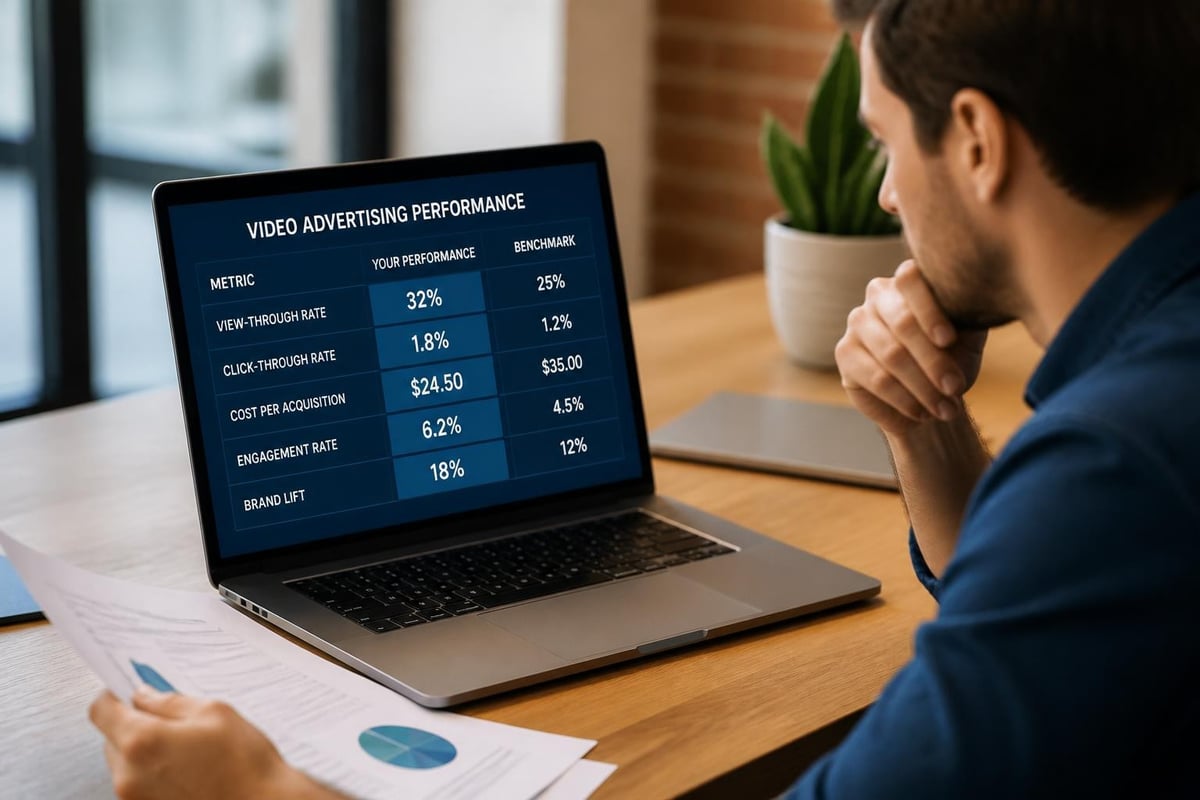
Tracking the right metrics determines whether your video ad investment delivers returns or drains resources without impact.
| Metric | What It Measures | Why It Matters |
|---|---|---|
| View-Through Rate (VTR) | Percentage who watch beyond 3 seconds | Indicates creative hook strength |
| Click-Through Rate (CTR) | Viewers who click your CTA | Measures conversion intent |
| Cost Per Acquisition (CPA) | Spend divided by conversions | Direct ROI measurement |
| Engagement Rate | Likes, comments, shares per view | Signals creative resonance |
| Brand Lift | Pre/post-campaign awareness change | Long-term brand impact |
These metrics create a comprehensive picture of video ad performance across awareness, consideration, and conversion objectives.
Strategic Planning Before Production
Effective video ads begin with strategic foundation work that many brands rush past in their eagerness to start creating. Clear objectives drive every creative decision that follows.
Defining Your Campaign Objectives
Start by identifying what success looks like. Are you building brand awareness among new audiences? Driving immediate product purchases? Generating qualified leads? Each objective requires different creative approaches, messaging strategies, and platform selections.
Your target audience profile shapes everything from language and tone to platform selection and creative style. Create detailed audience personas that include:
- Demographics (age, location, income)
- Psychographics (values, interests, pain points)
- Media consumption habits (preferred platforms, content types)
- Purchase behaviors (decision drivers, consideration time)
Budget allocation between production and media spend requires careful balance. Under-investing in creative quality limits performance potential, while over-producing creative without sufficient media budget prevents reaching meaningful audience scale.
Competitive Research and Creative Inspiration
Analyzing competitor video ads reveals market positioning opportunities and creative territories to avoid. Examine what messaging angles competitors emphasize, which platforms they prioritize, and how audiences respond through engagement metrics.
Beyond direct competitors, study how creative hooks work across successful ads in adjacent categories. The most effective video ads often borrow creative patterns from unexpected sources.
Scripting and Storyboarding Your Video Ad
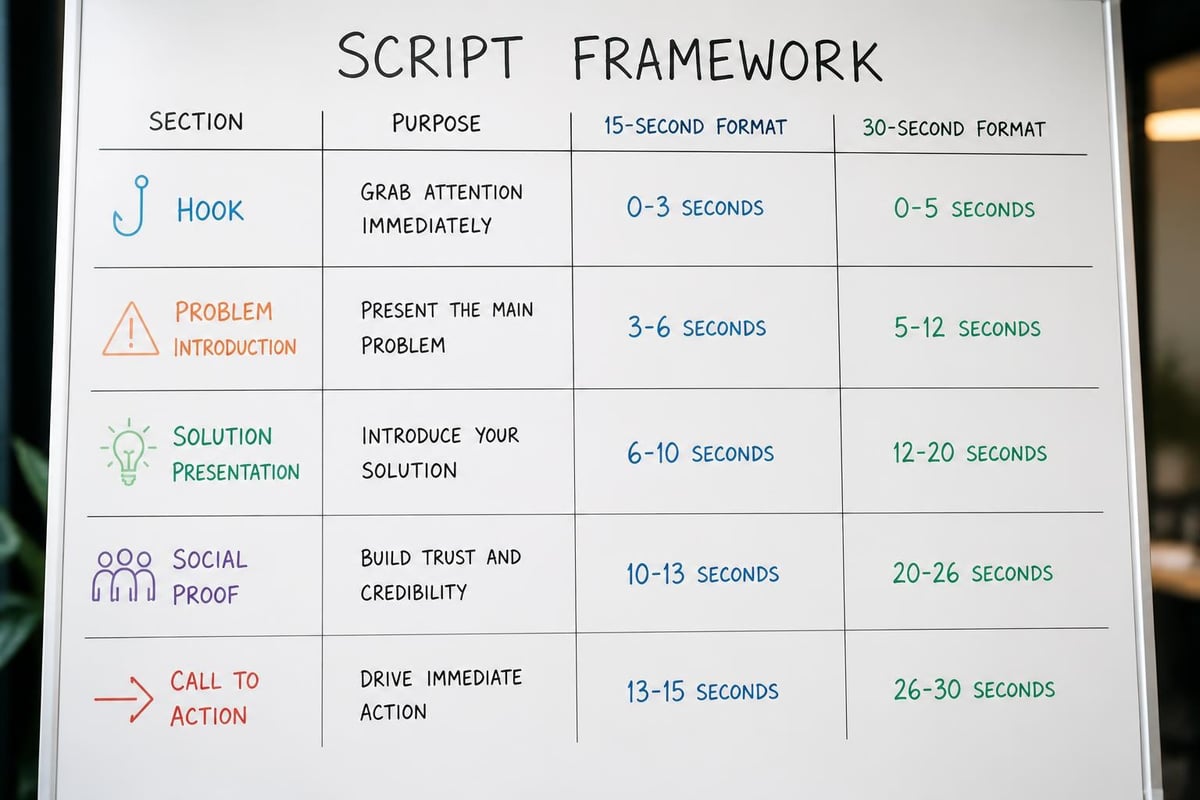
The foundation of any effective video ad is a tightly constructed script that delivers your message within platform-specific constraints. To make a video ad that performs, every word and visual must earn its place.
The First Three Seconds
Your opening determines whether viewers keep watching or scroll past. Pattern interrupts-unexpected visuals, provocative questions, or surprising statements-combat habituation in crowded feeds.
Consider these proven hook structures:
- Problem agitation: Open with the specific pain point your product solves
- Unexpected claim: Lead with a counterintuitive statement that demands explanation
- Visual intrigue: Show something unusual that requires context to understand
- Social proof: Feature authentic user testimonials or results immediately
The hook must connect directly to what follows. Bait-and-switch tactics that trade relevance for views damage brand trust and rarely convert.
Message Architecture
After securing attention, your video ad must deliver value propositions clearly and persuasively. Structure messaging hierarchically:
- Primary benefit: The single most compelling reason to care
- Supporting proof points: Evidence, features, or testimonials that validate the benefit
- Clear call-to-action: Specific next step you want viewers to take
Keep language conversational and benefit-focused. Audiences tune out feature lists disconnected from tangible outcomes. "Get six hours of battery life" matters less than "Never worry about your phone dying mid-day again."
Production Approaches for Different Budgets
How you make a video ad depends significantly on available resources, but effectiveness doesn't require massive budgets. Strategic choices about production approach often matter more than raw spending.
High-Production Studio Shoots
Traditional production with professional crews, studios, lighting, and talent delivers polished results suitable for premium placements and brand-building campaigns. This approach works well when:
- Visual quality directly reinforces brand positioning (luxury, premium, professional)
- Product details require controlled lighting and close-up capture
- Multiple ad variations can be captured efficiently in a single shoot day
Budget for pre-production planning, location or studio rental, professional talent, crew (director, cinematographer, audio), and post-production editing. Expect $10,000-$50,000+ for professional studio production depending on complexity.
UGC and Creator-Generated Content
User-generated content aesthetics often outperform polished ads on social platforms where authentic, relatable creative feels native to the feed. According to Meta's guidance on Reels ads, content that looks like organic creator posts typically sees higher engagement and lower cost-per-result.
Working with creators provides:
- Authentic voice: Creators speak naturally to their audiences
- Platform expertise: Creators understand what performs on their native platforms
- Built-in audiences: Leverage creator followings for amplification
- Cost efficiency: Generally more affordable than full production crews
When partnering with creators, provide clear brand guidelines while allowing creative freedom within those parameters. Over-scripting eliminates the authentic voice that makes creator content effective.
For brands needing UGC aesthetics at scale without managing individual creator relationships, VidBud's AI-powered platform generates scroll-stopping UGC ads with built-in market research and creative direction, delivering performance-optimized video creative ready for TikTok and Meta.

DIY and In-House Production
Smartphone cameras now capture broadcast-quality video, making in-house production viable for brands with limited budgets. Success requires:
- Quality lighting: Natural window light or affordable LED panels
- Clean audio: Lavalier microphones or shotgun mics eliminate ambient noise
- Stable footage: Tripods or gimbals prevent distracting camera shake
- Editing software: Tools like CapCut, DaVinci Resolve, or Adobe Premiere
In-house production works particularly well for product demonstrations, testimonial capture, and behind-the-scenes brand content that benefits from raw authenticity.
Platform-Specific Optimization
Each advertising platform has distinct technical requirements, audience expectations, and best practices. Generic video ads underperform compared to platform-optimized creative.
TikTok Video Ad Specifications
TikTok's algorithm favors native-feeling content that blends seamlessly into For You Page feeds:
- Aspect ratio: 9:16 vertical (1080x1920)
- Duration: 9-15 seconds for in-feed ads (up to 60 seconds supported)
- File format: MP4 or MOV
- Creative approach: Fast-paced, trend-aware, authentic UGC aesthetics
Sound-on viewing dominates TikTok, making audio strategy critical. Trending sounds can amplify reach, while original audio should prioritize clear voice-over or music that enhances messaging.
Meta (Facebook and Instagram) Requirements
Meta's family of apps supports various video ad placements with different specifications:
| Placement | Aspect Ratio | Duration | Best Use |
|---|---|---|---|
| Feed (Facebook) | 4:5 or 1:1 | 15-30 sec | Detailed messaging |
| Stories/Reels (Instagram) | 9:16 | 15 sec | Quick awareness |
| In-stream | 16:9 | 5-15 sec | Pre-roll interruption |
The IAB's multiscreen video research emphasizes designing for sound-off viewing on Meta platforms, where the majority of users scroll with audio muted. Captions and visual storytelling become essential.
YouTube Video Advertising
YouTube's skippable and non-skippable pre-roll formats require different strategic approaches:
- Non-skippable (15-20 seconds): Front-load key messages, assume full view
- Skippable (any length): Hook within first 5 seconds before skip option appears
- Discovery ads: Thumbnail and title optimization drives click-through
YouTube audiences often have higher intent and attention than passive social scrollers, allowing for longer-form content that provides substantive value.
Legal and Compliance Considerations
Professional video advertising requires attention to legal requirements that protect both your brand and your audience.
Disclosure Requirements
The FTC's endorsement and influencer guidelines mandate clear disclosure of material connections between advertisers and endorsers. When you make a video ad featuring paid partnerships, influencers, or compensated testimonials, disclosures must be:
- Clear and conspicuous: Easily noticed and understood
- Close to the claim: Positioned where claims appear, not buried
- Unambiguous: Use clear language like "Ad" or "Sponsored," not #partner
Violations carry significant penalties and damage brand reputation beyond regulatory fines.
Music Licensing
Commercial video ads require proper music licensing. LegalClarity's advertising music guide explains that using copyrighted music without permission exposes brands to infringement claims.
Options include:
- Stock music libraries: Pre-cleared tracks with commercial licenses
- Original composition: Commission custom music you fully own
- Licensed popular music: Negotiate sync rights (expensive but impactful)
Never assume that paying for a song on iTunes or using a track on social media provides commercial advertising rights.
Accessibility Standards
The W3C's accessibility guidance recommends captions and transcripts for all video content. Beyond compliance, accessibility features improve performance:
- Captions enable sound-off viewing
- Transcripts improve SEO and discoverability
- Audio descriptions expand audience reach
Building accessibility into production workflows from the start costs less than retroactive compliance.

Testing and Optimization Strategies
The most successful video ad campaigns treat every creative asset as a hypothesis requiring validation through testing.
Creative Variable Testing
Systematic testing identifies which creative elements drive performance improvements. Test one variable at a time to isolate impact:
- Hook variations: Different opening lines, visuals, or questions
- Offer positioning: Price emphasis vs. benefit focus vs. urgency
- Call-to-action: "Shop Now" vs. "Learn More" vs. "Get Started"
- Creative format: Testimonial vs. demonstration vs. lifestyle
- Duration: 15-second vs. 30-second versions
Nielsen's research on creative effectiveness shows that creative quality accounts for 40-80% of campaign performance variance-making testing essential for optimization.
Audience Segmentation
Different audience segments respond to different messaging, creative styles, and offers. Create tailored video ad variations for:
- Awareness stage: Educational content addressing pain points
- Consideration stage: Comparison-focused content with social proof
- Decision stage: Offer-driven content with urgency and clear CTAs
Retargeting audiences who have engaged with previous video ads allows for sequential messaging that builds on established context rather than repeating awareness-stage content.
Performance Analysis and Iteration
Regular analysis identifies winning patterns to scale and losing elements to eliminate. Review performance weekly during active campaigns:
- Which hooks generate highest view-through rates?
- Which CTAs drive most conversions at lowest cost?
- Which audience segments show strongest engagement?
- Which platforms deliver best return on ad spend?
Document learnings to inform future creative development, building institutional knowledge about what works for your specific brand and audience.
Distribution and Media Planning
Even the most compelling creative fails without strategic distribution that reaches the right audiences at the right moments.
Budget Allocation Across Platforms
Diversification reduces platform risk while allowing comparison of efficiency across channels. Start with 60-70% of budget on your proven highest-performing platform, allocating 30-40% to test additional channels.
Platform CPMs vary significantly based on targeting precision, competition, and ad format:
- Meta platforms: $5-15 CPM for broad targeting, $15-50+ for narrow audiences
- TikTok: $10-20 CPM with performance improving as platform learning optimizes
- YouTube: $10-30 CPM depending on placement and targeting
Frequency Management
Overexposure to the same creative drives declining performance and audience fatigue. Monitor frequency metrics (average impressions per user) and refresh creative when performance deteriorates.
Guidelines for creative rotation:
- Refresh creative every 7-14 days for high-frequency campaigns
- Develop 3-5 creative variations to rotate within campaigns
- Test new creative at 20-30% budget while scaling winners
Seasonal and Timing Considerations
Campaign timing impacts both costs and performance. Competition drives CPMs higher during peak advertising seasons (Q4 holidays, back-to-school, major shopping events), while audience attention and purchase intent also spike.
Consider testing AI-generated video creative to enable rapid creative production that matches campaign velocity during high-stakes periods when traditional production timelines create bottlenecks.
Measuring True Video Ad ROI
Understanding whether your video advertising investment generates positive returns requires connecting media metrics to business outcomes.
Attribution Modeling
Modern customer journeys span multiple touchpoints across devices and platforms. Attribution models assign conversion credit to various interactions:
- Last-click attribution: 100% credit to final touchpoint (undervalues awareness)
- First-click attribution: 100% credit to initial touchpoint (undervalues conversion drivers)
- Multi-touch attribution: Distributes credit across journey (most accurate, requires sophisticated tracking)
Video ads often play awareness and consideration roles earlier in funnels, making multi-touch attribution essential for accurate ROI assessment.
Incremental Impact Testing
Compare performance between exposed and unexposed audiences to isolate true incremental impact. Holdout groups receiving alternative creative or no ads provide control baselines for measuring lift.
Calculate incremental cost per acquisition:
Incremental CPA = (Total Ad Spend) / (Exposed Group Conversions - Control Group Conversions)
This methodology reveals whether video ads drive new conversions or simply receive credit for purchases that would have occurred regardless.
Long-Term Value Measurement
Optimizing purely for immediate conversions can sacrifice long-term brand building and customer lifetime value. Track cohorts of customers acquired through video ads to measure:
- Repeat purchase rates
- Average order value over time
- Customer lifetime value (LTV)
- Retention and churn patterns
High-quality video ads that build brand affinity often acquire customers with superior long-term value even if initial CPAs appear higher than performance-focused creative.
Advanced Techniques for Experienced Advertisers
Once you've mastered fundamentals, advanced techniques can unlock incremental performance improvements.
Dynamic Creative Optimization
Platforms like Meta offer dynamic creative tools that automatically test combinations of creative elements (videos, headlines, descriptions, CTAs) to identify top-performing combinations. This machine-learning approach:
- Tests more variations than manual A/B testing allows
- Personalizes combinations to individual user preferences
- Optimizes continuously as performance data accumulates
Feed multiple video ad variations, headline options, and description variants into dynamic campaigns for automated optimization at scale.
Sequential Storytelling
Multi-video narrative sequences guide audiences through progressive messaging across multiple exposures. Structure campaigns to show:
- First exposure: Problem awareness and brand introduction
- Second exposure: Solution demonstration and differentiation
- Third exposure: Social proof and conversion-focused offer
Sequential storytelling leverages the familiarity built through previous exposures, allowing later ads to skip reintroduction and dive directly into persuasion.
Programmatic Creative Personalization
Advanced programmatic advertising enables real-time creative customization based on user data, serving personalized video ads that reference location, weather, browsing history, or demographic attributes.
Personalization increases relevance but requires careful execution to avoid crossing into creepy surveillance-advertising territory that damages brand perception.
Successfully learning how to make a video ad that drives measurable results requires balancing creative excellence with strategic rigor, platform expertise, and continuous optimization. The brands winning with video advertising in 2026 treat creative as both art and science, combining compelling storytelling with data-driven testing to identify and scale what works. Whether you're producing studio-quality content, partnering with creators, or exploring emerging production technologies, the fundamental principles of clear messaging, audience understanding, and relentless testing remain constant. VidBud eliminates the traditional bottlenecks between strategy and execution, enabling brands to generate scroll-stopping UGC ads with AI-powered creative direction and unlimited video generation that's ready to launch across TikTok, Meta, and beyond-turning briefs into performance-optimized creative at the scale modern marketing demands.