
September 10, 2026
Create AI Video: The Complete Guide for Marketers
Learn how to create AI video content at scale. Explore models, workflows, quality benchmarks, and ethical practices for UGC ads in 2026.
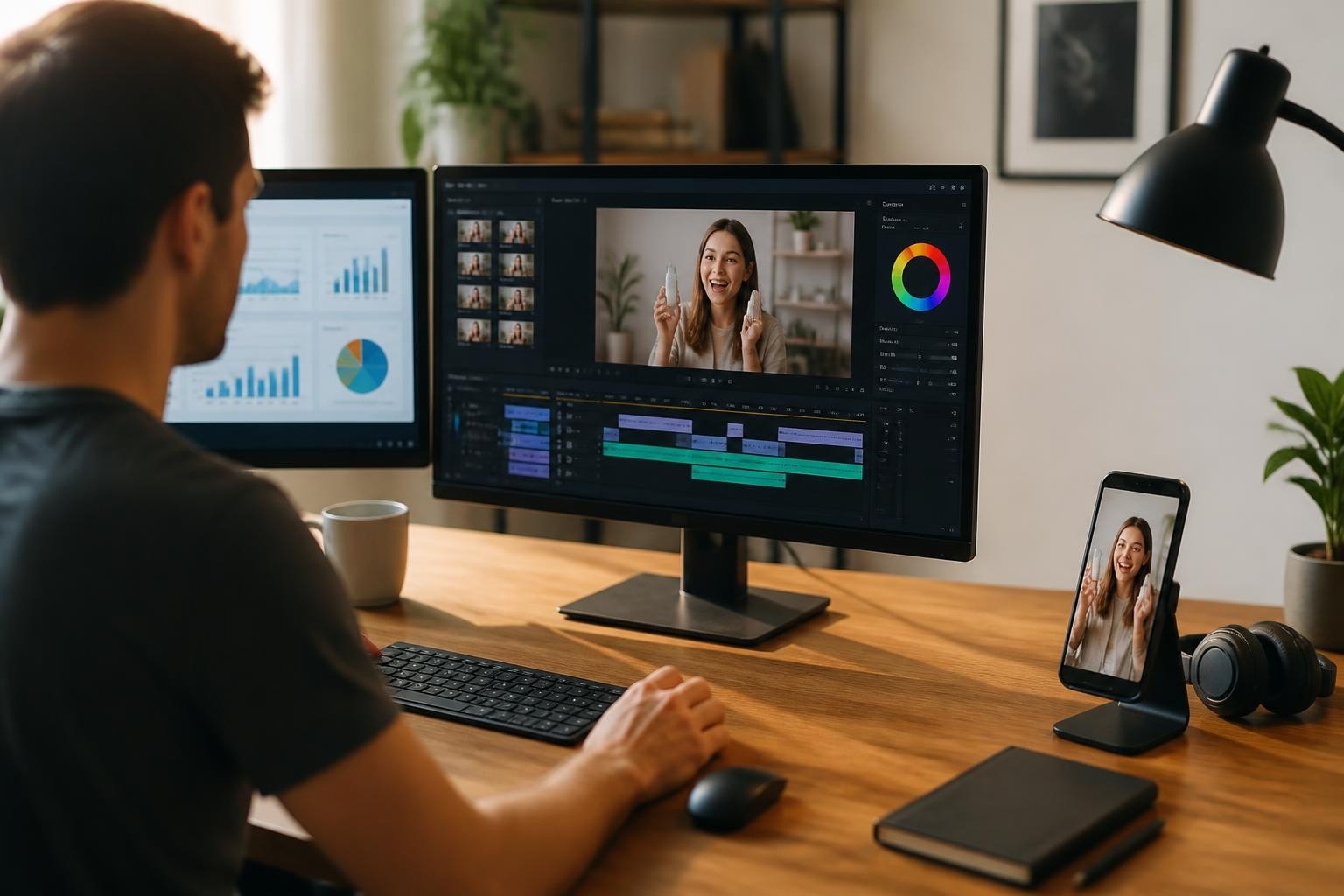
The ability to create AI video has evolved from experimental research into a production-ready capability for brands, creators, and performance marketers. In 2026, generative video models can turn text briefs into user-generated content ads, product demonstrations, and social creative without cameras, actors, or lengthy production cycles. This shift represents more than a cost saving-it fundamentally changes how teams approach ad testing, creative iteration, and personalized content at scale. Understanding the technical foundations, practical workflows, and ethical considerations behind AI video generation is now essential for anyone building modern marketing operations.
How AI Video Generation Works
At its core, the process to create AI video relies on diffusion models trained on massive video datasets. These neural networks learn the statistical patterns of motion, composition, and visual coherence across millions of video clips. When you provide a text prompt or creative brief, the model reverses a learned noise process to generate frames that match your description while maintaining temporal consistency across the sequence.
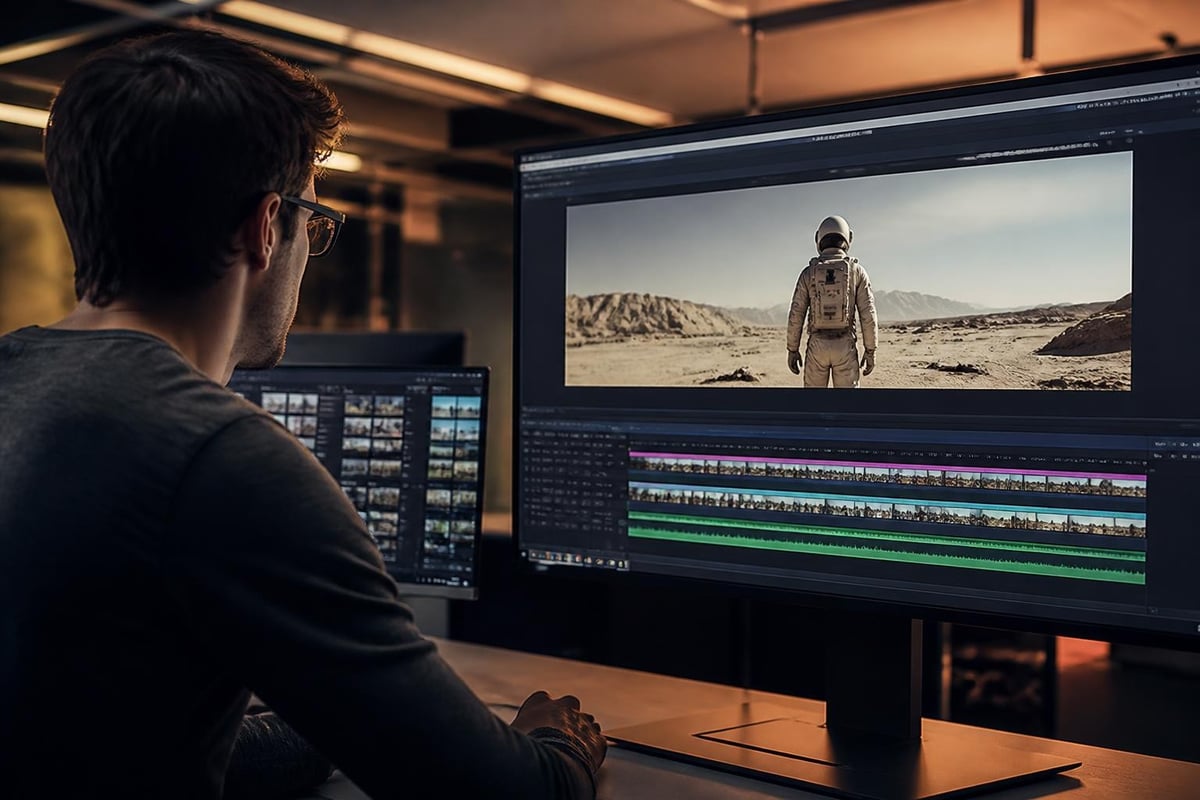
The technical architecture behind these systems has advanced considerably since early experiments. Modern approaches use 3D U-Net architectures with temporal attention layers that track objects and motion across frames, preventing the flickering and discontinuity that plagued earlier attempts. Research from 2024 details how these temporal consistency mechanisms work at the model level, showing how attention heads learn to bind features across the time dimension.
Key Components of Video Synthesis
Every platform built to create AI video shares several core technical elements:
- Text encoders that translate natural language into embedding vectors the model understands
- Temporal modules that enforce consistency between frames and manage motion dynamics
- Spatial generators that produce high-resolution visual content within each frame
- Upsampling networks that refine resolution and add fine detail in post-processing
- Safety classifiers that filter outputs for compliance and brand safety
The training data matters as much as the architecture. Models learn from datasets like Kinetics, which contains hundreds of thousands of labeled video clips spanning hundreds of human action categories. This diversity allows models to understand everything from athletic movements to conversational gestures-critical for generating realistic UGC-style content.
Workflows That Turn Briefs Into Video Ads
The practical workflow to create AI video for advertising differs significantly from general-purpose video generation. Performance marketers need outputs that match brand guidelines, incorporate specific messaging, and work within platform specs for TikTok, Meta, and other channels.
A production-ready workflow typically follows these steps:
- Brief development with clear messaging, target audience, and creative direction
- Market research integration to identify winning hooks and creative angles
- Prompt engineering that translates strategy into model-readable instructions
- Generation and iteration with quality filtering and variant testing
- Platform optimization for aspect ratios, durations, and technical specs
- Performance tracking to close the loop between creative attributes and results
From Research to Render
The strongest AI video workflows begin with understanding what makes UGC hooks effective before generation starts. Analyzing competitor creative, platform trends, and audience psychology informs the prompts and direction you feed into the generation system. This is where research and production converge-the insights that drive strategy flow directly into the technical parameters that create AI video outputs.
| Workflow Stage | Traditional Production | AI Video Generation |
|---|---|---|
| Concept to first cut | 5-14 days | Minutes to hours |
| Cost per variant | $500-$5,000 | Near-zero marginal cost |
| Iteration cycles | 2-3 maximum | Unlimited testing |
| Personalization | Extremely expensive | Native to the process |
| Time to platform | Days after final edit | Immediate export |
For teams running creative testing programs, the economics shift dramatically. When you create AI video at scale, the constraint is no longer production capacity-it becomes strategic decision-making about which concepts to test and how to interpret results.
Quality Standards and Evaluation Methods
Not all AI-generated video meets the threshold for paid distribution. Establishing clear quality criteria prevents wasted spend on outputs that audiences can immediately identify as synthetic or low-quality. The evaluation framework needs to address both technical fidelity and marketing effectiveness.
Technical Quality Metrics
Researchers measure generative video quality using several quantitative approaches. Fréchet Video Distance (FVD), proposed in foundational metric research, compares the distribution of generated videos to real video datasets. Lower FVD scores indicate outputs that more closely match authentic video statistics. While useful for model development, FVD doesn't directly predict ad performance.
For marketing applications, you need metrics that capture what matters to viewers:
- Motion coherence: Do objects move naturally without warping or teleporting?
- Temporal stability: Are lighting, color, and composition consistent across frames?
- Facial realism: For UGC-style content, do faces show natural expressions and avoid uncanny valley effects?
- Brand alignment: Does the output match visual identity, tone, and messaging requirements?
- Platform compliance: Does the video meet technical specs and policy requirements?
Manual review remains essential. A team member should watch every video before it enters a campaign, checking for artifacts, off-brand elements, or content that could misrepresent your product.
Marketing Performance Indicators
The ultimate test of quality is performance. When you create AI video for advertising, track how these assets perform against human-created controls:
| Metric | What It Reveals | Target Threshold |
|---|---|---|
| Hook rate (3-sec view) | Initial stopping power | ≥ 90% of control creative |
| Hold rate (through-play) | Content engagement quality | ≥ 85% of control creative |
| Click-through rate | Message clarity and CTA strength | ≥ 95% of control creative |
| Cost per acquisition | Overall campaign efficiency | Equal to or better than control |
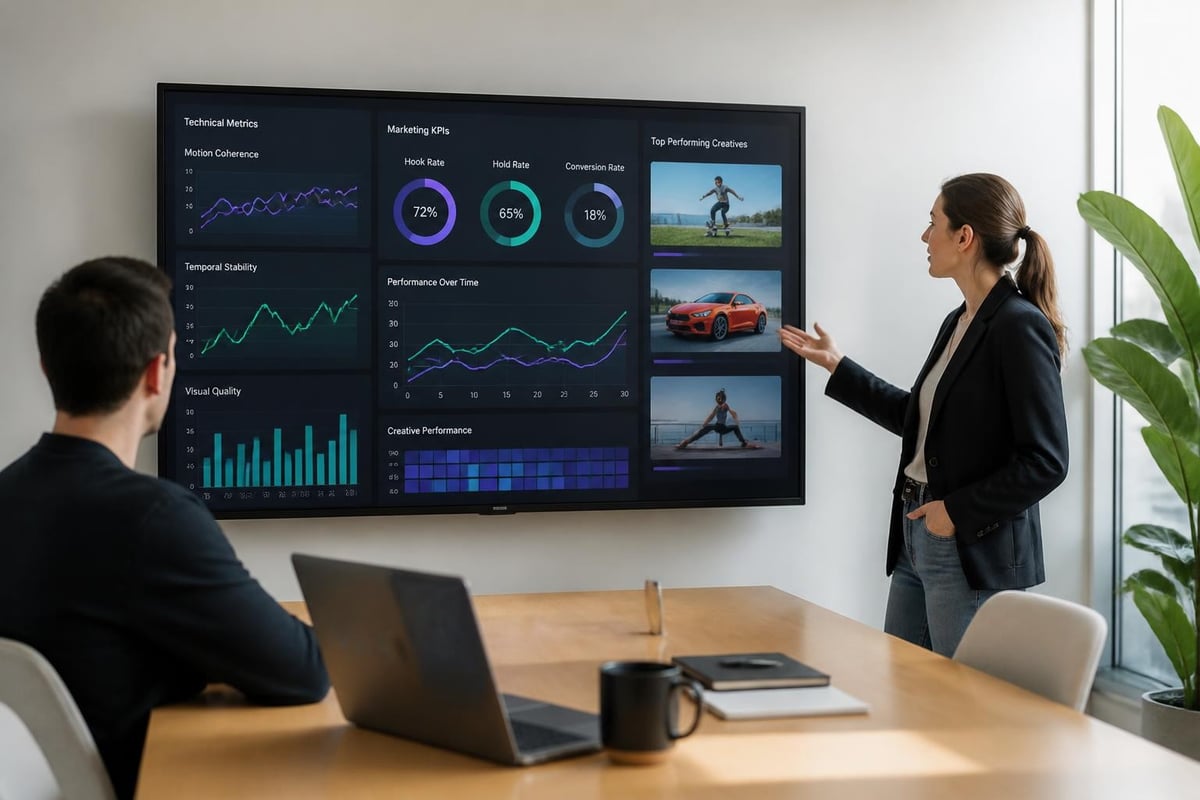
If AI-generated assets consistently underperform human-created content on these metrics, the issue usually lies in prompt engineering, insufficient creative direction, or model limitations for your specific use case. Most performance gaps close as teams develop expertise in directing AI systems toward their brand standards.
Ethical and Regulatory Considerations
The capacity to create AI video raises significant questions about authenticity, disclosure, and potential misuse. UNESCO's ethical framework for AI emphasizes transparency, accountability, and respect for human dignity-principles that apply directly to synthetic media in marketing.
Disclosure and Transparency
Clear disclosure builds trust. When you create AI video for advertising, viewers have a right to understand what they're watching. Best practices include:
- Labeling synthetic content in ad copy or visible watermarks when required by platform policy
- Avoiding deepfakes or impersonation of real individuals without explicit consent
- Maintaining factual accuracy in claims, demonstrations, and testimonials
- Respecting intellectual property by training only on licensed or original content
The Partnership on AI provides detailed guidance on responsible synthetic media practices, covering everything from consent frameworks to content provenance standards.
Legal Compliance Requirements
Regulatory frameworks continue to evolve. In the United States, FTC enforcement under the TAKE IT DOWN Act now addresses deepfakes, impersonation, and deceptive synthetic media. Brands that create AI video must ensure outputs don't violate these rules, which carry substantial penalties for violations.
Key compliance considerations include:
- Verifying you have rights to any likeness, voice, or brand assets used in training or prompts
- Implementing content filters that prevent generation of prohibited categories (violence, explicit content, regulated products)
- Maintaining audit trails that document how each video was created and approved
- Establishing internal review processes before publishing any AI-generated content
When working with synthetic training data, ensure your datasets follow best practices for bias mitigation, representation, and quality control. The data your models learn from shapes the outputs they produce.
Platform-Specific Optimization Strategies
Different social platforms have distinct technical requirements and audience expectations. When you create AI video for distribution, optimizing for each channel improves performance and prevents technical rejections.
TikTok Creative Specifications
TikTok prioritizes authentic, creator-style content. AI-generated videos perform best when they mimic organic UGC rather than polished brand content:
- Aspect ratio: 9:16 vertical format required for feed placement
- Duration: 15-30 seconds for optimal completion rates
- Opening hook: First 1-2 seconds must stop the scroll
- Visual style: Raw, authentic aesthetic outperforms high-production polish
- Sound design: Trending audio integration improves distribution
Meta Platforms (Facebook and Instagram)
Meta's systems favor content that drives meaningful interaction. Your approach to create AI video for Meta should emphasize:
- Multiple aspect ratios: 1:1 for feed, 9:16 for Stories/Reels, 4:5 for feed optimization
- Captions required: 85% of video views occur with sound off
- Strong CTA placement: Meta users respond to clear, early calls-to-action
- Variety in creative: The algorithm penalizes repetitive creative, requiring constant refresh
| Platform | Optimal Duration | Key Success Factor | Primary Distribution Algorithm |
|---|---|---|---|
| TikTok | 15-30 seconds | Authentic creator vibe | Content relevance + engagement velocity |
| Instagram Reels | 7-15 seconds | Visual impact + music | Interest graph + engagement history |
| Facebook Feed | 15-45 seconds | Clear value proposition early | Social graph + interaction prediction |
| YouTube Shorts | 15-60 seconds | Pacing + payoff | Watch time + satisfaction survey |
Understanding these platform nuances ensures the videos you create AI-powered perform as well as traditionally produced content.
Building Your AI Video Production Stack
Teams that successfully create AI video at scale build integrated technology stacks that connect research, generation, optimization, and measurement. The specific tools matter less than the workflow integration.
Core Stack Components
Your production infrastructure should include:
- Creative intelligence layer that surfaces winning hooks, messaging, and visual patterns from competitive and historical data
- Generation platform with fine-tuned models aligned to your brand and use cases
- Asset management system that organizes, tags, and versions all outputs
- Quality assurance workflow with human review and approval gates
- Distribution integration that pushes approved videos directly to ad platforms
- Performance analytics that ties creative attributes to business outcomes
Many brands build this stack by combining specialized point solutions. Others work with platforms that integrate multiple capabilities. VidBud's AI UGC video generation exemplifies the integrated approach, combining market research, creative direction, and unlimited video generation in a single workflow designed specifically for performance marketers who need scroll-stopping ad creative at scale.

Prompt Engineering for Brand Consistency
The way you instruct AI systems directly determines output quality. Effective prompts to create AI video include:
- Specific visual references rather than vague descriptors ("20s woman in coffee shop, natural lighting" vs "attractive person")
- Motion and pacing direction to control the energy level ("quick cuts between product shots" vs "show product")
- Tone and emotion keywords that shape the overall feeling ("excited, authentic testimonial" vs "customer review")
- Brand asset references when the model has been fine-tuned on your visual identity
- Technical constraints like "vertical 9:16, 15 seconds, mobile-first framing"
Document what works. Build a prompt library that captures successful formulas, then iterate variations to explore the creative space around proven concepts.
Scaling Creative Testing Programs
The ability to create AI video unlocks testing programs that were previously impossible due to cost and time constraints. Performance marketers can now run true multivariate creative tests across dozens or hundreds of variants.
Test Design Principles
Structure your creative testing to isolate variables:
- Hook variations: Test 5-10 different opening sequences with identical body content
- Visual style shifts: Compare realistic vs stylized vs animated treatments of the same concept
- Messaging angles: Generate variants emphasizing different value propositions or pain points
- Persona targeting: Create versions featuring different demographic representations
- Length optimization: Produce 15-second, 30-second, and 60-second cuts of top concepts
Most teams discover that 60-80% of performance variance comes from the first three seconds. Concentrating testing effort on hooks and openings delivers the highest return on creative investment.
Attribution and Learning Loops
The value of AI video generation compounds when you close the loop between performance data and production decisions. Build systems that:
- Tag every video with creative attributes (hook type, visual style, messaging angle, length, persona)
- Export performance metrics at the ad level from each platform
- Join creative metadata with performance data in a unified analytics layer
- Surface patterns that reveal which attributes drive results for your brand and audience
- Feed insights back into prompt engineering and concept development
This learning loop transforms creative production from a cost center into a strategic capability. Teams that excel at this closed-loop process maintain competitive advantages that grow over time.

Advanced Techniques for 2026
As models improve and tooling matures, several advanced capabilities are becoming accessible to marketing teams who create AI video regularly.
Multi-Shot Sequences and Story Arcs
Early AI video tools generated single-shot content. Modern platforms can now produce multi-shot sequences with consistent characters, locations, and narrative progression. This enables:
- Problem-solution-benefit story structures within 30-second ads
- Product demonstration sequences showing multiple use cases
- Testimonial-style content with conversational pacing and cut-aways
The technical challenge of maintaining character and scene consistency across cuts has largely been solved through latent space manipulation and cross-attention mechanisms that bind elements across shots.
Dynamic Personalization at Scale
Generate unique video variants for different audience segments:
- Geographic personalization showing local landmarks, weather, or cultural references
- Product catalog videos automatically featuring items the viewer has browsed
- Demographic variants that represent different age groups, family structures, or lifestyles
- Behavioral targeting with messaging tuned to purchase stage or engagement history
When you create AI video with parametric variation, the marginal cost of each additional variant approaches zero. This economic reality makes mass personalization viable for brands of any size.
Integration With Broader Marketing Automation
AI video generation works most powerfully when integrated into larger marketing systems:
- Email campaigns can include personalized video content based on subscriber behavior
- Landing pages might feature dynamically generated product videos matched to ad messaging
- Social response systems could create custom video replies to comments or questions
- Retargeting campaigns can automatically generate fresh creative to combat ad fatigue
The workflow to create video with AI increasingly connects to CRM data, product feeds, customer journey orchestration, and real-time bidding systems.
Future Trajectory and Emerging Capabilities
The evolution of AI video technology continues to accelerate. Google Research has documented rapid progress in model architectures, training approaches, and output quality across generative models. Several developments will reshape how teams create AI video over the next 12-24 months:
Longer-form content generation will extend beyond 60-90 seconds to full-length educational videos, product tutorials, and brand storytelling pieces. Current duration limits reflect computational constraints rather than fundamental model limitations.
Real-time generation and streaming will enable live applications where AI creates video on-demand in response to user interactions, questions, or preferences. Latency improvements make this feasible for certain use cases in late 2026.
Cross-modal conditioning will let you create AI video from more diverse inputs: audio descriptions, reference images, competitor videos, customer reviews, or sales data. The text-to-video paradigm expands to any-to-video.
Fine-tuning accessibility will allow more brands to train custom models on their specific visual identity, products, and brand world. This moves AI generation from generic outputs toward truly on-brand creative that maintains consistent visual standards across all generated content.
The trajectory points toward AI video becoming a default production method rather than an experimental capability. Teams that build expertise now develop competitive advantages that compound as the technology matures.
The ability to create AI video at scale fundamentally changes the economics and possibilities of creative testing, personalization, and content production for modern marketing teams. By understanding the technical foundations, implementing quality standards, maintaining ethical practices, and building integrated workflows, brands can harness generative video to produce scroll-stopping content that performs. VidBud helps creators, brands, and marketers turn briefs into on-brand UGC ads through AI-powered market research, creative direction, and unlimited video generation-ready to launch on TikTok, Meta, and beyond.