
September 14, 2026
AI to Create Video: The Complete 2026 Guide
Discover how ai to create video transforms ad production in 2026. Learn platforms, workflows, and strategies for creators and marketers.
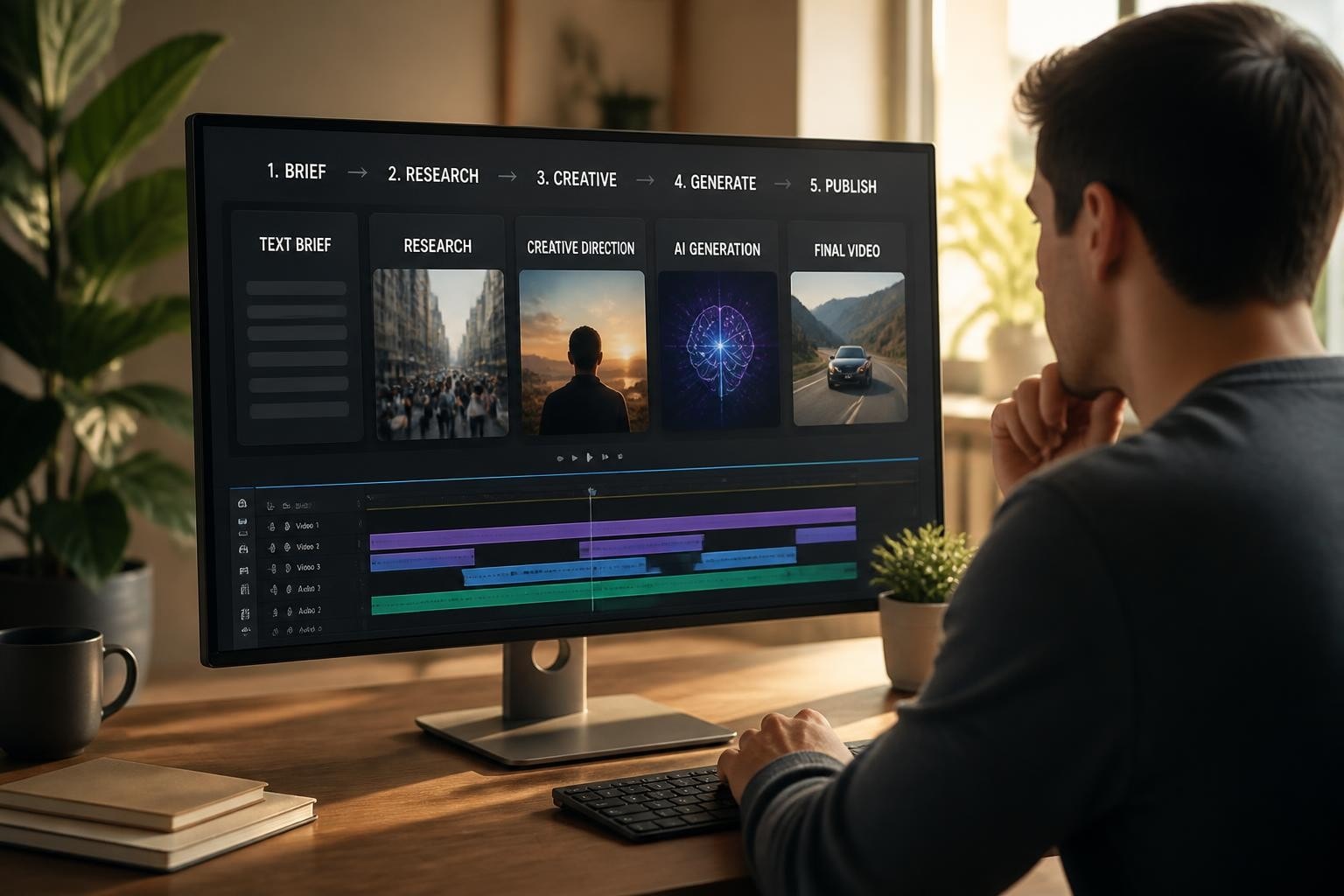
The advertising landscape has undergone a seismic shift over the past few years. Traditional video production, which once required expensive equipment, production crews, and weeks of post-production work, now stands alongside a powerful alternative. Using ai to create video has become the competitive edge that separates agile brands from those still locked into legacy workflows. For creators, marketers, and DTC brands in 2026, artificial intelligence offers not just a faster path to finished ads, but an entirely new creative paradigm where iteration, testing, and personalization happen at unprecedented scale.
Understanding AI Video Generation Technology
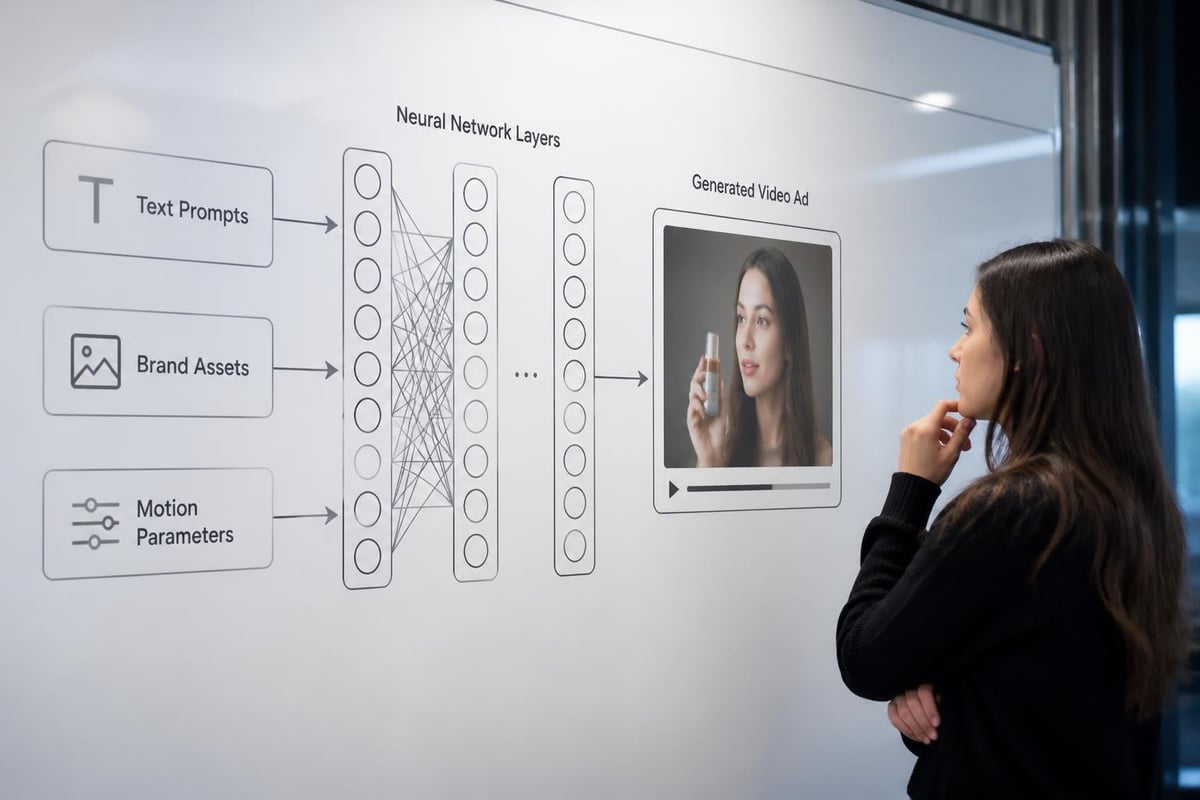
The foundation of modern ai to create video rests on sophisticated machine learning architectures that have evolved dramatically since their inception. Deep learning models now process text prompts, reference images, and brand guidelines to synthesize video content that rivals professionally filmed material in quality and engagement metrics.
The Technical Backbone
At its core, video generation AI employs diffusion models and transformer architectures that learn from millions of hours of video data. Research published in photorealistic video generation studies demonstrates how these systems achieve temporal consistency and visual fidelity by understanding motion patterns, lighting changes, and object permanence across frames.
The technology stack typically includes:
- Text-to-video engines that interpret natural language descriptions
- Image-to-video converters that animate static assets
- Style transfer networks that maintain brand consistency
- Motion prediction algorithms that ensure smooth transitions
- Audio synthesis modules that sync speech and sound effects
What distinguishes 2026's AI video tools from earlier iterations is their ability to understand context. When you use ai to create video for a skincare ad versus a tech product launch, the system recognizes not just the visual differences but the pacing, emotional tone, and storytelling conventions that resonate with each audience.
From Research to Real-World Applications
Academic advances have rapidly transitioned into commercial tools. The AAAI proceedings on video implicit diffusion models outline methods that now power production-ready platforms. These aren't experimental prototypes-they're the engines behind ads generating millions in revenue for e-commerce brands.
Performance marketers have discovered that using ai to create video solves several critical bottlenecks:
- Speed to market drops from weeks to hours
- Creative testing volume increases by 10-50x
- Production costs decrease by 60-80%
- Personalization depth reaches individual audience segments
Choosing the Right AI Video Platform
Not all AI video tools deliver equal results for advertising. The platform you choose determines whether you're producing scroll-stopping content or generic clips that disappear into the feed noise.
Essential Platform Features
When evaluating tools to use ai to create video for paid social campaigns, prioritize platforms built specifically for advertising outcomes rather than general video creation.
| Feature Category | Why It Matters | Red Flags |
|---|---|---|
| UGC-style output | Native ad formats outperform polished corporate videos | Only produces cinematic/Hollywood styles |
| Brand consistency | Every video must match your visual identity | Limited customization options |
| Platform optimization | TikTok specs differ from Meta specs | One-size-fits-all exports |
| Iteration speed | Testing requires rapid variant generation | Long rendering queues |
The best platforms integrate market research into the creative process. Before you even generate your first frame, they analyze competitor ads, trending hooks, and audience behavior patterns. This intelligence shapes the AI's output, ensuring that when you use ai to create video, you're not just making content-you're making content engineered to perform.
Workflow Integration Matters
Your AI video tool shouldn't exist in isolation. Modern generative AI platforms connect with your broader marketing stack, pulling in:
- Product feeds and SKU data
- Customer testimonials and reviews
- Historical performance metrics
- Brand asset libraries
- Campaign calendars and briefs
This integration means using ai to create video becomes as simple as submitting a brief. The system handles research, scripting, visual selection, and rendering-delivering ad-ready files to your media buyers or directly to ad accounts.
Building Effective AI Video Workflows
Simply having access to AI tools doesn't guarantee results. The difference between mediocre AI-generated ads and scroll-stopping performers lies in workflow design.
The Brief-to-Video Pipeline
Successful creators and brands using ai to create video follow a structured process:
Step 1: Strategic Foundation Start with clear campaign objectives. Define your target audience, key message, and success metrics. AI generates better output when it understands the strategic context, not just the visual requirements.
Step 2: Market Research Integration Analyze what's working in your vertical right now. Which hooks are stopping thumbs? What pain points resonate? Understanding what makes UGC hooks effective informs your prompts and creative direction.
Step 3: Creative Direction Translate strategy into specific creative parameters. Describe the scene, talent type, emotional tone, pacing, and call-to-action. The more detailed your direction, the more precisely the AI delivers.
- Specify setting and environment (home kitchen, coffee shop, car interior)
- Define talent characteristics (age range, gender presentation, energy level)
- Outline narrative arc (problem presentation, solution reveal, benefit demonstration)
- Include verbal hooks and key phrases
- Note visual elements and product shots needed

Step 4: Generation and Review Run your first batch. Modern platforms using ai to create video produce multiple variants simultaneously, letting you review options and select winners. This isn't a one-and-done process-iteration is built into the workflow.
Step 5: Optimization and Deployment Export in platform-specific formats. What works on TikTok needs different specs than Instagram Reels or Facebook feed placements. The AI should handle these technical variations automatically while maintaining creative consistency.
Advanced Techniques for Performance Marketers
Once you've mastered basic AI video creation, advanced tactics separate good campaigns from exceptional ones.
Systematic Creative Testing
The real power of using ai to create video emerges when you treat it as a testing engine, not just a production tool. Performance marketers in 2026 run continuous creative experiments:
- Hook variations: Test 5-10 different opening lines or visual openers for the same core message
- Benefit sequencing: Reorder how you present product advantages to find the optimal flow
- CTA placement: Move calls-to-action between mid-roll and end cards
- Talent diversity: Generate versions with different presenter types to identify audience preferences
- Visual density: Compare minimal, clean aesthetics against busy, detail-rich presentations
For brands scaling spend into six and seven figures monthly, the ability to use ai to create video for systematic testing becomes a competitive moat. Competitors stuck in traditional production cycles test 10 creatives per quarter. AI-powered teams test 10 variations per product per week.
Personalization at Scale
Generic ads die in the feed. The most sophisticated applications of ai to create video involve dynamic personalization where the content itself adapts to viewer segments.
Consider a DTC supplement brand targeting three distinct audiences: athletes, busy professionals, and health-conscious parents. Rather than one generic ad, they use AI to generate:
- Athlete version: High-energy setting, performance benefits, workout integration
- Professional version: Office or commute setting, mental clarity focus, convenience emphasis
- Parent version: Home environment, family health narrative, daily routine fit
Each version features appropriate talent, settings, language, and benefits-yet all stem from a single product and core value proposition. The AI handles the translation across contexts.
Brand Safety and Consistency
One concern when you use ai to create video is maintaining brand integrity. Established brands can't afford off-brand content, even if it performs well in testing.
Advanced platforms address this through:
| Control Mechanism | How It Works | Example |
|---|---|---|
| Visual style guides | AI trained on your brand assets | Color palettes, logo usage, font choices auto-applied |
| Voice and tone parameters | Language models fine-tuned to brand voice | Formal vs. casual, technical vs. accessible automatically matched |
| Legal and compliance filters | Automatic flagging of restricted claims | Health claims, competitor references, regulated terminology blocked |
| Human-in-the-loop review | Approval workflows before deployment | Senior creatives review AI outputs before media spend |
These guardrails mean using ai to create video accelerates production without sacrificing the brand standards that took years to establish.
Measuring Success and Iterating
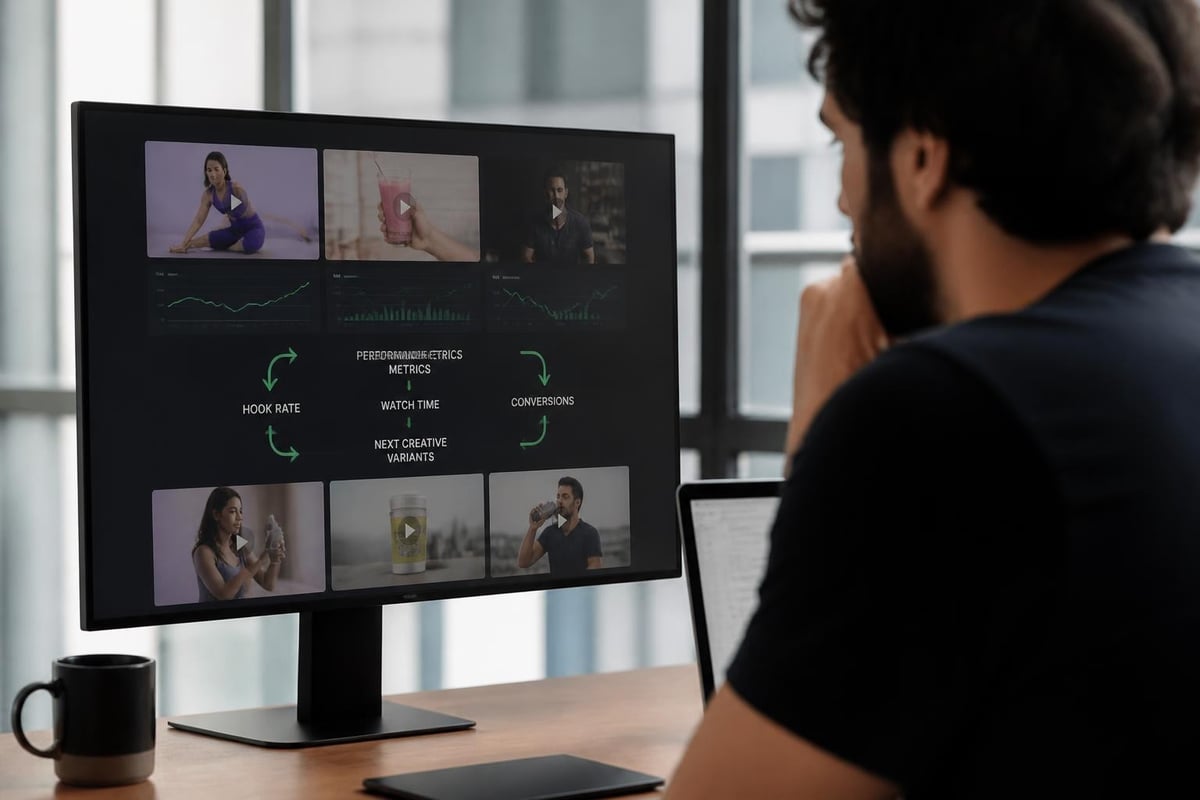
AI-generated video isn't a set-it-and-forget-it solution. The platforms and techniques that win are those that close the feedback loop between performance data and creative iteration.
Key Performance Indicators
Track metrics that matter for paid social success:
- Hook rate: Percentage of viewers who watch past 3 seconds
- Hold rate: Average watch time as percentage of video length
- Click-through rate: Engagement beyond passive viewing
- Conversion rate: Ultimate business outcome
- Cost per acquisition: Efficiency metric combining creative and targeting
When you use ai to create video as part of a systematic testing program, these metrics guide your next generation. Underperforming elements get eliminated. Winning patterns get amplified and recombined.
The Continuous Improvement Cycle
The most successful AI video programs operate as learning systems:
- Week 1: Generate 20 variants testing different hooks and messaging angles
- Week 2: Analyze performance data to identify top performers and losing patterns
- Week 3: Generate 20 new variants that amplify winning elements while testing new variables
- Week 4: Continue the cycle with increasingly refined hypotheses
This approach, enabled by using ai to create video at scale, mirrors how algorithmic trading firms approach financial markets-small, continuous improvements compound into significant competitive advantages over time.
Overcoming Common Challenges
Despite rapid advances, AI video creation still presents challenges that marketers and creators must navigate thoughtfully.
Quality Consistency
Not every AI-generated video meets publication standards on the first try. Common issues include:
- Uncanny valley effects in facial expressions
- Inconsistent object permanence across frames
- Awkward transitions between scenes
- Mismatched audio-visual sync
The solution isn't to abandon AI but to build quality checks into your workflow. Generate multiple variants, review systematically, and develop an eye for the telltale signs of AI artifacts that reduce credibility. As video generation research continues advancing, these issues diminish with each model update.
Creative Fatigue Prevention
When you use ai to create video at high volume, audiences may eventually recognize patterns or styles specific to AI-generated content. Combat creative fatigue by:
- Regularly updating your style parameters and visual references
- Mixing AI-generated content with traditionally produced assets
- Using AI for rapid testing, then investing in high-budget production for proven winners
- Varying talent, settings, and narrative structures even within AI workflows
- Monitoring audience comments and sentiment for signs of declining engagement
Ethical and Disclosure Considerations
Transparency matters. While AI-generated UGC-style ads don't require the same disclosures as influencer partnerships, brands should consider their own ethical guidelines around synthetic content, particularly when it mimics real people or testimonials.
Integration with Broader Marketing Strategy
AI video creation delivers maximum value when integrated with your complete marketing ecosystem, not treated as an isolated tactic.
Cross-Channel Consistency
The video ads you create for TikTok should align with your email campaigns, landing pages, and product positioning. When you use ai to create video as part of a coordinated strategy, the AI can pull from the same strategic briefs and messaging frameworks that guide your other channels.
This creates a multiplier effect. A customer who sees your AI-generated TikTok ad, then visits your website, then receives an email campaign encounters consistent messaging and visual identity-even though three different systems produced the touchpoints.
From Awareness to Conversion
Different stages of the customer journey demand different video content. AI platforms excel at producing these variations:
- Top-of-funnel: Attention-grabbing hooks, problem agitation, broad benefit statements
- Mid-funnel: Feature demonstrations, comparison content, social proof
- Bottom-funnel: Specific offers, urgency triggers, detailed CTAs
Using ai to create video across the full funnel means your creative volume matches your campaign sophistication. You're not limited to one or two hero videos stretched across every touchpoint.
Platforms like VidBud exemplify this approach by integrating market research, creative direction, and unlimited video generation into a unified workflow. Instead of managing separate tools for research, scripting, and production, creators and brands work from a single brief to generate platform-optimized UGC ads ready for immediate deployment.

Attribution and Learning
Connect your AI video platform to your analytics stack. Track which creative elements drive results, then feed those insights back into your next generation brief. This closed-loop system transforms using ai to create video from a production tactic into a strategic capability that improves with each campaign cycle.
Modern attribution often struggles with video content, especially across privacy-restricted platforms like iOS after App Tracking Transparency changes. Use server-side tracking, first-party data, and incrementality testing to understand true impact beyond platform-reported metrics.
Future Trends and Emerging Capabilities
The pace of innovation in AI video generation accelerates monthly. Understanding where the technology heads helps you future-proof your creative strategy.
Real-Time Personalization
The next frontier involves generating video creative dynamically at impression time. Imagine a system that uses ai to create video customized to individual viewers based on their browsing history, purchase behavior, and real-time context-all rendered in milliseconds as the ad loads.
Early implementations already exist for static personalization (showing different products to different segments). True dynamic video synthesis for individual viewers will become practical as research presented at venues like ECCV 2024 transitions from academic papers to production systems.
Voice and Language Expansion
Current AI video tools primarily serve English-language markets. Expansion into comprehensive multilingual support-with culturally appropriate visuals, not just dubbed audio-will unlock global markets for brands currently limited by translation and localization costs.
Interactive and Shoppable Formats
Static video ads give way to interactive experiences where viewers can explore products, switch between variants, or complete purchases without leaving the video player. When you use ai to create video in these emerging formats, the AI must understand not just visual storytelling but user experience design and conversion optimization.
API-First Development
For developers and technical teams, platforms are increasingly exposing programmatic access. The OpenAI API for video creation represents this trend toward treating video generation as a programmable service you integrate into broader automation and workflow systems.
This enables sophisticated use cases like automatically generating product videos when new SKUs enter your catalog, creating personalized video thank-you messages for high-value customers, or building custom content management systems with native AI video generation capabilities.
Strategic Recommendations for 2026
Based on current capabilities and near-term trajectory, here's how creators, brands, and marketers should approach using ai to create video:
For Individual Creators and Small Teams
Start with platforms designed for creators who need to move fast without technical expertise. Focus on learning what hooks and messaging patterns work for your niche before scaling volume. Use AI to test 5-10x more creative concepts than you could produce manually, then invest your limited traditional production budget in proven winners.
Build a systematic library of winning elements-successful hooks, benefit statements, CTAs, visual styles-that you can mix and recombine in new AI-generated variants.
For Performance Marketing Teams
Treat AI video generation as creative infrastructure, not a novelty tool. Build processes that connect media buying, creative testing, and audience insights into continuous feedback loops. When you use ai to create video at scale, the bottleneck shifts from production capacity to strategic thinking and hypothesis generation.
Invest in skills that complement AI: market psychology, quantitative analysis, and the ability to translate data patterns into creative briefs that guide the AI toward better outputs.
For Brand Marketing Organizations
Balance the speed and efficiency of AI-generated content with the brand-building power of high-production traditional campaigns. Use AI for always-on testing and performance channels while reserving traditional production for flagship brand moments and creative that demands human craft.
Develop clear brand guidelines and training sets that teach AI systems your visual and verbal identity. The investment in these foundational assets pays dividends across every video you generate subsequently.
For Agencies and Creative Services
Position AI video capabilities as value-add services that enhance your strategic consulting, not commodity production that competes on price. Clients can access AI tools directly-your advantage lies in knowing how to use ai to create video strategically, connecting creative to business outcomes.
Develop specialized expertise in specific verticals or ad formats. Deep knowledge of what works for DTC beauty brands on TikTok, combined with AI production capabilities, creates defensible value that generic AI tools alone cannot match.
Building Your AI Video Stack
The practical question facing most teams: which specific tools and platforms should you invest in learning and integrating?
Evaluation Framework
Assess potential platforms across these dimensions:
- Output quality: Does it match or exceed your current creative standards?
- Speed: Time from brief to finished video
- Cost structure: Per-video pricing vs. subscription vs. usage-based
- Learning curve: Hours to first publishable output
- Customization depth: Can you achieve true brand consistency?
- Integration options: API access, direct ad platform connection, asset library sync
- Support and community: Documentation, tutorials, responsive help
Platform Categories
The market has segmented into distinct categories, each optimized for different use cases:
General video creation tools offer broad capabilities but lack advertising-specific optimizations. They work for content marketing and social posts but often miss the nuances of performance creative.
Ad-specific platforms like VidBud purpose-build for paid social outcomes. Features like UGC-style output, platform-specific formatting, and performance-oriented creative direction deliver better results for marketers focused on ROAS and customer acquisition.
Enterprise solutions provide extensive customization, brand controls, and approval workflows but require significant implementation investment and ongoing technical resources.
API-first developer tools give maximum flexibility for teams with engineering resources to build custom integrations and workflows.
For most creator and brand teams, ad-specific platforms offer the fastest path to results. The tradeoff of slightly less customization versus dramatically faster time-to-value makes sense when your primary metric is video ad performance, not artistic expression.
Case Study Patterns and Success Indicators
While specific client results vary, successful implementations of ai to create video for advertising share common patterns worth noting.
Volume-Driven Discovery
Brands that generate 50+ video variants monthly discover insights impossible to uncover with traditional production budgets. They learn that their target audience responds better to problem-focused hooks than benefit-focused ones, or that demonstration-style content outperforms testimonial formats.
This learning compounds. Each insight informs the next round of generation, creating an upward spiral of creative effectiveness.
Speed-to-Market Advantage
Seasonal moments, trending topics, and competitive moves create brief windows for relevant messaging. Teams that can use ai to create video and launch campaigns within 24-48 hours capture value that slower competitors miss entirely.
A consumer electronics brand that generates relevant content within hours of a competitor's product announcement, a fashion retailer that creates ads matching trending styles while they're still climbing TikTok, or a food delivery service that capitalizes on weather events all demonstrate how speed translates directly to revenue.
Cost Structure Transformation
Traditional video production involves high fixed costs and low variable costs-you pay significantly for the first video, then marginally more for variations. AI inverts this: implementation and learning represent the fixed investment, but marginal cost per additional video approaches zero.
This transforms campaign economics. You can afford to test long-tail audience segments, experimental messaging angles, and seasonal variations that never justified traditional production budgets.
The evolution of AI video generation has fundamentally altered what's possible for creators, brands, and marketers who need high-performing ad creative at scale. Using ai to create video isn't about replacing human creativity-it's about amplifying strategic thinking and removing production constraints that previously limited testing, personalization, and optimization. VidBud helps you transform creative briefs into scroll-stopping UGC ads through AI-powered market research, creative direction, and unlimited video generation, all optimized for TikTok, Meta, and beyond. Start generating performance-driven ad creative today.