September 5, 2026
Video Create AI: 2026 Guide for Marketers & Creators
Discover how video create AI transforms ad production in 2026. Learn technical approaches, workflows, and best practices for UGC video at scale.
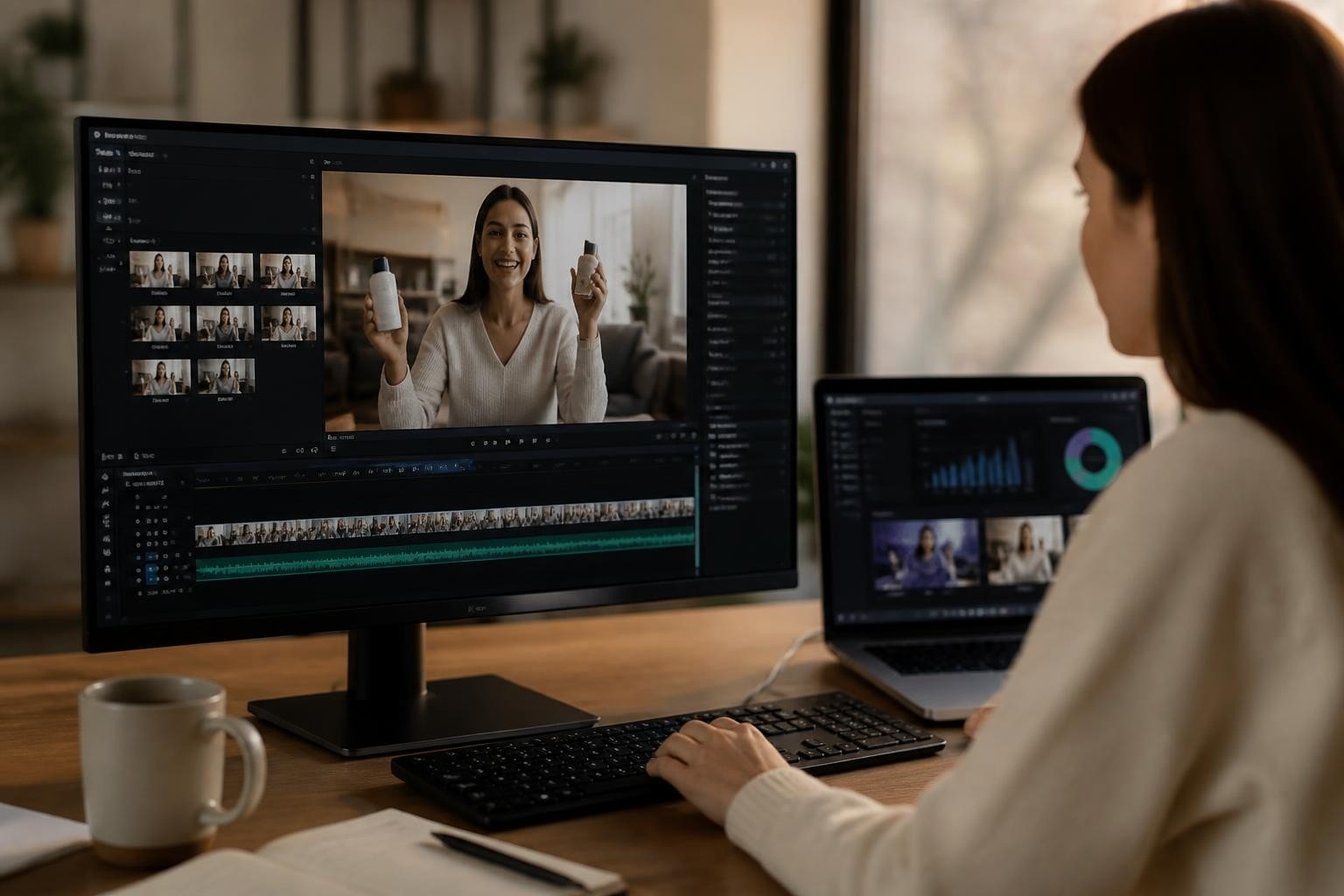
The advertising landscape has undergone a dramatic transformation as video create AI technologies mature into production-ready tools. What once required production crews, talent agencies, and weeks of post-production now happens in minutes through sophisticated generative models. For performance marketers and creative teams managing high-volume campaigns across TikTok, Meta, and emerging platforms, understanding how to leverage these systems has become essential to staying competitive in 2026.
Understanding Video Create AI Architecture
Modern video create AI systems rely on diffusion models, transformer architectures, and multi-stage generation pipelines. These technical foundations enable machines to synthesize realistic motion, maintain temporal consistency, and align visual output with text descriptions or creative briefs.
Core Generation Approaches
The field has coalesced around several dominant paradigms. Diffusion-based text-to-video pipelines iteratively refine noise into coherent frames, using spatial and temporal attention mechanisms to preserve consistency across sequences. Factorized approaches, such as those explored in Meta's Emu Video research, decompose the problem into image generation followed by motion synthesis, allowing for greater control and efficiency.
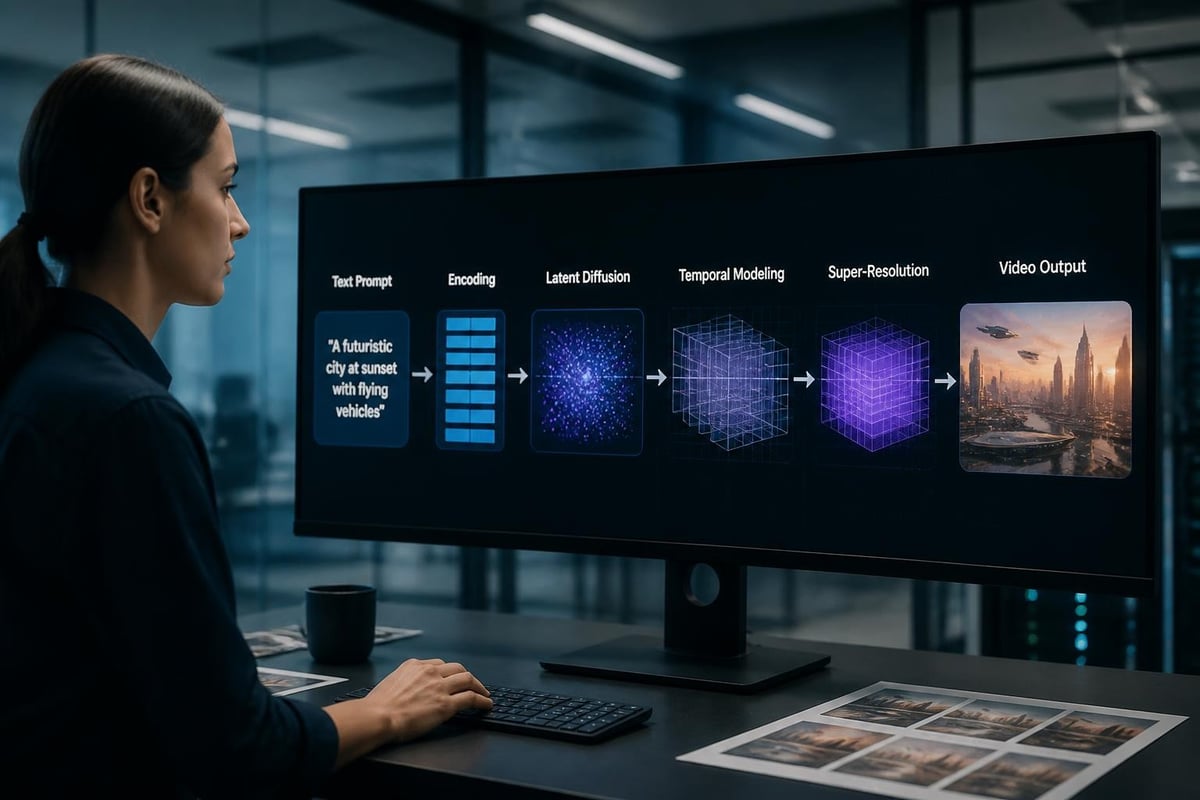
Recent advances from major research labs demonstrate the velocity of progress. Google's Veo and Imagen 3 announcements showcase photorealistic output at resolutions and frame rates suitable for broadcast, while maintaining semantic fidelity to complex prompts. The technical leap from 2024 prototypes to 2026 production systems centers on three dimensions: resolution scaling, prompt adherence, and controllability.
| Generation Method | Strengths | Typical Use Cases |
|---|---|---|
| Text-to-video diffusion | High quality, flexible prompts | Concept visualization, backgrounds |
| Factorized image+motion | Precise control, efficiency | Product demos, templated content |
| Video-to-video translation | Style transfer, consistency | Brand adaptation, localization |
| Multi-modal conditioning | Brand alignment, specificity | UGC ads, personalized creative |
Training Data and Model Capabilities
The capability ceiling of any video create AI system depends heavily on its training corpus. Contemporary models train on millions of hours of licensed video, web content, and synthetic data generated through simulation engines. This diversity enables generalization across domains but introduces challenges around bias, representation, and copyright considerations.
Key technical capabilities in 2026 models include:
- Temporal coherence across 60+ frame sequences without flickering or object drift
- Multi-shot composition allowing scene transitions and narrative structure
- Camera motion control enabling pan, zoom, and tracking movements
- Character consistency maintaining identity and appearance across shots
- Physics simulation for realistic object interaction and motion dynamics
The 2024 arXiv survey on generative AI for video provides comprehensive technical context for researchers and engineers building on these foundations, covering architecture choices, evaluation metrics, and remaining open problems.
Workflow Integration for Marketing Teams
Implementing video create AI within existing marketing operations requires rethinking content pipelines, approval processes, and quality assurance protocols. The technology enables new production rhythms but demands deliberate workflow design to capture the efficiency gains.
From Brief to Asset: The Modern Pipeline
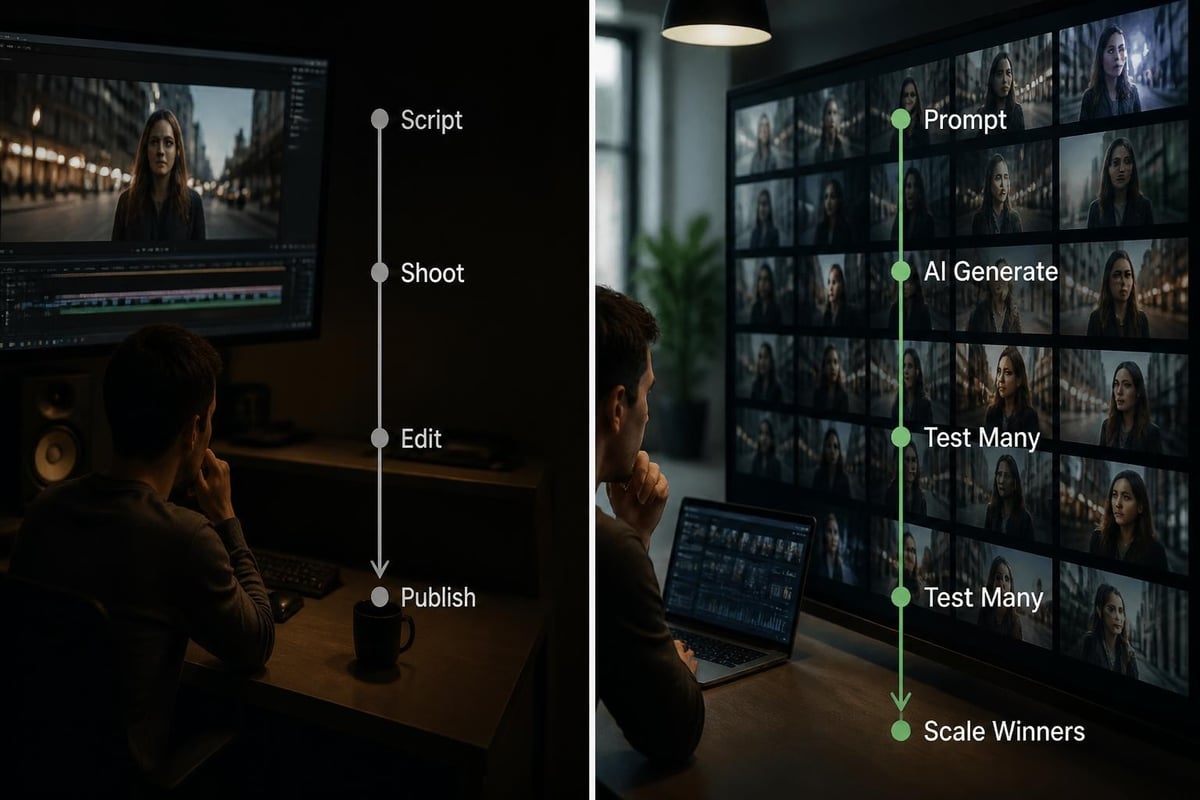
Traditional video production follows a linear path from concept through scripting, shooting, editing, and delivery. Video create AI collapses these stages while introducing new control points. A typical 2026 workflow for performance marketing teams includes:
- Strategic brief development with target audience, message hierarchy, and platform specifications
- AI-assisted market research analyzing competitor creative and audience signals
- Prompt engineering and creative direction translating strategy into generation parameters
- Batch generation producing variant sets for testing
- Human review and selection filtering outputs against brand guidelines
- Iteration and refinement adjusting parameters based on performance data
The shift from sequential production to parallel variant generation fundamentally changes how teams approach creative testing. Instead of producing three concepts and choosing one, teams generate thirty variants, test fifteen, and iterate on the top five-all within the timeline that previously delivered a single asset.
Quality Control and Brand Consistency
Maintaining brand integrity across AI-generated content requires systematic controls. Leading teams implement:
- Style libraries encoding brand colors, typography, and visual language as generation constraints
- Approval tiers with automated checks for technical specs and human review for message alignment
- Performance feedback loops connecting platform metrics back to generation parameters
- Version control tracking prompt variations and model versions for reproducibility
Platforms designed specifically for marketing use cases streamline these workflows. Teams working on scroll-stopping UGC ads benefit when AI video generation tools integrate market research, creative direction, and generation into unified environments rather than stitching together separate point solutions.

Technical Considerations for Production Deployment
Moving video create AI from experimentation to production requires addressing infrastructure, cost, quality, and reliability concerns that don't surface in prototype phases.
Compute and Latency Trade-offs
Generation quality correlates directly with compute investment. High-fidelity output at 1080p resolution with complex motion may require minutes per clip even on optimized hardware, while lower-resolution previews generate in seconds. Teams must architect pipelines balancing:
| Priority | Architecture Choice | Typical Performance |
|---|---|---|
| Speed | Lower resolution, fewer diffusion steps | 10-30 seconds per clip |
| Quality | Full resolution, extended sampling | 3-8 minutes per clip |
| Cost efficiency | Batch processing, off-peak compute | Variable, optimized for throughput |
| Iteration velocity | Progressive refinement, preview modes | Seconds for preview, minutes for final |
Cloud infrastructure with GPU acceleration has become the standard deployment model, though edge processing for real-time applications continues advancing. The choice between API-based services and self-hosted models depends on volume, customization needs, and data governance requirements.
Prompt Engineering and Control Systems
The gap between intent and output narrows through sophisticated prompting. Professional implementations employ:
- Structured templates with placeholders for product names, features, and contexts
- Negative prompting explicitly excluding unwanted elements or styles
- Parameter tuning adjusting guidance scales, sampling methods, and seed values
- Compositional generation building complex scenes from separately controlled elements
Achieving consistent results across variant sets demands systematic experimentation. Teams maintain prompt libraries, A/B test parameter combinations, and version control their generation recipes alongside traditional creative assets.
Legal and Ethical Frameworks
The rapid deployment of video create AI has outpaced regulatory frameworks, creating uncertainty around copyright, authenticity disclosure, and content liability that marketers must navigate carefully in 2026.
Copyright and Licensing Implications
The U.S. Copyright Office's AI initiative provides evolving guidance on authorship and rights for AI-generated works, but gray areas persist. Key considerations include:
Training data provenance: Models trained on copyrighted material without license raise infringement questions, though fair use defenses and transformative use arguments remain unsettled.
Output ownership: Works created with substantial human creative direction generally qualify for copyright protection, while purely machine-generated content may not.
Commercial use restrictions: Platform terms of service often impose limitations on AI-generated content used in advertising, requiring careful review.
Authenticity and Disclosure Standards
As synthetic media becomes indistinguishable from recorded footage, disclosure obligations intensify. UNESCO's guidance on media literacy responses to generative AI emphasizes transparency as essential for maintaining public trust. Leading brands adopt policies requiring:
- Clear labeling of AI-generated advertising content
- Avoidance of deceptive synthetic testimonials or endorsements
- Regular audits for bias, misrepresentation, or harmful stereotypes
- Compliance with emerging platform-specific synthetic media rules
The advertising industry's self-regulatory bodies continue developing standards, but marketers operating in 2026 should implement conservative disclosure practices anticipating stricter future requirements.
Optimizing Video Create AI for Social Platforms
Different social platforms impose distinct technical requirements, cultural norms, and algorithmic preferences that shape how video create AI should be deployed for maximum impact.
Platform-Specific Generation Strategies
TikTok and Short-Form Vertical Video
TikTok's 9:16 aspect ratio, rapid editing pace, and audio-driven culture demand generation approaches optimized for:
- Vertical composition with subject focus in upper two-thirds
- Jump cuts and transition effects matching native creator aesthetics
- Audio synchronization with trending sounds and music
- Hook moments in the first 0.5 seconds to prevent scrolling
Meta (Facebook and Instagram) Ecosystem
Meta properties support diverse formats but reward authentic, relatable content. Video create AI for Meta should prioritize:
- Natural, unpolished aesthetics over high production values
- User-generated content (UGC) visual language and framing
- Clear product integration without hard-sell messaging
- Caption-friendly visuals accounting for muted autoplay
YouTube and Long-Form Content
YouTube's algorithm favors watch time and engagement, requiring different generation parameters:
- Landscape orientation with cinematic composition
- Slower pacing supporting longer viewer attention
- Chapter-appropriate visual variety maintaining interest
- Thumbnail-optimized opening frames
A comprehensive survey on text-to-video generators in the Journal of Big Data examines architectural differences suited to various output requirements, providing technical depth for teams optimizing generation systems.
Performance Testing and Iteration
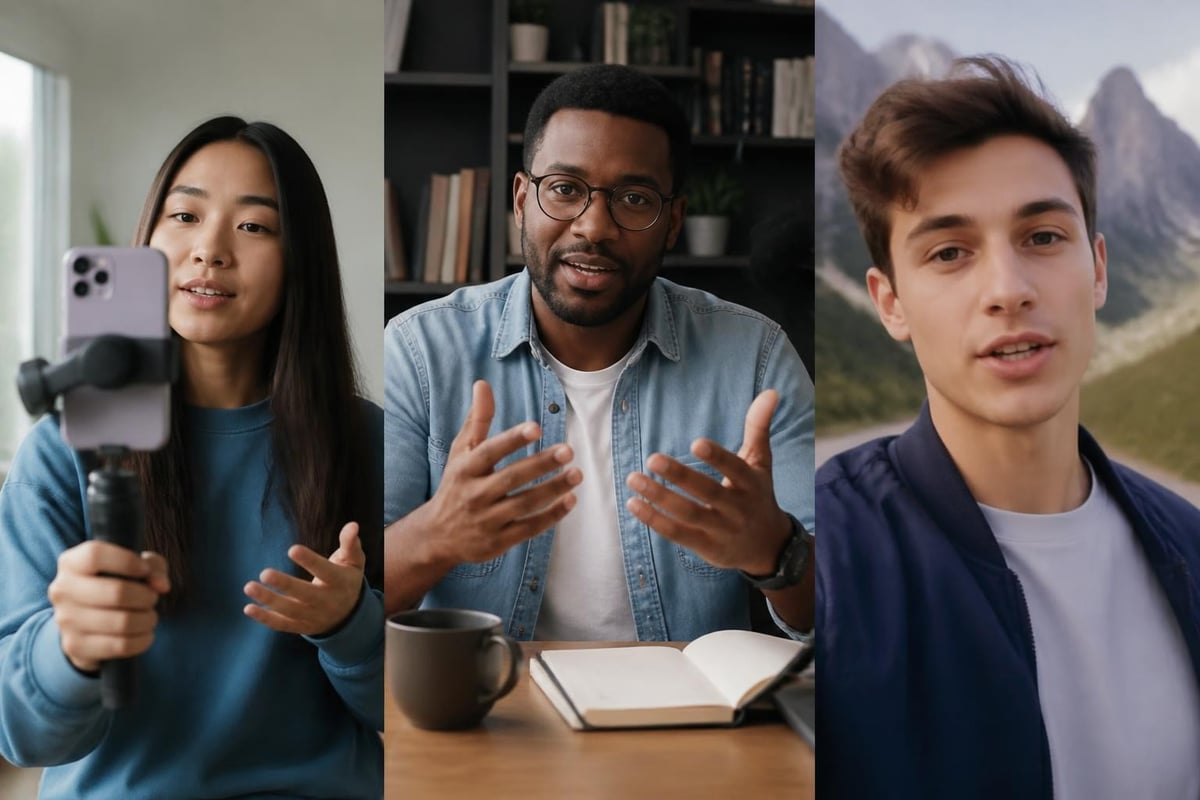
The true value of video create AI emerges through rapid testing iteration. Sophisticated marketing teams execute:
- Variant generation: Create 10-20 variations exploring different hooks, messages, and visual styles
- Systematic testing: Launch variants with controlled budgets across matched audiences
- Statistical analysis: Identify performance drivers through multi-variate analysis
- Prompt refinement: Adjust generation parameters based on winning characteristics
- Scaled deployment: Increase spend on validated variants while generating new tests
This data-driven creative approach, enabled by video create AI economics, often outperforms traditional high-production-value content by finding unexpected resonance through volume and iteration.
Advanced Techniques and Future Directions
As video create AI matures, sophisticated users push beyond basic text-to-video generation toward multi-modal control, real-time personalization, and hybrid human-AI workflows.
Multi-Modal Conditioning and Fine-Tuning
Contemporary systems accept diverse inputs beyond text prompts:
- Reference images establishing composition, color palette, or specific products
- Audio tracks driving motion rhythm and scene pacing
- Video seeds providing motion templates or style references
- 3D models ensuring accurate product representation
Fine-tuning base models on brand-specific datasets creates custom generators that inherently produce on-brand output without extensive prompting. This approach requires:
- Curated training sets of 500+ brand-aligned videos
- Specialized compute infrastructure for training runs
- Versioning and regression testing as base models update
- Ongoing maintenance as brand guidelines evolve
Personalization at Scale
The frontier of video create AI lies in audience-specific customization. Emerging capabilities enable:
Dynamic product insertion: Swapping featured products based on viewer browsing history or preferences
Localized adaptation: Adjusting visual references, talent representation, and messaging for geographic segments
Behavioral targeting: Generating variants optimized for awareness, consideration, or conversion stages
A/B testing automation: Continuous generation and testing identifying optimal creative elements
These advances transform video from static assets into dynamic templates, rendered uniquely for each viewer context-a paradigm shift with profound implications for creative strategy.
Integration with Broader Marketing Stacks
Video create AI delivers maximum value when integrated with:
- Analytics platforms providing performance data to guide generation priorities
- Asset management systems organizing and versioning generated content libraries
- Collaboration tools enabling distributed teams to review and approve outputs
- Ad platforms automating upload and campaign configuration
For teams managing UGC video campaigns at scale, exploring integrated solutions that bundle generation with research and deployment workflows often proves more efficient than assembling toolchains from separate vendors.
Measuring ROI and Business Impact
Justifying video create AI investment requires connecting generation capabilities to measurable business outcomes across efficiency, performance, and strategic dimensions.
Cost-Per-Asset Economics
Traditional video production for a single polished ad ranges from $5,000 to $50,000+ when factoring creative agency fees, talent, crew, and post-production. Video create AI shifts this to:
- Variable cost per generation: $0.10 to $5.00 depending on length, resolution, and platform
- Fixed platform subscription: $50 to $500+ monthly for professional tools
- Human oversight labor: Creative director and strategist time for prompting and selection
For teams producing 20+ video variants monthly, breakeven occurs within the first month. At scale-100+ videos monthly-the cost differential reaches 10-100x savings versus traditional production.
Performance Lift Metrics
Beyond cost efficiency, video create AI enables creative strategies previously impractical:
| Traditional Approach | Video Create AI Approach | Typical Impact |
|---|---|---|
| 3 concepts, 1 final | 30 variants, test top 15 | +40-80% CTR improvement |
| Quarterly refresh | Weekly new creative | +25-50% reduced fatigue |
| Single audience cut | Personalized per segment | +30-60% conversion lift |
| 4-week production | 2-day iteration | 10x velocity increase |
These performance gains compound over time as teams develop institutional knowledge in prompt engineering, testing methodologies, and platform optimization.
Strategic Capability Building
The most significant ROI often manifests in capabilities rather than immediate metrics:
- Market responsiveness: Launching creative within hours of trending topics or competitive moves
- International expansion: Producing localized creative for new markets without establishing local production
- Portfolio depth: Testing entirely new messaging angles without opportunity cost
- Learning velocity: Generating sufficient test volume to reach statistical significance faster
Organizations that master video create AI develop sustainable competitive advantages in markets where creative effectiveness drives customer acquisition economics.
Video create AI has evolved from experimental technology to production-ready infrastructure reshaping how marketing teams approach content creation in 2026. The technical foundations, workflow integrations, and strategic applications outlined above provide a framework for capturing the efficiency and performance benefits while navigating legal and ethical considerations responsibly. Whether you're a performance marketer seeking scroll-stopping UGC ads or a brand team scaling creative across platforms, VidBud delivers the integrated market research, creative direction, and AI video generation you need to turn briefs into ready-to-launch ad creative for TikTok, Meta, and beyond-without the traditional production overhead.