September 3, 2026
AI Video Creating: The Complete 2026 Guide
Discover how AI video creating transforms content production in 2026. Learn workflows, tools, and strategies to generate scroll-stopping ads at scale.

AI video creating has fundamentally transformed how businesses approach video content production in 2026. What once required camera crews, actors, studio time, and extensive post-production now happens through intelligent algorithms that generate compelling video content from text prompts and creative briefs. This shift isn't just about convenience-it represents a complete reimagining of the creative workflow, enabling brands and marketers to produce scroll-stopping content at a scale previously impossible. For performance marketers and direct-to-consumer brands, this technology delivers a competitive edge by shortening production cycles from weeks to minutes while maintaining the authentic feel that drives conversions.
The Evolution of AI Video Creating Technology
The technical foundations of AI video creating have matured significantly over the past two years. Modern systems leverage sophisticated text-to-video generation frameworks that combine generative adversarial networks, diffusion models, and transformer architectures to produce coherent video sequences from natural language descriptions.
Core Technical Components
Today's AI video creating platforms integrate several specialized subsystems:
- Natural language processing engines that interpret creative briefs and translate them into visual parameters
- Temporal consistency algorithms that maintain character appearance, lighting, and scene continuity across frames
- Motion synthesis models that generate realistic human movements and gestures
- Audio synchronization systems that match lip movements to speech patterns
- Style transfer mechanisms that apply brand guidelines and aesthetic preferences
These components work together to address the fundamental challenges of video generation. Research from Meta AI demonstrates how explicit image conditioning improves temporal coherence, allowing systems to maintain consistent visual elements throughout longer sequences.
Performance and Efficiency Gains
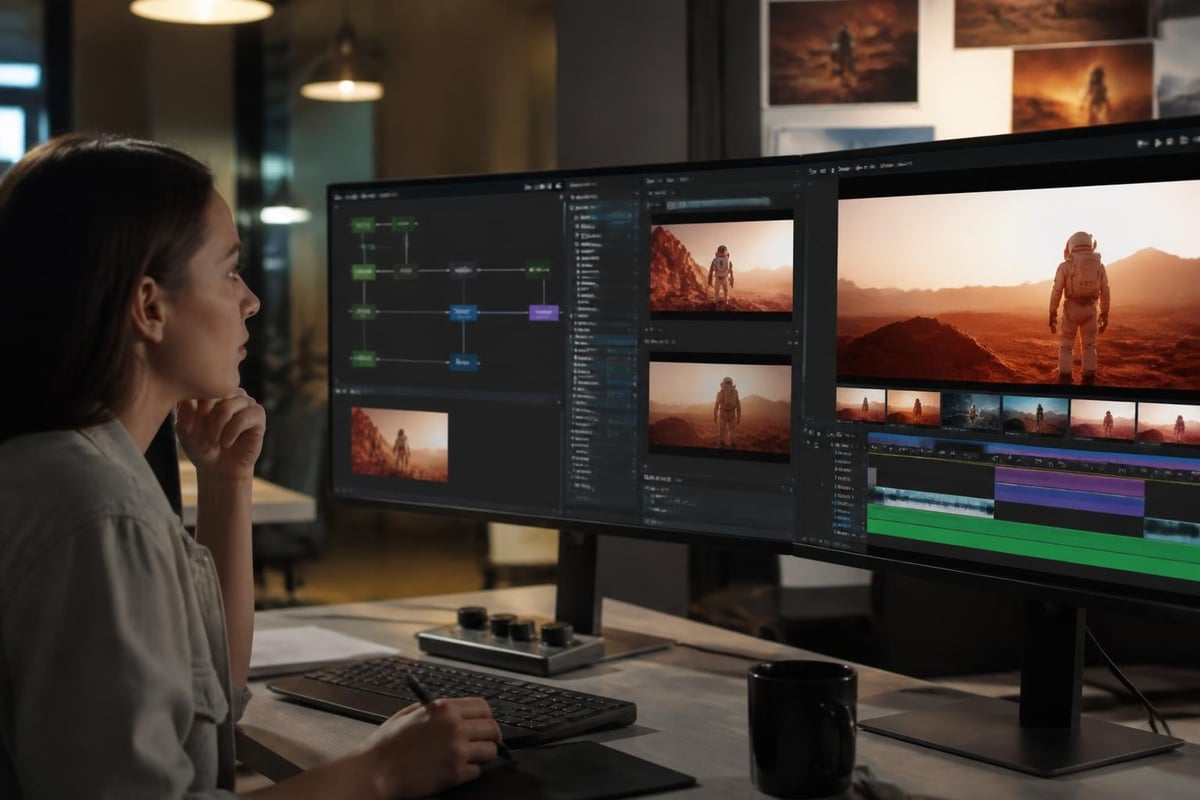
The computational efficiency of AI video creating has improved dramatically. NVIDIA's research on Sparse VideoGen showcases techniques that accelerate video diffusion transformers by up to 7x, making real-time preview and rapid iteration practical for marketing teams working under tight campaign deadlines.
| Performance Metric | Traditional Production | AI Video Creating (2026) |
|---|---|---|
| Average Production Time | 2-4 weeks | 15-60 minutes |
| Cost per Video Asset | $2,000-$15,000 | $10-$200 |
| Iteration Speed | 3-5 days | Minutes |
| Scaling Capacity | Linear (1:1) | Exponential (1:100+) |
Strategic Applications for Performance Marketing
AI video creating delivers the most value when aligned with specific marketing objectives. The technology excels in scenarios requiring high-volume content production, rapid testing cycles, and personalized variations.
User-Generated Content at Scale
The UGC aesthetic dominates social advertising in 2026 because it drives higher engagement and trust than polished studio content. AI video creating enables brands to generate authentic-feeling testimonials, product demonstrations, and lifestyle content without recruiting creators or managing production logistics.
Smart marketers use this technology to produce dozens of creative variations for split testing. Each video can feature different:
- Opening hooks designed to stop the scroll
- Product positioning angles targeting distinct customer pain points
- Call-to-action strategies optimized for different funnel stages
- Creator personas representing diverse demographics
- Background settings matching various lifestyle contexts
This approach to creative testing would be economically impossible with traditional production methods. Now, performance marketers can identify winning concepts within days rather than quarters.
Multi-Platform Content Optimization
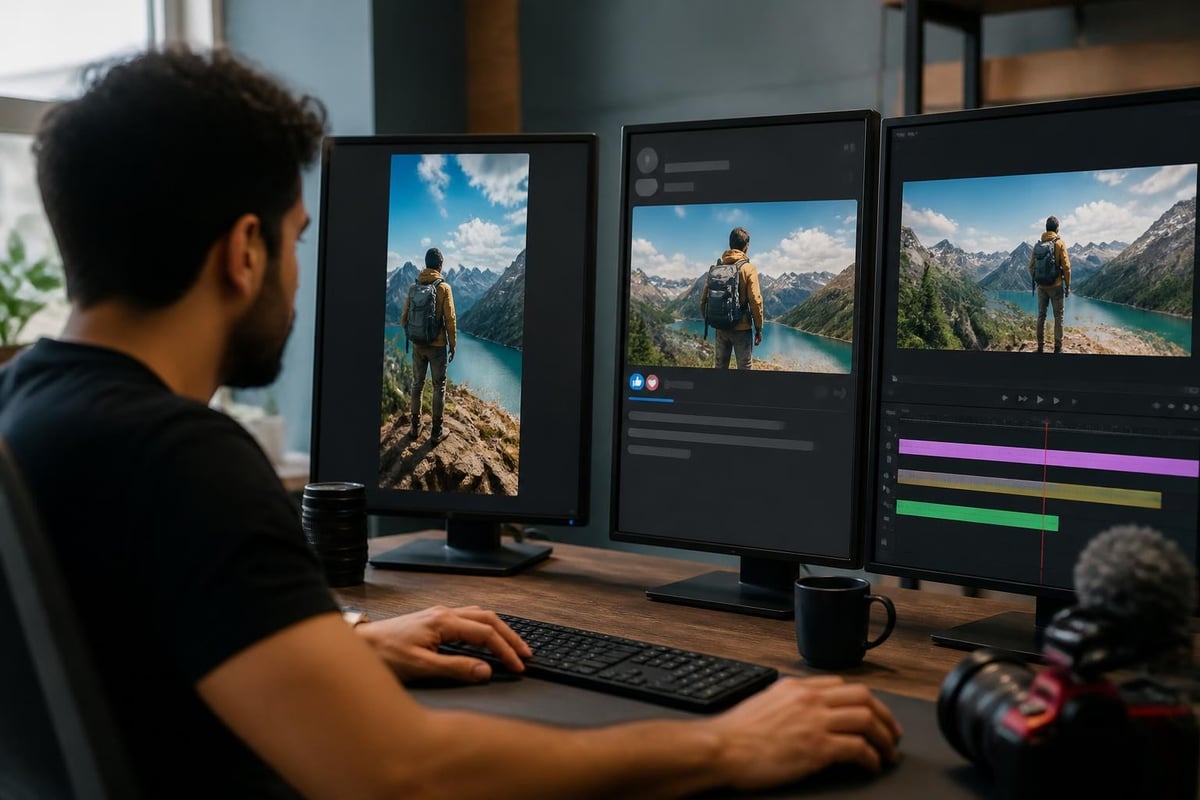
Different platforms require different creative approaches. TikTok favors fast-paced, trend-aligned content with native editing styles, while Meta's feed prioritizes clear value propositions in the first three seconds. AI video creating platforms allow marketers to generate platform-specific variations from a single creative brief.
The best systems understand platform specifications automatically:
- Vertical 9:16 formatting for Stories and Reels
- Horizontal 16:9 for YouTube and website embeds
- Square 1:1 for feed placements
- Platform-specific caption styling and text overlay patterns
Building Effective AI Video Creating Workflows
Successful implementation requires more than just access to technology. Top-performing teams develop systematic workflows that combine AI capabilities with human creative judgment.
The Strategic Brief Framework
Quality outputs start with quality inputs. A comprehensive creative brief for AI video creating should include:
- Target audience definition with demographic and psychographic details
- Core message and value proposition stated clearly
- Desired emotional tone (excitement, trust, urgency, curiosity)
- Specific product features or benefits to highlight
- Brand voice guidelines and visual identity parameters
- Campaign objectives (awareness, consideration, conversion)
The specificity of these inputs directly correlates with output relevance. Vague prompts generate generic content, while detailed briefs produce targeted assets that resonate with specific audience segments.
Iteration and Refinement Cycles
AI video creating shines brightest when used iteratively. The initial generation provides a foundation that teams refine through multiple cycles:
- Generate first batch of creative variations (10-20 concepts)
- Review for brand alignment, message clarity, and platform fit
- Select top performers and identify improvement areas
- Regenerate with refined parameters and specific adjustments
- Conduct audience testing with final candidates
- Scale production of validated concepts
This workflow mirrors traditional creative development but compresses timelines from months to days. For brands looking to streamline their ad creative production, VidBud AI UGC Video Plans combine AI market research, creative direction, and unlimited video generation into a single platform designed for performance marketers who need to launch campaigns quickly.

Quality Control and Brand Safety
As AI video creating becomes more powerful, quality control frameworks become more critical. Leading organizations implement multi-layer review processes:
| Review Stage | Focus Area | Responsibility |
|---|---|---|
| Automated screening | Technical quality, platform specs | AI system |
| Brand compliance | Visual identity, messaging tone | Marketing team |
| Legal review | Claims, disclosures, regulations | Compliance team |
| Audience testing | Engagement, comprehension | Research team |
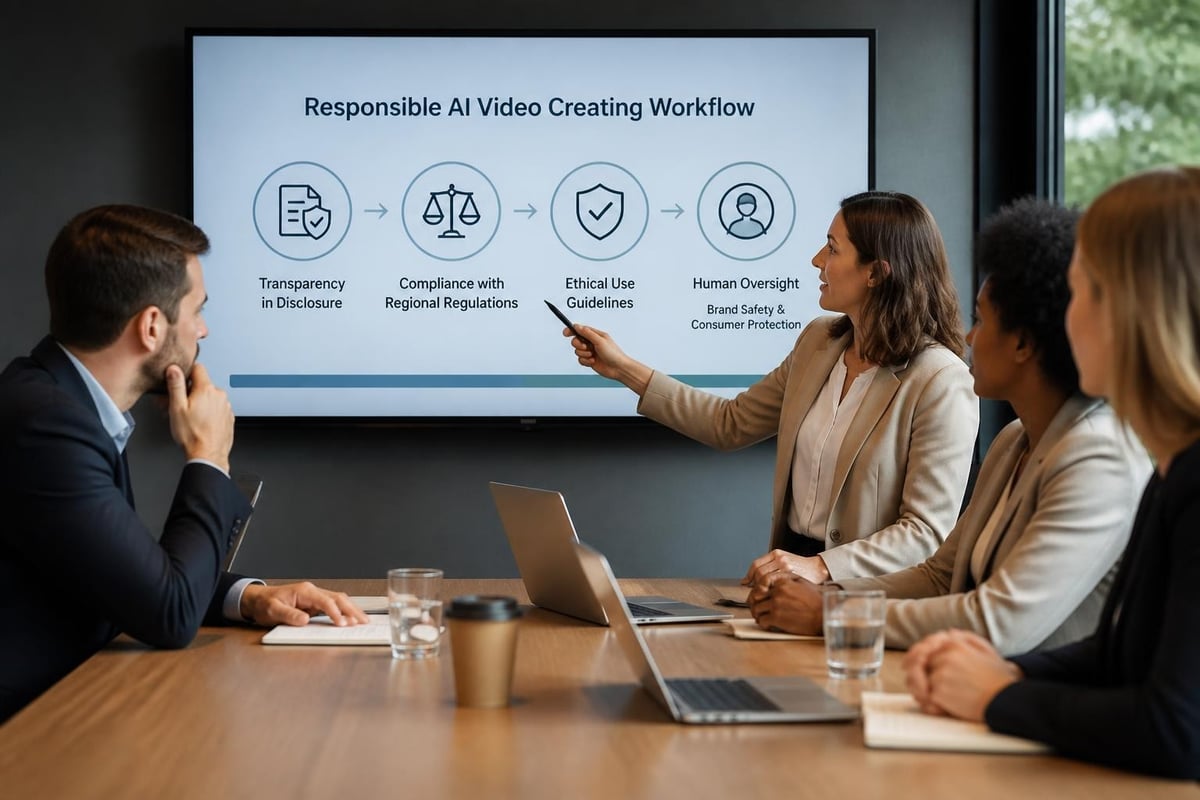
The growing sophistication of deepfake technology makes brand safety protocols especially important. Companies must establish clear guidelines around representation, ensure transparency about AI-generated content where required by regulation, and maintain human oversight of all published assets.
Technical Considerations and Best Practices
Understanding the technical limitations and capabilities of AI video creating helps teams set realistic expectations and optimize their approach.
Current Capabilities and Constraints
Modern AI video creating excels at specific content types while still facing challenges in others. The technology performs best with:
- Static or simple backgrounds that don't require complex physics simulation
- Medium shots and close-ups rather than wide establishing shots with many elements
- Shorter durations (15-60 seconds) where temporal consistency is easier to maintain
- Clear lighting conditions without complex shadows or reflections
- Single subject focus rather than multiple interacting characters
Teams should design creative concepts that play to these strengths rather than pushing the technology into scenarios where it struggles.
Resolution and Quality Standards
Output quality varies significantly across platforms and tools. When evaluating AI video creating solutions, consider:
- Native resolution support (1080p minimum for most platforms, 4K for premium placements)
- Frame rate options (30fps standard, 60fps for smooth motion)
- Bitrate and compression (higher bitrates preserve detail through platform encoding)
- Color accuracy and consistency (especially for product showcases)
According to Stanford's AI Index technical performance chapter, video generation quality has improved by approximately 40% year-over-year since 2024, with the gap between AI-generated and human-produced content narrowing in specific categories like talking-head testimonials and product demonstrations.
Regulatory and Ethical Frameworks
The rapid advancement of AI video creating has prompted regulatory responses worldwide. Marketers must navigate an evolving landscape of disclosure requirements and ethical guidelines.
Transparency and Disclosure Requirements
Multiple jurisdictions now mandate disclosure when using AI-generated content in advertising. European standardization recommendations provide comprehensive guidance on labeling synthetic media, protecting consumer rights, and establishing accountability frameworks.
Best practices include:
- Clear labeling of AI-generated content in video metadata and visible watermarks where required
- Truthful representation of product features and benefits regardless of production method
- Consent protocols when using AI to generate content based on real individuals
- Retention of audit trails showing creative development and approval processes
Smart brands go beyond minimum compliance, viewing transparency as a trust-building opportunity rather than a regulatory burden.
Data Privacy and Training Considerations
AI video creating systems learn from vast datasets of existing content. Organizations should understand:
- What training data their chosen platform uses
- Whether their inputs and outputs contribute to future training
- How user data and creative briefs are stored and protected
- Intellectual property rights for generated content
Responsible vendors provide clear documentation about these factors. For businesses concerned about proprietary information, look for platforms offering private deployment options or strict data isolation guarantees. You can review VidBud's compliance policies to understand how leading platforms approach these issues.
Integration with Broader Marketing Technology
AI video creating delivers maximum value when integrated into existing marketing technology stacks rather than operating as an isolated tool.
Workflow Automation and APIs
Modern platforms offer API access that enables programmatic video generation triggered by:
- New product launches automatically generating announcement videos
- Inventory changes creating promotional content for overstocked items
- Seasonal events producing themed variations of evergreen content
- Performance data regenerating underperforming ads with new creative angles
- Competitor actions responding to market changes with rapid creative pivots
This level of automation transforms video from a scarce resource requiring careful rationing into an abundant asset that can be deployed dynamically across campaigns.
Analytics and Attribution
The true power of AI video creating emerges when production velocity combines with rigorous performance measurement:
- Generate multiple creative variations
- Deploy across platforms with unique tracking parameters
- Monitor engagement metrics (view-through rate, watch time, engagement actions)
- Analyze conversion data (click-through rate, cost per acquisition, return on ad spend)
- Feed performance insights back into creative brief refinement
Top teams build feedback loops where performance data directly influences the next generation of creative concepts. This data-driven approach to creative development was previously impossible due to production bottlenecks.
Future Developments and Emerging Capabilities
The AI video creating landscape continues to evolve rapidly. Several emerging capabilities will further transform how marketers approach video content in the coming years.
Advanced Personalization
Next-generation systems will generate personalized video variations for individual viewers based on:
- Demographic data and browsing history
- Previous engagement with brand content
- Stage in the customer journey
- Real-time context (time of day, location, device)
This moves beyond current A/B testing approaches toward truly individualized creative experiences at scale.
Interactive and Branching Content
AI video creating will increasingly support interactive formats where viewer choices influence narrative direction. These branching experiences create deeper engagement while providing rich behavioral data about customer preferences and decision-making patterns.
Real-Time Generation and Streaming
As computational efficiency improves, we'll see platforms capable of generating video content in real-time during live events, responding to breaking news, or creating personalized product demonstrations during customer service interactions.
The technical foundations for these capabilities already exist in research labs. Their transition to production systems represents a matter of when, not if.
Measuring ROI and Business Impact
Organizations investing in AI video creating should establish clear metrics for evaluating return on investment beyond simple cost savings.
Comprehensive Performance Metrics
| Metric Category | Key Performance Indicators | Business Impact |
|---|---|---|
| Efficiency | Production time, cost per asset, iteration speed | Reduced overhead, faster time-to-market |
| Scale | Volume of creative variations, campaign coverage | Increased testing capacity, market responsiveness |
| Performance | Engagement rates, conversion rates, ROAS | Revenue growth, customer acquisition |
| Innovation | Test velocity, concept diversity, creative risk-taking | Competitive differentiation, brand evolution |
The most successful implementations show improvements across all categories simultaneously. A performance marketing team at a direct-to-consumer brand might reduce creative production costs by 70% while simultaneously increasing testing volume by 500%, leading to a 45% improvement in overall campaign ROAS.
Strategic Value Creation
Beyond measurable metrics, AI video creating enables strategic shifts that are harder to quantify but equally important:
- Democratization of video production allowing smaller teams to compete with larger competitors
- Faster response to market trends and competitive actions
- Risk reduction through rapid testing before committing to expensive productions
- Enhanced creativity by removing resource constraints that previously limited experimentation
Organizations should consider both quantitative ROI and these qualitative strategic benefits when evaluating AI video creating investments.
AI video creating has matured from experimental technology to essential infrastructure for modern marketing teams. The combination of improved quality, faster generation, and seamless integration with existing workflows makes it a practical solution for brands needing to produce engaging content at scale. VidBud helps creators, brands, and marketers turn creative briefs into scroll-stopping UGC ads through AI-powered market research, creative direction, and unlimited video generation-delivering on-brand content ready for TikTok, Meta, and beyond. Ready to transform your video production workflow? Explore how VidBud can accelerate your creative process today.