
September 19, 2026
AI Creating Video: How AI Video Platforms Work in 2026
AI creating video is transforming ad production. Learn how AI video generation works, key techniques, and how brands use AI to scale UGC ads.
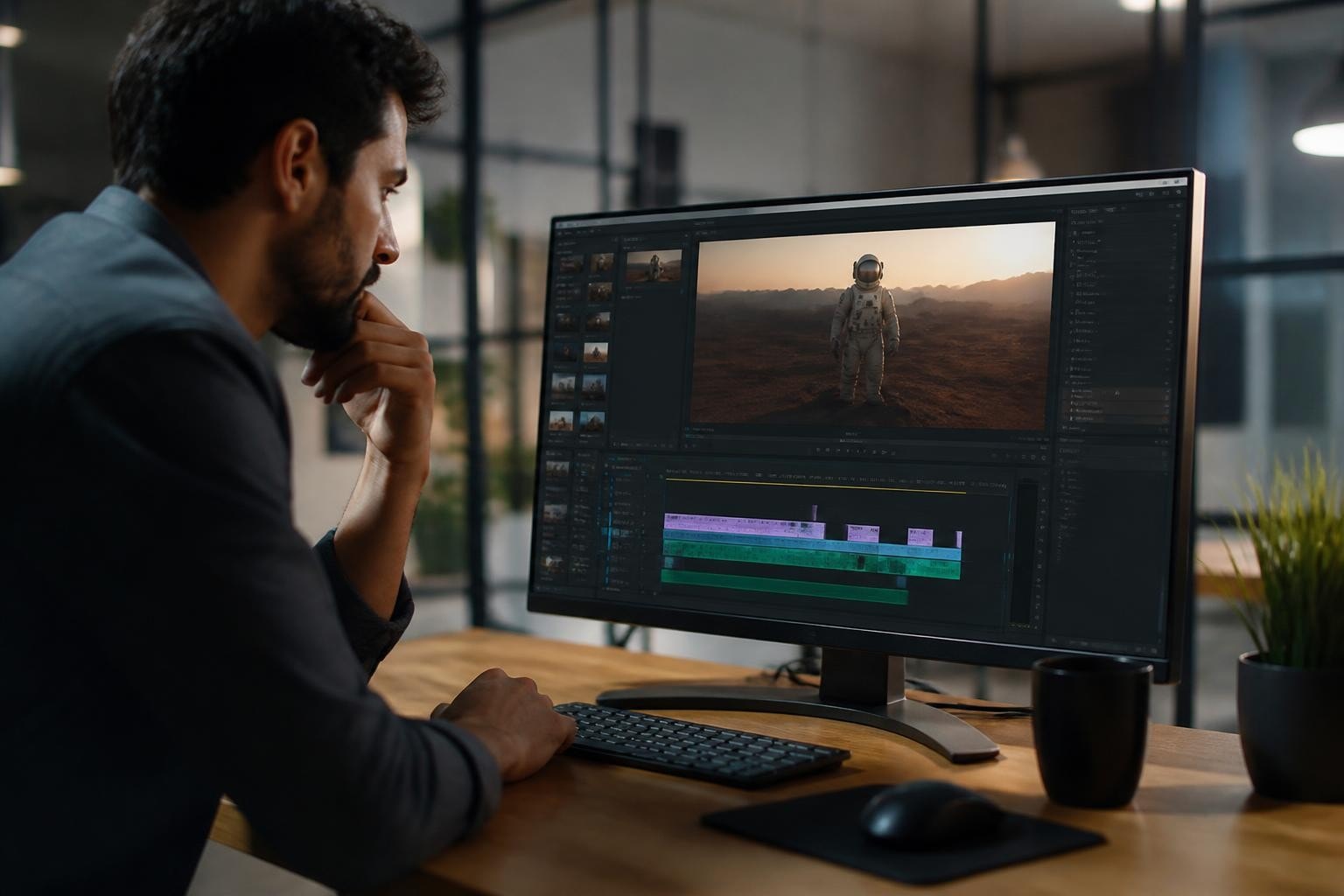
The landscape of video production has shifted dramatically over the past few years. What once required cameras, actors, lighting crews, and extensive post-production can now be accomplished through AI creating video at scale. Brands, creators, and performance marketers are leveraging artificial intelligence to generate user-generated content (UGC) ads, product demonstrations, and social media videos without ever stepping onto a set. This transformation isn't just about convenience; it's fundamentally changing how fast-moving marketing teams produce and test creative at scale. Understanding how these systems work, their capabilities, and their limitations is essential for anyone looking to stay competitive in digital advertising in 2026.
How AI Creating Video Actually Works
At its core, ai creating video relies on deep learning models trained on millions of video clips paired with text descriptions. These models learn the relationship between language and visual motion, enabling them to generate new video sequences from text prompts or reference images.
The most successful approaches build on diffusion models, a technique that starts with random noise and gradually refines it into coherent video frames. Research from Meta's Make-A-Video team demonstrated how image generation models could be extended to video by adding temporal layers that maintain consistency across frames.
The Technical Pipeline
Modern AI video generation platforms follow a multi-stage pipeline:
- Text encoding – Natural language prompts are converted into mathematical representations that capture semantic meaning
- Latent generation – The model generates compressed representations of video frames in a lower-dimensional space
- Temporal coherence – Additional networks ensure smooth motion and consistency between frames
- Upscaling and refinement – Final frames are enhanced for resolution and visual quality
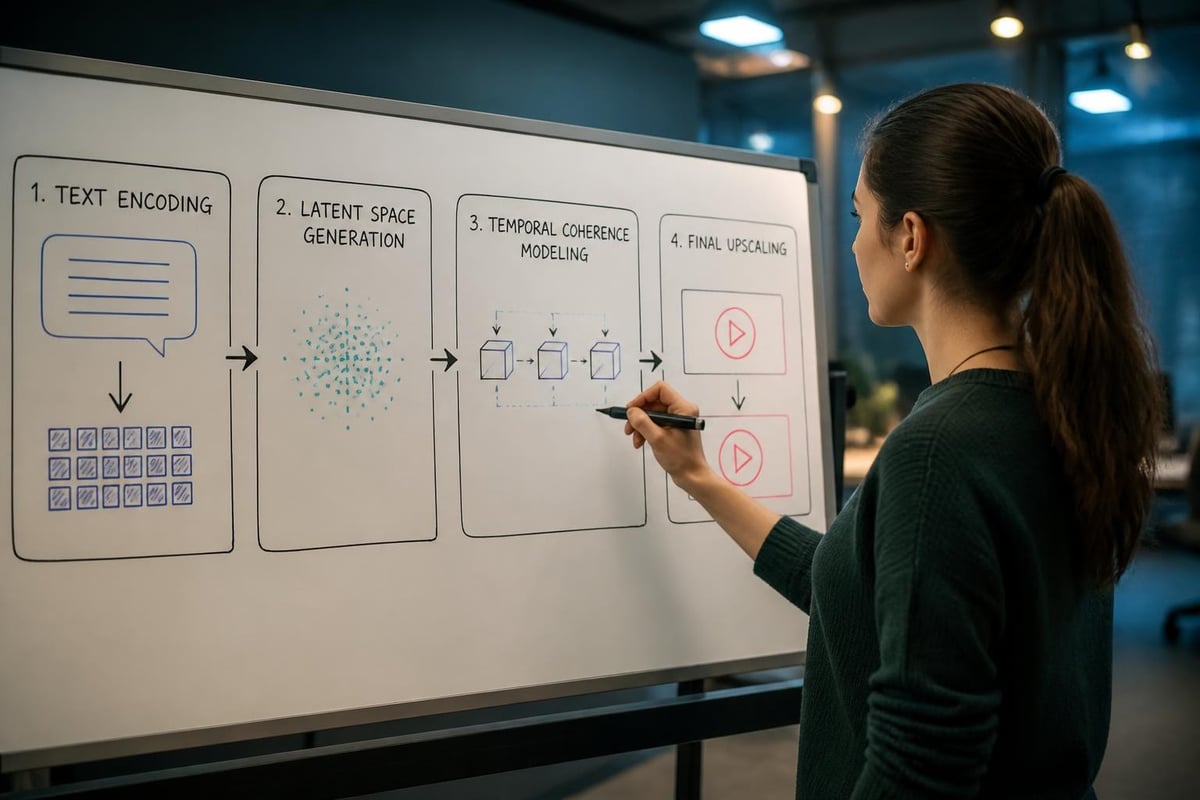
This pipeline allows platforms to generate videos in minutes rather than days. The computational efficiency comes from working in compressed latent spaces rather than directly manipulating high-resolution pixels throughout the generation process.
Key Techniques Behind AI Video Generation
Several breakthrough techniques have made ai creating video practical for commercial applications. Understanding these methods helps marketers choose the right tools and set realistic expectations.
Diffusion Models and Temporal Consistency
Diffusion-based approaches have become the dominant architecture for video generation. A comprehensive survey of video diffusion models outlines how these systems balance image quality with temporal coherence. The challenge isn't just generating attractive individual frames but ensuring they flow naturally when played in sequence.
Key advantages of diffusion models:
- Higher quality output compared to earlier GAN-based approaches
- Better control through text conditioning and guidance
- Ability to edit and refine specific portions of generated videos
- More stable training and predictable results
Training Data and Fine-Tuning
The quality of AI-generated videos depends heavily on training data. Models learn from datasets containing millions of video clips with accompanying descriptions. For advertising applications, this means models need exposure to product videos, UGC content, and social media formats to produce relevant output.
Fine-tuning allows platforms to specialize general models for specific use cases. A model trained on broad internet videos can be adapted to generate content that matches a brand's visual style, follows UGC conventions, or incorporates specific product categories.
| Training Approach | Use Case | Output Quality | Production Speed |
|---|---|---|---|
| Base Model | General video generation | Good | Fast |
| Fine-Tuned Model | Brand-specific content | Excellent | Fast |
| Custom Training | Highly specialized applications | Variable | Slow |
Evaluating AI Video Quality
Measuring the quality of AI-generated videos requires more than subjective judgment. The research community has developed comprehensive frameworks to assess video generation systems across multiple dimensions.
VBench, a comprehensive benchmark suite introduced by computer vision researchers, breaks down video quality into 16 distinct aspects including subject consistency, motion smoothness, temporal flickering, and aesthetic quality. This granular approach helps developers identify specific weaknesses and track improvements.
Metrics That Matter for Marketing
For brands using ai creating video for advertising, certain quality factors matter more than others:
- Temporal consistency – Objects and people should maintain consistent appearance across frames
- Motion realism – Movement should appear natural, not jerky or physically impossible
- Brand alignment – Generated content should match brand guidelines and visual identity
- Engagement signals – Videos should include hooks and elements proven to drive performance
When evaluating AI video platforms, marketers should prioritize tools that excel in these practical dimensions rather than chasing the highest scores on academic benchmarks.
Practical Applications in Advertising
The real value of ai creating video emerges when applied to specific marketing challenges. Forward-thinking brands are using these tools to solve problems that traditional production couldn't address at scale.
Rapid Creative Testing
Performance marketing demands constant experimentation. AI video generation enables teams to produce dozens of creative variations testing different hooks, messaging angles, and visual treatments. What once took weeks of production scheduling now happens in hours.
Testing workflow enabled by AI:
- Generate 20-30 video variations from a single brief
- Launch small-scale tests across platforms
- Identify top performers based on CTR and engagement
- Scale winning creative while iterating on underperformers
- Repeat the cycle weekly or even daily
UGC-Style Content at Scale
User-generated content consistently outperforms polished studio ads on social platforms. However, coordinating authentic creators, managing approvals, and maintaining consistent output quality creates bottlenecks. VidBud AI UGC Video Plans address this by generating UGC-style ads that capture the authentic feel of creator content while maintaining brand control and production speed.

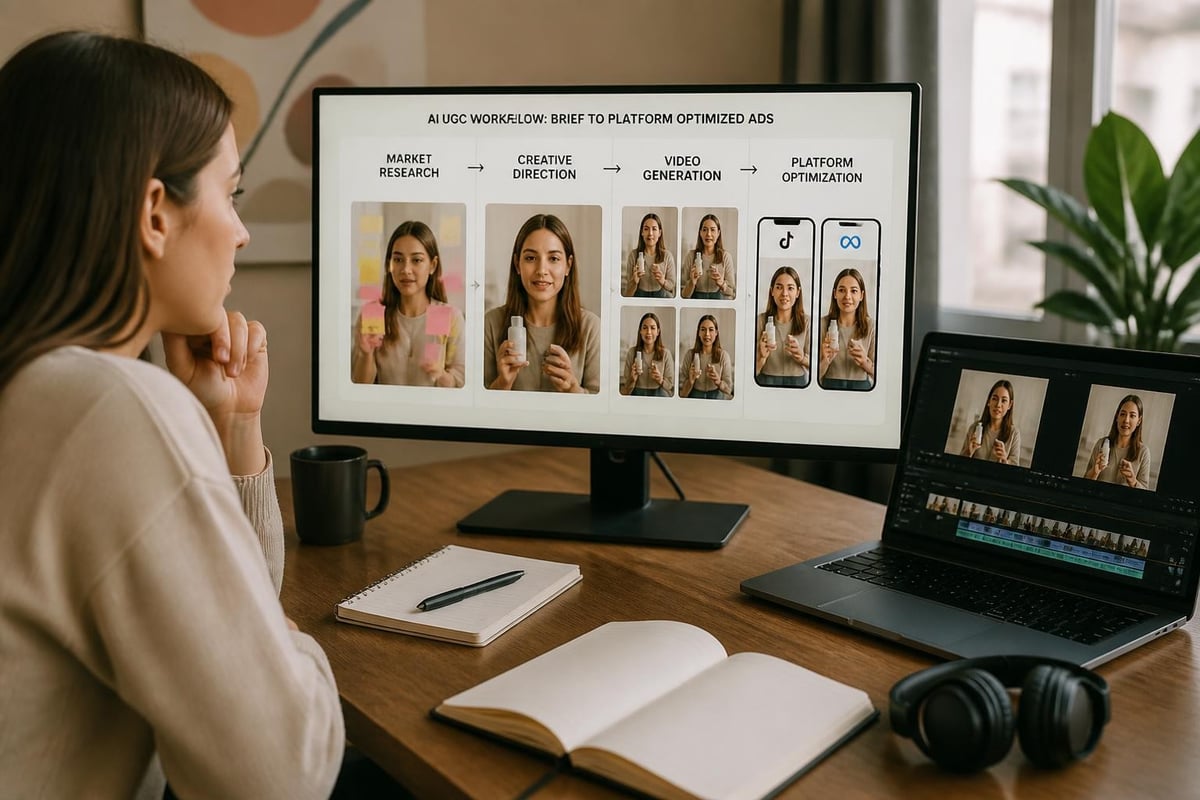
This approach gives brands the authenticity of UGC with the reliability and scalability of automated production. Creative teams can focus on strategy and concept development while AI handles the execution across dozens or hundreds of variations.
Localization and Personalization
AI creating video excels at producing variations for different markets, demographics, or user segments. A single creative concept can be adapted with different visual styles, pacing, or emphasis points without reshooting anything.
The same techniques that enable style transfer in images work for video, allowing brands to maintain consistent messaging while adapting presentation for different audiences. This capability becomes especially valuable for global campaigns that need cultural relevance across markets.
Technical Implementation Considerations
Teams looking to integrate AI video generation into their workflows need to understand the technical landscape. The ecosystem includes both commercial platforms and open-source tools with different tradeoffs.
Developer Tools and APIs
For technical teams building custom solutions, frameworks like Hugging Face Diffusers provide well-documented pipelines for text-to-video and image-to-video generation. These tools let developers fine-tune models, customize generation parameters, and integrate video creation into broader marketing automation systems.
Integration points to consider:
- Input data formats (text prompts, reference images, style guides)
- Output specifications (resolution, aspect ratio, duration)
- Processing time and computational requirements
- Quality control and filtering mechanisms
- Asset management and storage
Computational Requirements
AI creating video demands significant computational resources. Most commercial platforms handle infrastructure internally, but teams building custom solutions need to plan for GPU capacity. Generation time varies based on video length, resolution, and quality settings, typically ranging from minutes to hours per video.
Cloud-based solutions offer flexibility, allowing teams to scale capacity based on production volume without maintaining dedicated hardware. For high-volume applications, cost optimization becomes important, balancing generation quality against computational expense.
Quality Control and Brand Safety
While AI video generation has advanced rapidly, it still requires human oversight to ensure output meets brand standards and avoids potential issues.
Common Challenges
Generated videos may exhibit artifacts or inconsistencies that trained eyes catch immediately:
- Temporal flickering – Slight variations in objects or backgrounds between frames
- Physical impossibilities – Motion or transformations that violate real-world physics
- Inconsistent details – Text, logos, or fine details that shift or blur
- Unnatural motion – Movement that feels robotic or disconnected
Robust workflows build in review checkpoints where creative teams evaluate generated assets before publication. Many platforms now include automated quality filters that flag videos with obvious issues, reducing manual review burden.
Maintaining Brand Consistency
AI models need clear guidance to produce on-brand content consistently. This requires:
- Comprehensive style guides encoded as model inputs
- Reference libraries of approved visual elements
- Clear prompt engineering standards
- Regular audits of generated content
- Feedback loops to improve model performance
Teams that invest in these guardrails achieve better results and higher approval rates for AI-generated content. Understanding the patterns that work for your brand allows you to refine prompts and parameters for more consistent output.
Regulatory and Ethical Considerations
As ai creating video becomes mainstream, regulatory frameworks are emerging to address transparency and potential misuse. Marketers need to stay informed about evolving requirements.
Transparency Requirements
The European Union's AI Act introduces transparency obligations for AI-generated content, requiring that synthetic media be clearly labeled. Similar regulations are under discussion in other jurisdictions.
Best practices for compliance:
- Disclose AI generation in video descriptions or overlays
- Maintain documentation of generation methods and training data
- Implement content provenance tracking
- Review platform-specific policies on synthetic media
Media Literacy and Responsible Use
UNESCO guidance on generative AI emphasizes the importance of media literacy as synthetic content becomes widespread. Brands using AI video generation have a responsibility to deploy these tools ethically and transparently.
This means avoiding deceptive practices, respecting intellectual property, and considering the broader societal impact of synthetic media. Responsible use builds trust with audiences and mitigates regulatory risk.
Future Directions and Emerging Capabilities
The field of ai creating video continues to evolve rapidly. Several trends are shaping the next generation of capabilities that will become available to marketers over the next few years.
Improved Temporal Understanding
Current models struggle with complex motion and long-range temporal consistency. Research focuses on better understanding of physics, action sequences, and narrative flow. Future systems will generate longer videos with more sophisticated motion and better story coherence.
Interactive Editing and Refinement
Advances in video editing with diffusion models enable more precise control over generated content. Rather than accepting the initial output, creative teams will interactively refine specific elements, adjust timing, or modify visual details through natural language instructions.
This iterative workflow bridges the gap between fully automated generation and traditional editing, giving creators the best of both approaches.
Multimodal Integration
Next-generation platforms will seamlessly combine video generation with other AI capabilities:
- Voice synthesis for narration and dialogue
- Music generation for custom soundtracks
- Script writing for video concepts and messaging
- Performance prediction to forecast ad effectiveness
These integrated systems will handle entire creative workflows from initial concept through final asset delivery, dramatically reducing time to market for new campaigns. Exploring how ad research integrates with production shows how these capabilities work together to improve creative outcomes.
Measuring Success and ROI
Implementing ai creating video technology requires clear metrics to justify investment and guide optimization. Success measurement should focus on both production efficiency and marketing performance.
Production Metrics
Track improvements in creative operations:
- Time to first asset – How quickly can you generate initial creative from a brief?
- Variation volume – How many versions can you produce for testing?
- Approval rates – What percentage of generated videos meet quality standards?
- Cost per asset – How does AI generation compare to traditional production costs?
Performance Metrics
Ultimately, generated videos must drive business results:
| Metric | Target | Measurement Method |
|---|---|---|
| Click-through rate | 2-5% above baseline | A/B testing against traditional creative |
| Cost per acquisition | 15-30% reduction | Campaign-level attribution |
| Creative fatigue | Slower decay curve | Time-series analysis of performance |
| Test velocity | 3-5x increase | Number of variants tested per week |
Successful teams establish baseline measurements before implementing AI video generation, then track improvements across both production and performance dimensions. This data-driven approach demonstrates ROI and identifies opportunities for optimization.
Building an AI Video Workflow
Integration of ai creating video into existing marketing operations requires thoughtful planning. Teams that succeed treat implementation as a process change, not just a technology adoption.
Workflow Design Principles
Start with high-volume use cases where production bottlenecks are most acute. Social media ads, product videos, and testing creative are ideal starting points because they require many variations and have shorter production cycles.
Maintain creative direction by keeping human strategists in the loop for concept development and final approval. AI handles execution and variation, while creative teams focus on strategy and quality control.
Build feedback loops that capture what works. Tag successful generated videos and analyze patterns in prompts, styles, and parameters. This knowledge base improves future generations and trains new team members.
Team Structure and Skills
Effective AI video workflows require new roles and capabilities:
- Prompt engineers who craft effective instructions for generation models
- Quality reviewers who evaluate output against brand standards
- Performance analysts who connect creative attributes to business results
- Technical integrators who maintain systems and workflows
Many teams upskill existing creative staff rather than hiring new specialists. Understanding what makes UGC hooks work helps creative teams guide AI generation toward effective patterns.
Platform Selection Criteria
Choosing the right AI video generation platform depends on specific needs, technical capabilities, and budget constraints.
Commercial Platforms vs. Open Source
Commercial platforms offer managed solutions with user-friendly interfaces, customer support, and consistent updates. They're ideal for teams that want to focus on creative strategy rather than technical implementation.
Open-source tools provide maximum flexibility and customization but require technical expertise. They work well for teams with engineering resources who need specialized capabilities or want to build proprietary systems.
Evaluation Framework
When assessing platforms, consider:
- Output quality – Does generated video meet your brand standards?
- Style flexibility – Can it produce the specific formats you need (UGC, product videos, testimonials)?
- Integration capabilities – Does it fit into your existing creative and marketing workflows?
- Pricing model – Do costs align with your production volume and budget?
- Support and documentation – Can your team get help when needed?
Test multiple platforms with real briefs before committing. The best choice depends on your specific requirements and how well each platform handles your typical creative challenges.
AI creating video has moved from experimental technology to practical production tool for brands and marketers who need to scale creative output without scaling budgets or timelines. The platforms and techniques available in 2026 enable teams to test more ideas, reach more audiences, and optimize performance faster than traditional production allows. If you're ready to transform your video ad production workflow, VidBud combines AI-powered market research, creative direction, and UGC video generation to help you turn briefs into scroll-stopping ads ready for TikTok, Meta, and beyond.